- Home
- Products +
- Industries +
- About Us +
- News
- Contact Us

- Home
- Products
- Industries
- About Us
- News
- Contact Us

CHARING manufactures HPMC, RDP, and PCE for dry-mix mortar and concrete — supplying high quality products across Southeast Asia, the Middle East, South America and Africa for over a decade. We share what we know.
1. What Is ETICS (EIFS)?
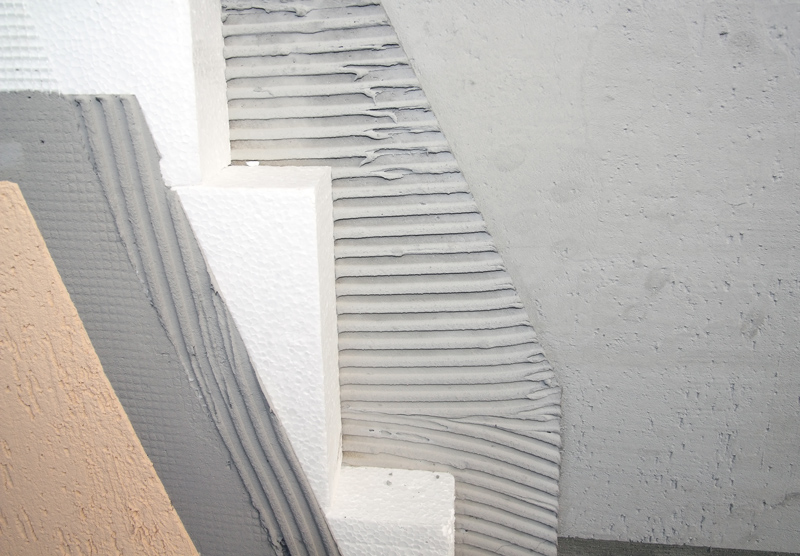
ETICS = External Thermal Insulation Composite System. It is a multi-layer system that wraps a building in insulation to save energy.
In North America it is called EIFS. In Europe and Asia it is ETICS. Same system, different name.
It is one of the most demanding applications for mortar additives. Three layers, three different mortars, three different sets of requirements.
2. Three Layers, Three Jobs
1. Adhesive Mortar → bonds the insulation board to the wall
2. Insulation Board → EPS or mineral wool
3. Base Coat (reinforcing mortar) → covers the board + embeds the glass fiber mesh
4. Primer + Finish Coat → decorative + weather protection
Adhesive Mortar — the "Glue"
| Requirement | Value |
| Bond to EPS board | ≥0.10 MPa |
| Bond to concrete wall | ≥0.60 MPa |
| Open time | ≥2 hours |
| Sag resistance | boards must not slide |
Base Coat — the "Armor" (the hard one)
The base coat must:
1.Bond to the EPS board
2.Embed and protect the glass fiber mesh from alkali
3.Resist impact — 3 J standard, 10 J reinforced
4.Absorb very little water — ≤500 g/m²
5.Let water vapor pass (the wall must "breathe")
6.Resist cracking under heat (a dark facade hits 70°C in summer)
Five of these six depend on the additives. Cement and sand alone cannot do this.
3. The Chinese Way — Insulation Can Be a Mortar Too
In Europe and North America, ETICS almost always uses a board (EPS, XPS, or mineral wool) for the insulation layer. The board is glued on, then covered with base coat.
In China that board system is common too. But there is a second, very common Chinese way: the insulation layer itself is a mortar. No board, no glue — you trowel the insulation on in layers.
Two main mortar-based systems:
A. Vitrified microbead insulation mortar - The insulation layer is a dry-mix mortar: cement + hollow vitrified microbeads + additives. - The microbeads are tiny hollow glass spheres. They trap air — that is the insulation. - Fire-safe (inorganic), good bond, durable, no mesh needed. - Needs a thicker layer than a board for the same insulation (the beads are heavier and conduct more heat).
B. EPS granule insulation slurry - The insulation layer is cement + expanded polystyrene granules + additives, troweled on. - Insulates better per thickness than microbeads. Works well on uneven walls. - But the EPS granules are flammable.
Why this matters for additives:
In the board system, additives go into the adhesive and the base coat. In the mortar systems, additives go into the insulation layer itself — and that layer is thick (20–50 mm), so it uses far more HPMC and RDP.
| Additive | Job in insulation mortar |
| HPMC (HP 100M) | Water retention — the lightweight beads and granules soak up water and dry fast |
| RDP (RD 7003M) | Bond — glues the beads into a strong, cohesive layer |
| PP fiber | Anti-crack — the thick layer shrinks as it dries |
Reference formula — vitrified microbead insulation mortar
| Material | Amount (kg/t) | CHARING Product |
| Cement 42.5R | 400–500 | — |
| Vitrified microbeads | 150–250 | — |
| Fly ash / filler | 150–250 | — |
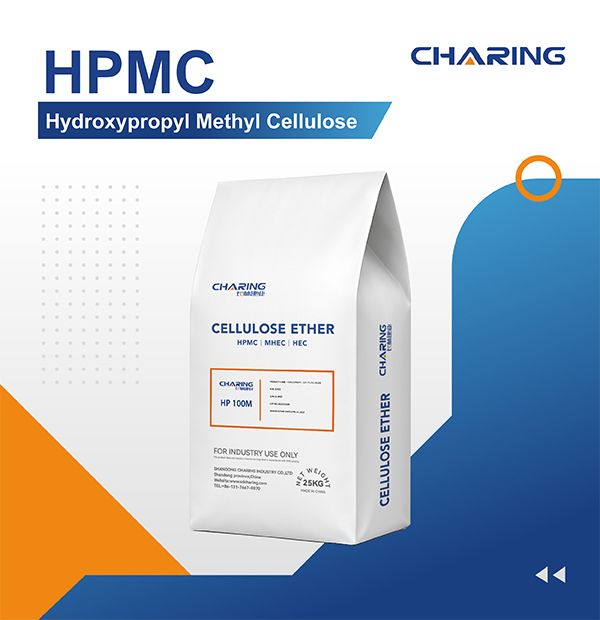
| HPMC | 3–5 | HP 100M |
| RDP | 12–20 | RD 7003M |
| PP fiber (6 mm) | 1–2 | — |
(This is a typical reference. The exact ratio depends on the bead grade and the thermal performance required — each company tests its own.)
4. Standards
| Standard | Scope |
| ETAG 004 | ETICS system performance (EU) |
| EN 13499 | ETICS product standard (EU) |
| JG 149 | EPS thin-render ETICS (China) — bond ≥0.10 MPa, impact ≥3 J / ≥10 J, water ≤500 g/m² |
| JGJ 144 | ETICS technical specification (China) |
| JG 158 | EPS granule insulation slurry system (China) |
| GB/T 20473 | Building insulation mortar (China) |
5. HPMC Selection
| Layer | Viscosity (2%, 20°C) | CHARING Grade |
| Adhesive mortar, normal climate | 100,000–200,000 mPa·s | HP 100M / HP 200M |
| Adhesive mortar, hot climate | 100,000–200,000 mPa·s | HK 100M / HK 200M |
| Base coat, standard | 100,000–200,000 mPa·s | HP 100M / HP 200M |
| Base coat, hot climate | 100,000–200,000 mPa·s | HK 100M / HK 200M |
Dosage: 1.5–3.0 kg/t.
Hot climate warning: a black south-facing facade in the Middle East can hit 70°C+. In hot climates use HK 100M / HK 200M — heat resistant to 65–70°C. For the harshest heat (dark facades that hit 70°C+), step up to MH (MHEC, 70–75°C).
6. RDP Selection — the Four Options
RDP is the most expensive additive in ETICS. The wrong choice costs money AND performance. Industry test data (3% RDP, standard formula):
| System | Adhesion | Impact | Water Absorption | Verdict |
| A. EVA only | Best | Best (10–12 J) | Worst (900–1000 g/m²) | Adhesion king, water problem |
| B. EVA + Silane | Good | Good (8–10 J) | Best (200–400 g/m²) | Best balance |
| C. VA-VeoVa | Moderate | Weak (3–4 J) | Poor (600–800) | Expensive, mediocre |
| D. Hydrophobic RDP | Poor | Fail (2–3 J) | Good | Cannot use alone |
The dilemma: EVA gives the best adhesion and impact, but absorbs too much water. Hydrophobic RDP resists water, but fails the impact test.
The answer — System B: EVA + silane hydrophobic powder. It gives both. EVA forms the tough, flexible film. A small dose of silane powder (0.2–0.3%) cuts water absorption from ~1,000 to ~200–400 g/m². This is the industry standard choice.
RDP Dosage vs Impact
| EVA RDP | Impact |
| 1% | 2–3 J (fails) |
| 2% | 5–6 J (standard) |
| 3% | 10–12 J (reinforced) |
| 4% | 13–15 J (premium) |
Standard grade: 2.0–2.5% (20–25 kg/t)
Reinforced grade (ground floor, public areas): 3.0–3.5% (30–35 kg/t)
Premium (schools, hospitals): 3.5–4.0% (35–40 kg/t)
Water is ETICS's enemy. A base coat that absorbs water loses bond, freezes and cracks in winter, and traps moisture behind the finish.
| Type | Durability | Recommendation |
| Silane powder | 20+ years (chemical bond) | Recommended |
| Silicone emulsion | 5–8 years | Acceptable |
| Metal stearate | 3–5 years | Not for exterior |
Recommended silane dosage: 0.20–0.30% (2–3 kg/t).
8. Reference Formulas
Adhesive Mortar
| Material | Amount (kg/t) | CHARING Product |
| Portland cement 42.5R | 300–350 | — |
| Quartz sand (0.1–0.5 mm) | 550–600 | — |
| HPMC (100,000–200,000 mPa·s) | 2.0–3.0 | HP 100M / HP 200M (hot: HK 100M / HK 200M or MH) |
| RDP (VAE) | 15–25 | RD 7015H |
| Wood fiber | 1–3 | — |
Base Coat — Standard Grade
| Material | Amount (kg/t) | CHARING Product |
| Portland cement 42.5R | 250–300 | — |
| Quartz sand (0.1–0.3 mm) | 500–580 | — |
| Calcium carbonate | 50–80 | — |
| HPMC (100,000–200,000 mPa·s) | 2.0–3.0 | HP 100M / HP 200M |
| RDP (VAE) | 20–25 | RD 7015H |
| Silane hydrophobic powder | 2.0–3.0 | CHARING Hydrophobic Powder |
| PP fiber (6 mm) | 1.0–2.0 | — |
Base Coat — Reinforced Grade
| Material | Amount (kg/t) | CHARING Product |
| HPMC (100,000–200,000 mPa·s) | 2.0–3.0 | HP 100M / HP 200M |
| RDP (VAE) | 30–35 | RD 7015H |
| Silane hydrophobic powder | 2.0–3.0 | CHARING Hydrophobic Powder |
| PP fiber (6 mm) | 1.0–2.0 | — |
| (cement, sand, filler) | same as standard | — |
9. CHARING Product Recommendations
| Layer | HPMC | RDP | Hydrophobic |
| Adhesive mortar, normal | HP 100M / HP 200M | RD 7015H | — |
| Adhesive mortar, hot climate | HK 100M / HK 200M (or MH) | RD 7015H | — |
| Base coat, standard | HP 100M / HP 200M | RD 7015H (20–25 kg) | Silane powder 2–3 kg |
| Base coat, reinforced | HP 100M / HP 200M | RD 7015H (30–35 kg) | Silane powder 2–3 kg |
| Base coat, hot climate | HK 100M / HK 200M | RD 7015H | Silane powder 2–3 kg |
| Insulation mortar (bead) | HP 100M | RD 7003M (12–20 kg) | — |
10. Common Defects and Fixes
| Problem | Cause | Fix |
| Boards fall off | RDP too low or wrong type | Raise EVA RDP to ≥2.5%, do not use hydrophobic RDP alone |
| Base coat cracks | RDP low, no fiber, poor water retention | RDP ≥2.5%, add PP fiber 1.5 kg/t |
| Mesh shows through | Base coat too thin or too dry | More HPMC, better workability |
| High water absorption | No hydrophobic agent | Add silane powder ≥2 kg/t |
| Surface skins in heat | HPMC gel temperature too low | Switch to HK (65–70°C) or MHEC (70–75°C) |
| Poor impact resistance | RDP under-dosed | Raise EVA RDP from 2% to 3% |
| Finish coat blisters | Base coat absorbs too much water | Add hydrophobic agent, check ≤500 g/m² |
| Insulation mortar crumbles | RDP too low, beads dry too fast | Raise RDP, more HPMC for water retention |
11. Common Mistakes to Avoid
1. Saving on RDP. Cutting RDP from 3% to 1.5% halves impact resistance. The system passes visual inspection, then fails the first hailstorm or second winter.
2. Using hydrophobic RDP alone. It resists water but fails the impact test. Always use EVA as the base, add silane powder for water resistance.
3. Ignoring the hydrophobic agent. The best RDP cannot save a base coat that absorbs 900 g/m² of water. The ETICS facades that still look good after 15 years all have hydrophobic base coats.
4. Wrong HPMC gel temperature for hot climates. A dark facade in the Middle East hits 70°C. Regular HPMC gels. Use HK 100M / HK 200M (65–70°C), or MH (70–75°C) for the worst cases.
5. Poor mesh. The additive package cannot compensate for cheap mesh. Use alkali-resistant glass fiber mesh — ≥145 g/m² standard, ≥160 g/m² reinforced.
For technical support, free samples, or help with your ETICS formulation:
Shandong Charing Industry Co., Ltd.
Email: info@sdcharing.com
Website: www.sdcharing.com

E-mail: sdcharing@sdcharing.com
Phone: +86 131 7667 0070
WhatsApp: +8615066133527
Add.: No.605-606,NO1 BUILDING,WANGYUE ZHIGU INDUSTRY PARK,NO.1919 WANGYUE ROAD, SHIZHONG AREA,JINAN CITY, SHANDONG PROVINCE,CHINA