- Home
- Products +
- Industries +
- About Us +
- News
- Contact Us



- Home
- Products
- Industries
- About Us
- News
- Contact Us

Mar. 23, 2026
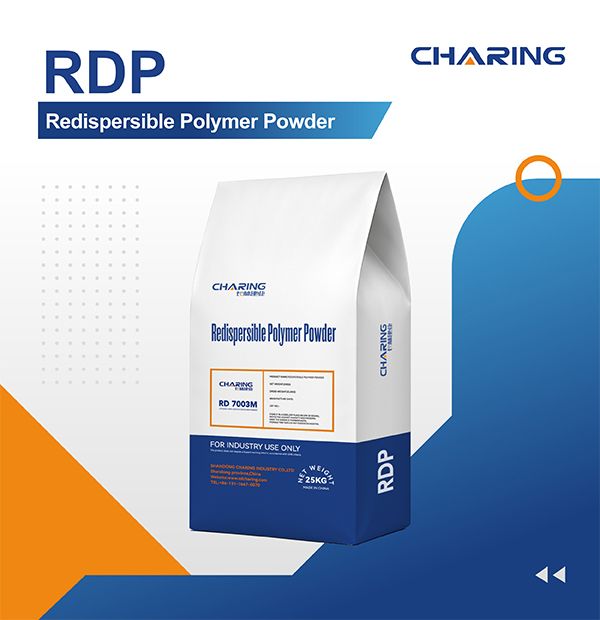
Based on the available information, you cannot directly substitute Polyvinyl Alcohol (PVA) for Redispersible Polymer Powder (RDP) in dry-mix mortar without significantly compromising key performance properties, especially water resistance and flexibility. While PVA can improve initial bonding strength, it does not replicate the comprehensive performance enhancement provided by RDP.
Feature | Polyvinyl Alcohol (PVA) | |
Primary Function | Acts as a protective colloid and a cost-effective adhesive to improve initial bonding strength in simple systems like putties . | A multifunctional additive that significantly enhances adhesion, flexibility, crack resistance, and water resistance . |
Water Resistance | Highly hydrophilic, leading to poor water resistance. The film it forms can be compromised in wet conditions . | Forms a hydrophobic, continuous polymer film that effectively blocks capillary pores, providing excellent water resistance and durability . |
Flexibility & Crack Resistance | Provides limited flexibility. It can help prevent cracking in some applications but does not provide the same level of deformation ability as RDP . | Creates a flexible polymer bridge within the rigid cement matrix. This acts as a "shock absorber," greatly improving the mortar's deformability and crack resistance . |
Application Scope | Suitable for low-cost, non-structural applications like interior wall putties or as an additive to reduce costs . | Essential for high-performance mortars requiring strong bonding, flexibility, and weatherability, such as tile adhesives, exterior insulation systems (EIFS), and waterproofing mortars . |
The table below summarizes the key functional differences between PVA and RDP in dry-mix mortar formulations.
Why PVA and RDP Are Chemically Different
Understanding their composition explains their performance gap:
PVA is a Key Ingredient in RDP: Interestingly, PVA is often used as a "protective colloid" in the production of RDP to help the powder particles redisperse in water . However, PVA alone cannot match the final performance.
RDP Forms a True Polymer Film: When RDP is mixed with water, it forms a stable emulsion. As the mortar dries, these particles coalesce into a continuous, flexible polymer film. This film creates "polymer bridges" that tightly bind all components together, providing flexibility and stress absorption . PVA cannot create this same type of resilient, water-resistant network.
Practical Implications for Formulation
Your choice depends entirely on the performance requirements and cost targets for your dry-mix mortar:
For Cost-Sensitive, Non-Structural Applications: If you are producing a simple interior wall putty and your main goal is to improve workability and basic adhesion at a lower cost, PVA can be a viable option .
For High-Performance Applications: For applications like tile adhesives, exterior wall putties, self-leveling compounds, or waterproofing mortars, RDP is essential. It provides the necessary bonding strength (especially under wet conditions), flexibility to accommodate substrate movement, and long-term durability .
To summarize, while PVA can be used in simple, low-cost dry-mix mortars, it is not a direct substitute for RDP in applications where high bonding strength, water resistance, and flexibility are required. In many high-quality formulations, PVA and RDP are used together to balance cost and performance.
I hope this analysis helps you make an informed decision. If you can share the specific type of dry-mix mortar you are developing (e.g., tile adhesive, wall putty), I may be able to provide more targeted information.

E-mail: sdcharing@sdcharing.com
Phone: +86 131 7667 0070
WhatsApp: 8615066133527
Add.: No.605-606,NO1 BUILDING,WANGYUE ZHIGU INDUSTRY PARK,NO.1919 WANGYUE ROAD, SHIZHONG AREA,JINAN CITY, SHANDONG PROVINCE,CHINA