- Home
- Products +
- Industries +
- About Us +
- News
- Contact Us



- Home
- Products
- Industries
- About Us
- News
- Contact Us
Jul. 17, 2026
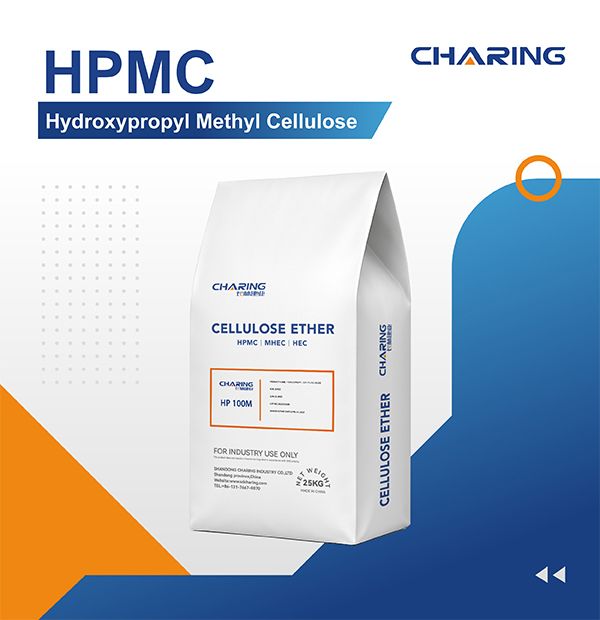
If you source Hydroxypropyl Methyl Cellulose (HPMC) for dry-mix mortar, you already know the challenge: HPMC looks identical — white powder, no odor, no visual difference. But the performance difference between a premium grade and a substandard batch can mean failed tile adhesion, cracked plasters, or rejected shipments.
We have been in cellulose ether business for years — manufacturing HPMC, MHEC, HEC. We also trade PEO with a very good partner factory. So we are quite familiar with China cellulose ether producing, market, advantage and disadvantage. We have seen too many customers burned by cheap HPMC. This guide gives you a systematic framework for evaluating suppliers — from reading between the lines of a COA to spotting the five hidden costs of cheap cellulose ether.
1.Why Supplier Evaluation Matters More for HPMC Than Any Other Additive
HPMC is not a commodity. Unlike cement or sand, cellulose ether performance depends on subtle chemical parameters — degree of substitution, molecular weight distribution, by-product salt content — that cannot be verified by appearance. A batch that looks perfect can still fail because:
1.Viscosity variability destabilizes your entire formulation — just ±10% variation in HPMC viscosity can shift mortar water demand by 3–5%
2.Misleading gel temperature — a higher number on the COA does not mean better performance; a properly formulated 58°C-grade HPMC can outperform a poorly substituted 70°C-grade in open time and surface wetting
3.Impurities (ash, salts) accelerate cement hydration unpredictably — a “retarder effect” from high salt content can delay setting by hours
4.Batch inconsistency forces you to recalibrate every shipment — a hidden production cost your supplier never mentions
And here’s the uncomfortable truth: the supply chain is fragmented. China produces over 60% of the world’s cellulose ether, with hundreds of manufacturers ranging from ISO-certified plants with automated DCS production lines to small workshops with manual control. Price can vary by 30–50% between these tiers — and so can reliability.
A systematic evaluation framework is not optional. It’s your quality insurance.
2. The 5 Key Quality Dimensions (and How to Test Them)
Every HPMC COA lists similar parameters. The question is not “what numbers are on the certificate” — it’s “how were those numbers generated, and what do they hide?”
2.1 Viscosity Consistency — The #1 Pain Point
Parameter | What It Means | Good Signal | Red Flag |
Viscosity (mPa·s, 2% solution, 20°C, Brookfield) | Measures thickening power; the most impactful parameter for mortar workability | Batch-to-batch variation ≤5% from target | Variation >10%, or viscosity “correct” but water retention fails |
Test method consistency | Brookfield RV/LV? Spindle number? RPM? Solution temperature? | Method fully specified on COA | Method not stated or changes between batches |
The trap: A supplier can deliver “correct” viscosity by adjusting concentration or testing temperature. Ask for viscosity measured at 2% aqueous solution, 20°C, Brookfield viscometer, with spindle and RPM noted. If the COA says “25°C” or “1% solution” without explanation, the number is not comparable.
What to do: Request retention samples from the last 3–5 production batches. Test them yourself under identical conditions. If the variation exceeds 5%, walk away — your production QC costs will exceed any price savings.
2.2 Active Content and Impurity Profile
Parameter | What It Measures | Good Range | Warning Signs |
Methoxy content (DS) | Degree of methyl substitution; affects gel temperature and water retention | 19–24% (Type 2208) or 28–30% (Type 2910); depends on grade | <17% or >32% — gel temperature or solubility compromised; ask which type your supplier is producing |
Hydroxypropoxy content (MS) | Degree of hydroxypropyl substitution; affects solubility and enzyme resistance | 4–12% for standard grade | <2% — behaves like MC (methyl cellulose only), no enzyme resistance |
Ash content (as sulfate) | Residual salts from neutralization (NaCl, Na₂SO₄) | ≤5% for general grade; ≤3% for premium | >8% — high salt accelerates cement setting, causes efflorescence |
Moisture content | Free water in powder | ≤5% | >8% — product may clump during storage; you’re paying for water |
pH (1% solution) | Residual acid/alkali from production | 5.0–8.0 | <4.0 or >9.0 — incomplete washing; may corrode packaging or affect cement hydration |
The trap — “pure HPMC” that isn’t: Some manufacturers blend starch ether or cheap thickeners to boost apparent viscosity. The starch passes a viscosity test but fails water retention. Verify: dissolve a sample in hot water (80°C), then cool — pure HPMC forms a clear, homogeneous gel; adulterated product shows turbidity or precipitate.
The trap — optical brighteners: Some suppliers add fluorescent whitening agents to boost “whiteness” scores. This has zero effect on performance but masks the use of lower-grade cotton linters. Verify: UV lamp test — pure HPMC shows no fluorescence; brightened product glows blue-white under 365 nm UV.
2.3 Light Transmittance — What It Actually Tells You
Light transmittance (measured at 2% solution, 590 nm) is widely cited as a “purity indicator.” It has value — but it’s also the most manipulated parameter in the industry.
| Transmittance | Interpretation | Caveats |
| ≥90% | Typically indicates high-purity raw material (refined cotton linter) and clean production | Can be artificially boosted by: (a) increasing degree of substitution, (b) adding optical brighteners, © ultra-fine grinding |
| 80–90% | Acceptable for most construction applications; minor impurities present | The realistic range for cost-effective construction-grade HPMC |
| <80% | Indicates impurities (lignin, hemicellulose) from lower-grade raw material | Performance may be fine — but check water retention and setting behavior carefully |
The right way to use transmittance: Not as a standalone quality metric, but as a consistency check. If your supplier’s transmittance was 88% ±2% for six months and suddenly drops to 82%, something changed — raw material source, washing process, or production line. That’s the signal. The absolute number matters less than its stability.
2.4 Gel Temperature — The Most Misunderstood Parameter
If you take one lesson from this guide, let it be this: a higher gel temperature number on the COA does not automatically mean better HPMC. The relationship between gel temperature, open time, and real-world performance is more nuanced than most buyers realize.
The Three Types of HPMC Gel Temperature — and What They Actually Mean
China’s cellulose ether industry produces HPMC in three standard substitution types, each with a characteristic gel temperature range. Understanding these types — not just the number — is the key to evaluating quality.
| Type (CHARING Series) | Gel Temp Range | Methoxy Content | Hydroxypropoxy Content | Key Characteristics |
| CHARING HPMC HP Series (Type 60RT) | 55–64°C | 28.0–30.0% | 7.0–12.0% | Highest methoxy → best surface activity, excellent solubility, longest open time in moderate climates. The workhorse for wall putty, gypsum plaster, and general mortar. |
| CHARING HPMC HK Series (Type 65RT) | 62–68°C | 27.0–30.0% | 4.0–7.5% | Lower hydroxypropoxy → reduced solubility speed, often shorter open time than HP Series. Can be a sign of cost-cutting in substitution control. |
| CHARING MHEC MH Series | 70–90°C | — | — |
The Counterintuitive Truth: 55–60°C Can Be Better Than 65–70°C
Many buyers instinctively prefer 65–70°C gel temperature, thinking “higher is safer.” In practice:
CHARING HPMC HP Series (Type 60RT, 55–64°C): High methoxy content (28–30%) gives this type the best surface wetting ability, fastest dissolution, and — critically — the longest open time in normal construction temperatures. For wall putty, standard tile adhesive, and general mortar, this is often the best-performing grade. Most of the world’s construction-grade HPMC actually falls in this range.
CHARING HPMC HK Series (Type 65RT, 62–68°C): The lower hydroxypropoxy content (4.0–7.5% vs. 7.0–12.0% in HP Series) means reduced solubility and surface activity. Counter-intuitively, open time is often shorter than HP Series in the same viscosity grade — the mortar skins over faster. Some manufacturers push this type because it’s cheaper to produce (less propylene oxide used in etherification). If your supplier offers 65RT at a lower price than 60RT, ask why.
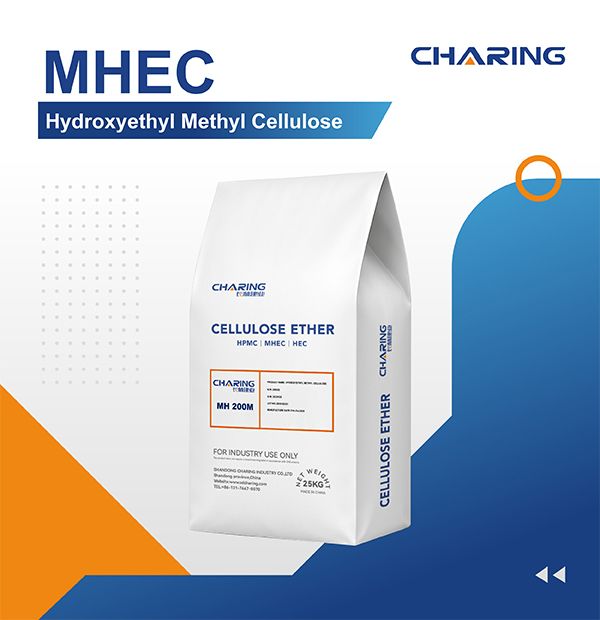
CHARING MHEC MH Series: Gel temperature 70–90°C. This is a genuinely different chemistry — the hydroxyethyl substituent provides both high gel temperature AND good solubility. For hot-climate tile adhesives (substrate temperature regularly exceeding 50°C), CHARING MH Series is the correct choice. But MHEC is not HPMC — don’t confuse the two.
The “Fake 70°C+” Trap
Some manufacturers produce HPMC that shows 70°C+ gel temperature on the COA, but the methoxy content is insufficient (below 22%). How is this possible?
Simple: they push the substitution reaction to favor gel temperature at the expense of proper methoxy distribution. The result reads “70°C” on the spec sheet — but the open time is actually shorter than a well-made 58°C grade, because the substitution pattern is uneven and surface activity is poor. Gel temperature without verified methoxy/hydroxypropoxy content is a meaningless number.
Scenario | Gel Temp on COA | Actual Performance | The Real Story |
CHARING HP Series (Premium 60RT) | 58–62°C | Long open time, excellent wetting, good water retention | Proper substitution, high methoxy — this is quality |
Cheap counterfeited “70°C” HPMC | 70–74°C | Short open time, poor wetting, skinning | Low/unbalanced methoxy — gel temp was forced, performance sacrificed |
CHARING MH Series (Genuine MHEC) | 70–85°C | Long open time, good wetting, high-temp stable | Different chemistry — you’re paying for it |
How to Evaluate Gel Temperature Correctly
1.Ask for methoxy AND hydroxypropoxy content alongside gel temperature. If the supplier can’t provide all three, they don’t control their substitution process.
2.Test open time, not just gel temperature. A 58°C HPMC with 30+ minutes open time beats a 70°C HPMC with 15 minutes open time. Always.
3.Match the type to the climate: CHARING HP Series (Type 60RT) for temperate/indoor use; CHARING MH Series (MHEC) for extreme hot-weather outdoor applications. Don’t over-specify gel temperature for applications that don’t need it.
4.Verify batch consistency: gel temperature should not drift more than ±3°C between batches. A supplier whose gel temp varies from 62°C to 70°C across batches has no control over their etherification process.
2.5 Open Time — The Ultimate Real-World Quality Test
If there is one performance metric that separates premium HPMC from commodity grade, it is open time — the working window during which mortar remains workable after application. This parameter is rarely listed on standard COAs, yet it is what your end customers experience every day on site.
Why Open Time Matters More Than Any Lab Number
A 25 kg bag of wall putty or tile adhesive is not judged in a QC lab — it is judged by a worker on a 35°C job site at 2 PM. If the mortar skins over in 15 minutes, the worker curses your brand. If it stays workable for 30+ minutes, they ask their boss to reorder.
Application | Minimum Acceptable Open Time | Why It Matters |
Wall putty / skim coat | ≥25 minutes | The applicator needs time to spread, level, and finish. 20 minutes is problematic — the surface skins before the worker can complete a full wall section. Re-troweling a skinned surface creates drag marks and weak layers. |
C1 tile adhesive (standard) | ≥20 minutes (EN 1346) | Tiles must be adjustable after placement. Shorter open time → rushed installation → poor coverage → hollow-sounding tiles. |
C2 tile adhesive (high-performance) | ≥30 minutes | Large-format tiles and exterior applications demand extended adjustment time. Professional tilers expect 30+ minutes. |
EIFS base coat | ≥30 minutes | Large panel areas with embedded mesh require sustained workability. |
Self-leveling compound | 20–30 minutes flow retention | Must maintain flowability for pumping and self-healing. |
What Controls Open Time
Open time is not a single-chemical property — it is the combined result of:
1.Water retention — the HPMC’s ability to hold moisture against substrate absorption. Insufficient water retention → premature drying → short open time. This is the #1 factor.
2.Gel temperature relative to ambient — if the mortar surface temperature approaches the gel point, the HPMC begins to precipitate, losing water retention and forming a crust. But as Section 2.4 explained, a higher gel temperature number does not automatically guarantee longer open time — the substitution pattern (methoxy distribution) is equally important.
3.Surface film formation — proper HPMC forms a thin polymer film at the mortar-air interface that retards evaporation. Poorly etherified HPMC fails to form an effective film, even if viscosity is correct.
4.Viscosity grade — higher viscosity generally extends open time, but with diminishing returns and potential workability penalties.
The Practical Open Time Test (Do This, Not Just the COA)
The only reliable way to evaluate HPMC open time is to test it in your actual formulation:
1.Mix your full mortar formulation at standard water ratio
2.Apply a 3–5 mm layer on a standard concrete substrate at 23°C, 50% RH
3.At 10, 15, 20, 25, and 30 minutes, place a standard tile (for adhesive) or press a fingertip (for putty)
4.Record the time when adhesion/plasticity drops below usable level
5.Repeat at 35°C to simulate summer conditions
A supplier who cannot provide open time data in a standard formulation should not be selling you HPMC for time-sensitive applications.
2.6 Surface Wetting — The Hidden Differentiator
Surface wetting — the ability of the HPMC solution to spread evenly across a substrate — is one of the least-discussed but most impactful quality parameters. It directly affects tile adhesive bond strength, putty adhesion, and EIFS board wetting.
The Wetting-Viscosity Trade-off
Here is an uncomfortable fact most HPMC data sheets won’t tell you:
Higher viscosity HPMC does NOT produce better surface wetting. In fact, the opposite is often true.
HPMC solutions are surface-active — the polymer chains migrate to interfaces (mortar-substrate, mortar-tile, mortar-air) and reduce surface tension. This is what creates the “tack” and spreading behavior that applicators feel.
Medium-low viscosity HPMC (40,000–75,000 mPa·s) generally provides better surface wetting than high-viscosity grades (100,000–200,000 mPa·s). The shorter polymer chains diffuse faster to the interface and orient more effectively.
High-viscosity HPMC provides higher water retention but can form a thicker gel layer at the interface, actually reducing intimate substrate contact.
Application | Recommended Viscosity Range | Why |
Tile adhesive (standard) | 40,000–75,000 mPa·s | Balances open time, wetting, and sag resistance. Medium-low viscosity gives better tile wetting and bond strength. |
Tile adhesive (large format / heavy tile) | 75,000–150,000 mPa·s | Needs higher anti-sag and longer open time. Wetting is still important but secondary to sag control. |
Wall putty / skim coat | 75,000–100,000 mPa·s | Needs good water retention for thin-layer application plus smooth surface finish. |
EIFS adhesive | 75,000–150,000 mPa·s | Must wet EPS board surface effectively. Too high viscosity → poor board wetting → delamination risk. |
Self-leveling compound | 400–1,000 mPa·s | Ultra-low viscosity to avoid interfering with flow. Water retention comes from dosage, not viscosity. |
Viscosity Selection by Climate — A Practical Guide
The local climate of your end market should directly influence which viscosity grade you specify:
Climate Zone | Recommended Viscosity Strategy | Rationale |
Tropical / hot (SE Asia, Middle East, Africa, South Asia) | Higher viscosity: 100,000–200,000 mPa·s; or MHEC | High ambient temperature accelerates water evaporation. Higher viscosity provides more water retention reserve. MHEC (70°C+ gel temp) adds thermal safety margin. |
Temperate (Europe, North America, East Asia, coastal regions) | Medium viscosity: 40,000–100,000 mPa·s | Balanced performance. The workhorse range for 80% of global construction applications. |
Cold / winter construction | Medium-low viscosity: 40,000–75,000 mPa·s | Low temperature slows HPMC dissolution. Lower viscosity grades dissolve faster and reach full performance sooner at cold water temperatures. High-viscosity grades in cold water can form undissolved lumps. |
Rule of thumb: Don’t just buy “the same viscosity you’ve always used.” Match viscosity to your customer’s climate and application. A tropical market using 40,000 mPa·s HPMC will have constant complaints about short open time — even if the product is technically high quality.
2.7 Particle Size and Dissolution Behavior
Parameter | Recommended Range | Why It Matters |
Particle size (mesh) | 80–100 mesh (150–180 μm) for standard; 120 mesh (125 μm) for fast-dissolve | Too fine → dust, poor flow, static issues; too coarse → slow dissolution, undissolved lumps |
Dissolution time | Fully dispersed within 2–3 minutes in cold water (surface-treated grades) | SLC and machine-applied plasters have limited mixing time |
Surface treatment | Glyoxal-treated for cold-water dispersion | Untreated HPMC forms lumps (“fish eyes”) when added directly to cold water |
3. How to Read a COA — 7 Red Flags
A Certificate of Analysis is not a quality guarantee — it’s a communication document. Here’s what to look for:
# | Red Flag | What It Hides | Action |
1 | Missing test method references | Results measured under non-standard conditions to appear better | Request method details (ASTM/ISO/GB number) |
2 | Ranges instead of specific values (“viscosity: 40,000–50,000”) | The batch varies this much internally — and will vary more in production | Ask for actual measured value, not the product specification range |
3 | No lot/batch number | Untraceable product; no retained sample for dispute resolution | Never accept a COA without a unique, traceable batch number |
4 | Only 3–4 parameters tested (viscosity, moisture, ash, pH) | Gel temperature, methoxy/hydroxypropoxy content, and transmittance are not being monitored | Request a full-spec COA with ≥8 parameters |
5 | “Typical values” instead of “this batch” | The numbers are from a brochure, not from testing this specific batch | Insist on batch-specific test data |
6 | Manufacturing date >6 months old | Old stock with potential viscosity drift or moisture absorption | Reject or request retest at supplier’s cost |
7 | Inconsistent units across batches (one COA in mPa·s, another in cps) | Disorganized QC system | It’s a minor sign, but coupled with other flags, it indicates systemic issues |
4. Sample vs. Bulk — The Consistency Test
Every supplier will send you a perfect sample. The real test is what arrives in the container three months later.
The 3-Step Consistency Verification Protocol
Step 1 — Sample Evaluation (Pre-qualification)
Request 1–2 kg of each grade you’re considering
Test against your own internal standard, not the supplier’s COA
Run the full test panel: viscosity (Brookfield, 2%, 20°C), gel temperature, ash, moisture, pH, dissolution behavior, transmittance
Record everything. This becomes your baseline.
Step 2 — Pilot Batch (Pre-commercial)
Order 100–500 kg (one pallet)
Test the same parameters on receipt
Compare to your Step 1 baseline — the variation should be within your acceptable tolerance
Produce a small batch of your actual mortar formulation and test all performance parameters (water retention, open time, consistency, setting time, strength)
This step is non-negotiable. A product that passes chemical tests may still fail in your specific formulation due to interactions with your cement, sand, or other additives.
Step 3 — First Commercial Order
Test retained samples from every drum or bag (statistical sampling per ISO 2859)
If more than one sample falls outside your tolerance, quarantine the shipment and discuss with the supplier before using in production
Establish a formal incoming QC protocol: test → accept → use. Never “use and test later.”
What Good Suppliers Do Differently
They send retention samples from every batch and store them for 12+ months
They provide batch-specific COAs with full test data, not “certificate of conformance”
They welcome your independent testing — and sometimes share their raw material traceability data
They alert you proactively if a batch shows deviation, rather than waiting for you to discover it
5. Factory Audit — 6 Things to Check During a Supplier Visit
If volume justifies it, an on-site audit is the single most valuable step in supplier qualification. Here’s what to focus on:
Area | What to Look For | Good Signal | Warning |
Raw material storage | Cotton linter / wood pulp quality and traceability | Clean, dry warehouse; FIFO inventory; supplier certificates on file | Mixed sources, outdoor storage, no supplier traceability |
Production control | DCS (Distributed Control System) vs manual operation | DCS with trend recording; every batch’s temperature/pressure/reaction time logged | Manual valves, paper records, “we know from experience” |
Washing & neutralization | Post-reaction purification steps | Multi-stage washing with conductivity monitoring of wash water | Single wash, no conductivity monitoring — residual salts |
QC laboratory | Equipment and testing protocols | Brookfield viscometer, UV-Vis spectrophotometer, muffle furnace, drying oven — all with calibration stickers | Viscometer only; no gel temperature testing capability |
Batch traceability | Can they trace a finished product drum back to raw material lot? | Full chain: raw material → reaction → washing → drying → milling → blending → packing | “We can check…” without a documented system |
Retained sample room | Samples from past production, properly stored | Organized, labeled, temperature-controlled; at least 12 months retention | No retained sample system or “we only keep for 3 months” |
6. The 5 Hidden Costs of Cheap HPMC
A $3.00/kg quote looks attractive next to $4.50/kg — until you calculate what you’re actually buying.
Hidden Cost | What Happens | Real-World Impact |
1. Reformulation cost | Every batch requires adjusting water, other additives, and mixing time to compensate for viscosity drift | 2–4 hours of lab work per shipment; 3–5 trial batches before first production use |
2. QC overhead | You need to test every delivery because you can’t trust batch consistency | Equipment, labor, and time — easily $500–1,000 per shipment in QC cost alone |
3. Production rejects | Failed batches due to incorrect water retention or unexpected setting behavior | 1–3% reject rate on a 25-ton monthly production = 0.25–0.75 tons of wasted material per month |
4. Customer complaints & returns | Mortar performance issues at end-user sites — cracked render, debonded tiles, poor workability | Far more expensive than rejects — freight, replacement, and reputation damage |
5. Seasonal reformulation | Low gel temperature forces you to adjust retarder/accelerator ratios for summer vs winter | Double the formulation work; risk of field failure in extreme weather |
The math: Take your annual HPMC volume, multiply by the price difference between quotes. Now add costs #1–5. If the total exceeds the savings from the cheaper quote, the “cheap” option is actually more expensive.
A real case we saw: A customer in Africa bought cheap HPMC — price was about 30% lower than market. First container arrived, viscosity was ok. Second container — viscosity dropped 20%. Third container — gel temperature 12°C lower than first. Customer had to reformulate three times in six months. Their production manager told us, “we saved $3,000 on purchase price, but spent $15,000 on lab work, rejected batches, and angry end customers.” Cheap can be very expensive.
Rule of thumb: If the price difference between two qualified suppliers exceeds 15%, the cheaper one is almost certainly cutting corners you haven’t discovered yet. True factory-gate cost for quality construction-grade HPMC does not vary by more than 10–15% between efficient producers using similar raw materials.
7. HPMC Quality Evaluation Checklist
Use this as your procurement specification template:
Parameter | Specification | Test Method | Tolerance |
Viscosity (2%, 20°C) | [Your grade] mPa·s | Brookfield RV, Spindle #X, X RPM | ±5% |
Methoxy content | 23–25% (CHARING HP Series) or 19–22% (CHARING HK Series) | GC/chemical method | ±2% |
Hydroxypropoxy content | 4–12% | GC/chemical method | ±2% |
Gel temperature | Match type to climate: CHARING HP Series (55–64°C) for temperate; CHARING MH Series / MHEC (70–90°C) for hot climate | Hot-stage / rheometer; must verify methoxy/hydroxypropoxy content alongside | ±3°C; never accept gel temp without substitution data |
Moisture | ≤5% | 105°C oven to constant weight | +1% |
Ash (as sulfate) | ≤5% | 750°C muffle furnace | +1% |
pH (1% solution) | 5.0–8.0 | pH meter | ±1.0 |
Transmittance (2%, 590 nm) | ≥85% (or your baseline ±3%) | UV-Vis spectrophotometer | ±3% from baseline |
Particle size | 80–100 mesh (≥95% pass) | Sieve analysis | +2% oversize |
Surface treatment | Glyoxal-treated (cold-water dispersible) | Visual: no lumps in 20°C water within 2 min | Pass/Fail |
Summary
Evaluating an HPMC supplier is not about finding the highest gel temperature or the lowest price. It’s about finding the supplier whose quality is predictable, consistent, and transparent — and who provides the right grade for your actual application and climate.
What to Prioritize | Why |
Batch-to-batch consistency | The single most valuable attribute — reduces your QC costs, formulation work, and production risk |
Open time in YOUR formulation | The ultimate field test. A 58°C HPMC with 30+ min open time beats a 70°C HPMC with 15 min open time |
Full COA disclosure with substitution data | Gel temperature without methoxy/hydroxypropoxy content is meaningless. Demand all three. |
Application-matched viscosity | Medium-low viscosity for tile adhesives (better wetting), higher for hot climates (water retention), low for self-leveling (flow). One grade does not fit all. |
Independent verification | Never rely solely on the supplier’s COA; always confirm with your own testing |

E-mail: sdcharing@sdcharing.com
Phone: +86 131 7667 0070
WhatsApp: 8615066133527
Add.: No.605-606,NO1 BUILDING,WANGYUE ZHIGU INDUSTRY PARK,NO.1919 WANGYUE ROAD, SHIZHONG AREA,JINAN CITY, SHANDONG PROVINCE,CHINA