- Home
- Products +
- Industries +
- About Us +
- News
- Contact Us

- Home
- Products
- Industries
- About Us
- News
- Contact Us

CHARING manufactures HPMC, RDP, and PCE for dry-mix mortar and concrete — supplying high quality products across Southeast Asia, the Middle East, South America and Africa for over a decade. We share what we know.
1. What Is Self-Leveling Compound?
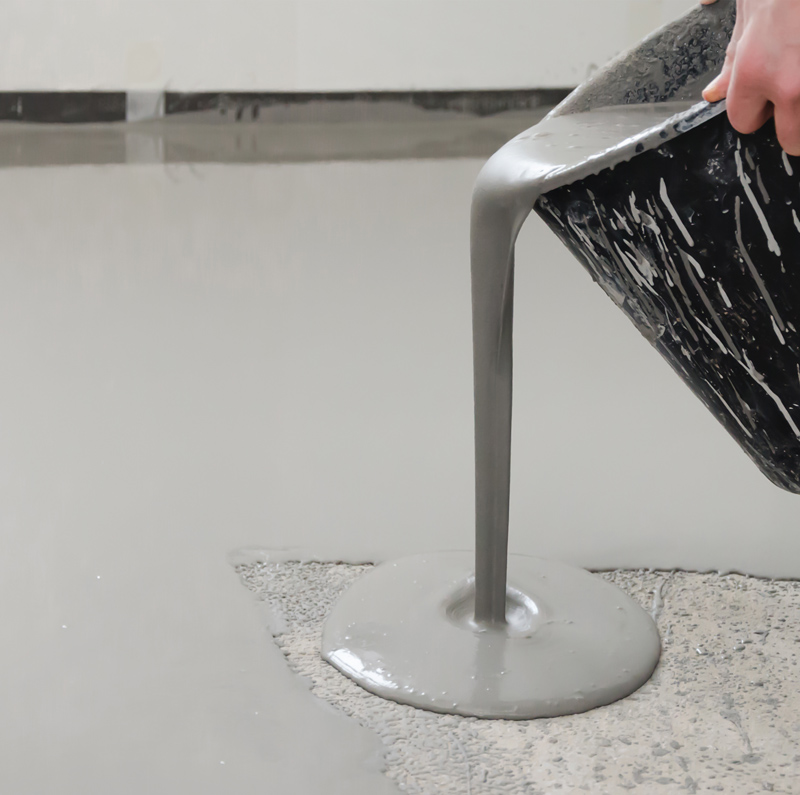
Self-leveling compound (SLC) is a dry-mix mortar that flows flat under its own weight. You pour it, it spreads, and it forms a smooth, level surface. No troweling needed.
It is the most formulation-sensitive product in dry-mix mortar. Tile adhesive has margin for error. SLC does not. Four binders must balance perfectly, or the whole system fails.
2. Standards and Codes
| Standard | Region | What It Covers |
| JC/T 985-2005 | China | Cement-based self-leveling mortar — flow, strength, bond, shrinkage |
| EN 13813 | Europe | Screed materials — classified by strength, flexural, wear, shrinkage |
| GB 50209-2010 | China | Floor construction quality — flatness, bond strength |
| GB/T 22374-2008 | China | Floor coating materials (resin toppings) |
Key requirements from JC/T 985-2005: initial flow ≥130 mm, 28-day compressive strength ≥20 MPa, flexural ≥4 MPa, bond ≥1.0 MPa, dimensional change ≤0.10%.
3. Types of Self-Leveling Compound
By Layer Thickness
| Type | Thickness | Function |
| Underlayment (SLC) | 3–12 mm | Flat base for floor coverings (vinyl, carpet, tile) |
| Topping / Wear Layer | 5–15 mm | Final wearing surface with abrasion resistance |
| Self-Leveling Screed (SLS) | 30–60 mm | Thick layer over insulation or underfloor heating |
Cement-Based vs Gypsum-Based
| Cement-Based | Gypsum-Based | |
| Binder | Portland + calcium aluminate + gypsum | α/β hemihydrate gypsum |
| Setting | Hydraulic (pH >12) | Crystallization (pH 6–8) |
| Shrinkage | Higher — needs compensation | Micro-expansion, inherently crack-resistant |
| Early strength | 4–8 h walk-on | 2–4 h walk-on (faster) |
| Water resistance | Good | Poor — needs hydrophobic agent |
| Standard | JC/T 985-2005 | JC/T 1023 |
4. The Binder System — Why It Is a Balancing Act
A single cement type cannot meet SLC's demands — fast setting, volume stability, controlled strength. The most common system is the ternary blend:
Portland cement + calcium aluminate cement (CAC) + gypsum.
These three react to form ettringite, the key to SLC:
Forms rapidly → fast setting and early strength
Holds lots of water (~46% by weight) → reduces free water, less shrinkage
Expands slightly → compensates cement shrinkage, prevents cracking
The ratio must be balanced. Typical: OPC 250–350 : CAC 50–100 : gypsum 30–50 kg/t.
Too much ettringite = expansion cracking. Too little = shrinkage cracking. This balance is why SLC is hard to get right.
Why the balance matters — shrinkage vs expansion.
Cement shrinks as it cures and dries. If nothing cancels it out, the floor cracks. Ettringite expands, which offsets that shrinkage. That is the whole reason the ternary system exists — to balance shrink against expand.
A simpler option.
You do not always need the full ternary system. A suitable expansive agent can also compensate the shrinkage — in self-leveling compound and in grout. This lets you run a much simpler formula.
The right expansive agent, and the right dosage, depends on your cement and your sand. So we do not go into that here — each company should test its own. Our role is to supply the additives (PCE, HPMC, RDP) that make whichever system you choose work.
5. The Six Key Additives
| Additive | Dosage (kg/t) | Role | CHARING Product |
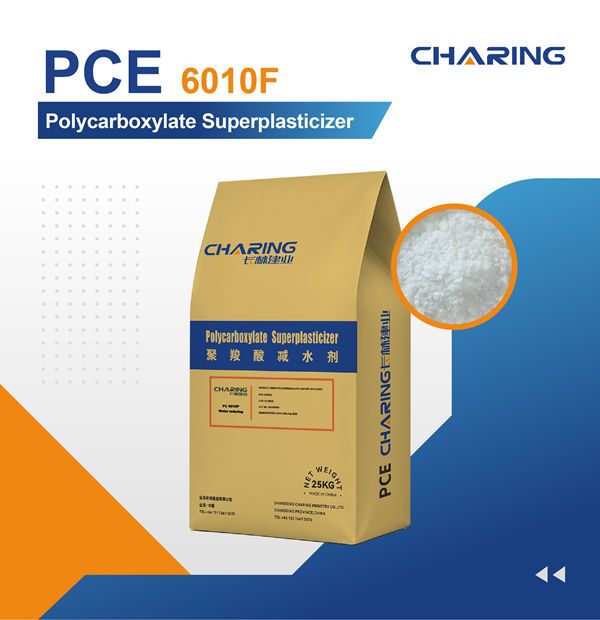
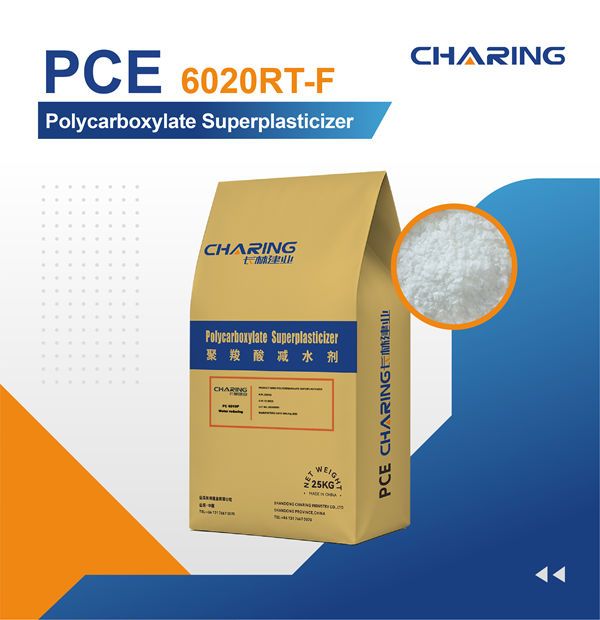
| PCE superplasticizer | 1.5–6.0 | Water reduction, flow — the #1 additive | PC 3010 |
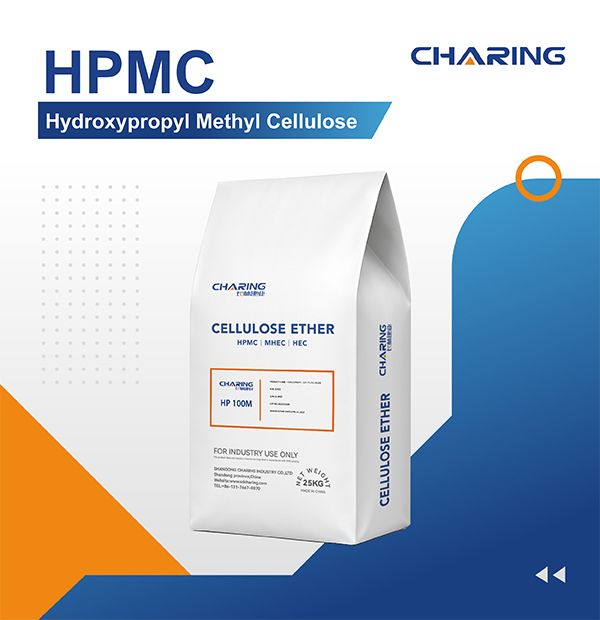
| HPMC (low viscosity) | 0.5–1.2 | Water retention, anti-segregation | HP 400 |
| RDP | 10–20 | Adhesion, flexibility, abrasion | RD 7015H |
| Defoamer | 0.2–1.0 | Remove air, pinhole-free surface | D802 |
| Set retarder | 0.5–2.0 | Control setting, open time | Tartaric acid |
| Early-strength agent | 5–10 | Fast walk-on | Calcium formate |
Why low-viscosity HPMC? SLC needs flow AND water retention. High-viscosity HPMC (100,000–200,000 mPa·s, used in tile adhesive) makes the mix too thick to self-level. Low-viscosity HP 400 (400 mPa·s) holds enough water without killing flow.
Why defoamer matters so much here? SLC is thin, so it traps air easily during mixing. Without defoamer, the surface is covered in pinholes — a defect that also weakens the surface. This is the most underrated additive in SLC.
6. Reference Formula — Cement-Based Underlayment (Ternary System)
| Component | Amount (kg/t) |
| Portland cement 42.5 | 250–350 |
| Calcium aluminate cement (CAC) | 50–100 |
| Anhydrite / hemihydrate gypsum | 30–50 |
| Quartz sand (0.1–0.5 mm) | 400–450 |
| Calcium carbonate (200–400 mesh) | 150–200 |
| PCE (PC 3010) | 1.5–6.0 |
| HPMC low-viscosity (HP 400) | 0.5–1.0 |
| RDP (RD 7015H) | 10–20 |
| Defoamer (D802) | 0.2–1.0 |
| Calcium formate | 5–10 |
| Lithium carbonate | 1–3 |
| Tartaric acid | 0.5–1.0 |
| PP fiber (6 mm) | 0.5–1.0 |
7. Performance Requirements (JC/T 985-2005)
| Property | Requirement | Typical Result |
| Initial flow | ≥130 mm | 135–145 mm |
| Flow after 20 min | ≥130 mm | 130–140 mm |
| Compressive strength (28 d) | ≥20 MPa | 25–35 MPa |
| Flexural strength (28 d) | ≥4 MPa | 6–8 MPa |
| Tensile bond strength | ≥1.0 MPa | 1.2–1.8 MPa |
| Dimensional change | ≤0.10% | 0.02–0.08% |
| Walk-on time | — | 4–5 hours |
8. CHARING Product Recommendations
| Function | Product | Dosage (kg/t) |
| Water reduction, flow | PCE PC 3010 | 1.5–6.0 |
| Water retention | HPMC HP 400 (400 mPa·s) | 0.5–1.0 |
| Adhesion, flexibility | RDP RD 7015H | 10–20 |
| Defoaming | Defoamer D802 | 0.2–1.0 |
| Set control | Tartaric acid | 0.5–1.0 |
| Early strength | Calcium formate | 5–10 |
| Ettringite acceleration | Lithium carbonate | 1–3 |
| Crack control | PP fiber | 0.5–1.0 |
9. Common Defects and Fixes
| Problem | Root Cause | Fix |
| Won't flow | PCE too low, or HPMC viscosity too high | Adjust PCE to 3 kg/t, use HP 400 |
| Bleeding / water on top | Too much water, no stabilizer | Cut water, add stabilizer 0.3–0.5 kg/t |
| Cracking | Binder ratio off, no expanding agent | Balance OPC:CAC:gypsum, add 0.3–0.7 kg/t expanding agent |
| Sets too slow | Retarder too high, CAC ratio off | Cut retarder, CAC to ~10% of binder |
| Low early strength | CAC too low | Add CAC 35–40 kg/t, check lithium carbonate |
| Pinholes | Trapped air, defoamer too low | Add defoamer 0.5–1.0 kg/t |
| Peels from floor | Substrate not primed | Prime the substrate, check moisture |
| Sand settles | No stabilizer | Add stabilizer or silica fume 3–10 kg/t |
10. Common Mistakes to Avoid
1. Using high-viscosity HPMC. SLC needs flow. High-viscosity HPMC (like tile adhesive grades) kills it. Always use HP 400 (400 mPa·s).
2. Skipping the defoamer. SLC traps air. No defoamer = pinhole-covered surface. It is the most underrated additive.
3. Wrong CAC-to-gypsum ratio. Too much gypsum = uncontrolled expansion. Too much CAC = flash set. Balance is everything.
4. Ignoring substrate prep. SLC peels off unprepared floors. Always prime first.
5. Fear of higher PCE. More PCE lets you cut water, which helps both flow and final strength. Do not be afraid to raise PCE.
For technical support, free samples, or help with your self-leveling formula:
Shandong Charing Industry Co., Ltd.
Email: info@sdcharing.com
Website: www.sdcharing.com

E-mail: sdcharing@sdcharing.com
Phone: +86 131 7667 0070
WhatsApp: +8615066133527
Add.: No.605-606,NO1 BUILDING,WANGYUE ZHIGU INDUSTRY PARK,NO.1919 WANGYUE ROAD, SHIZHONG AREA,JINAN CITY, SHANDONG PROVINCE,CHINA