- Home
- Products +
- Industries +
- About Us +
- News
- Contact Us

- Home
- Products
- Industries
- About Us
- News
- Contact Us

CHARING manufactures HPMC, RDP, and PCE for dry-mix mortar and concrete — supplying high quality products across Southeast Asia, the Middle East, South America and Africa for over a decade. We share what we know.
1. What Is Tile Adhesive?
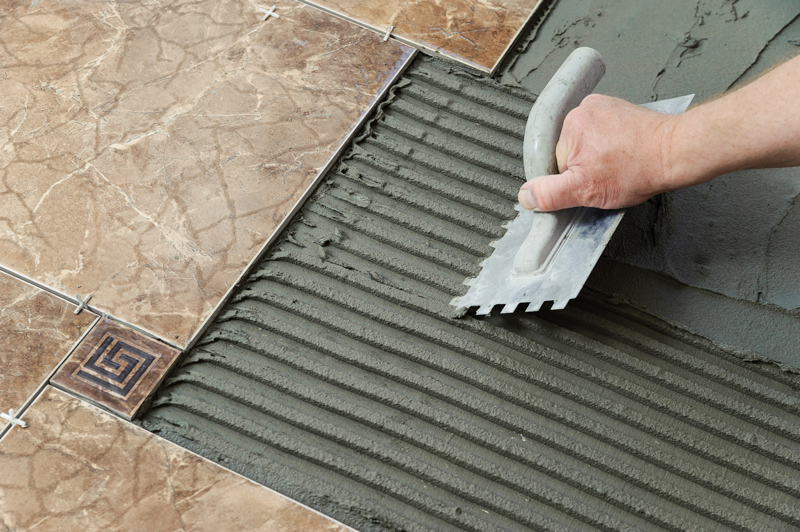
Tile adhesive is a dry-mix powder. Cement, sand, mineral filler, plus chemical additives. Mix with water on site. It bonds tiles to walls or floors.
Modern tile adhesive is not just "cement + sand." It contains cellulose ether (HPMC) for water retention, redispersible polymer powder (RDP) for adhesion and flexibility, starch ether for slip resistance, and optional defoamer and hydrophobic agent. The formula determines the grade.
2. Standards and Codes
| Standard | Region | What It Covers |
| JC/T 547-2017 | China | Ceramic tile adhesive — classification and requirements |
| EN 12004 / ISO 13007 | Europe / Global | Tile adhesives — same classification system as JC/T 547 |
| JGJ 110-2008 | China | Inspection standard for bond strength of facing brick |
| JGJ 126-2000 | China | Construction and acceptance of exterior wall facing brick |
| ANSI A118.4 / A118.15 | USA | American standard for modified cementitious tile adhesive |
JC/T 547 and EN 12004 use the same classification: C1 (normal), C2 (improved), with optional letters F (fast), T (slip-resistant), E (extended open time), S1/S2 (flexible). One system covers the world.
3. Grade System — C1, C2, S1, S2, T, E, F Explained
| Code | Meaning | Test Requirement |
| C1 | Normal adhesive | Tensile adhesion ≥ 0.5 MPa |
| C2 | Improved adhesive | Tensile adhesion ≥ 1.0 MPa (twice C1) |
| F | Fast setting | 6-hour tensile ≥ 0.5 MPa |
| T | Slip resistant | Slip ≤ 0.5 mm |
| E | Extended open time | Open time ≥ 30 min |
| S1 | Flexible | Transverse deformation ≥ 2.5 mm |
| S2 | Highly flexible | Transverse deformation ≥ 5.0 mm |
Any grade can combine: C2TE, C2TES1, C2TES2, etc.
4. Performance Requirements
Every grade must pass four conditioning tests:
| Test | Condition | Performance Drop |
| Standard cure | 28 days at 23°C / 50% RH | Baseline |
| Water immersion | 21 days at 23°C | Adhesion drops 30–40% |
| Heat ageing | 70°C for 14 days | Adhesion drops 10–20% |
| Freeze-thaw | 25 cycles (−15°C air / water) | Adhesion drops 40–50% |
Key rule: To reliably pass all four tests, your dry tensile adhesion should be at least 1.0 MPa for C1 and 1.8 MPa for C2T. Cut RDP below the minimum, and you fail the freeze-thaw test in cold climates.
5. Reference Formulas
C1 — Standard Tile Adhesive
| Material | Amount (kg/t) |
| Cement 42.5 | 350–400 |
| Sand 40–70 mesh | 400–500 |
| Sand 70–140 mesh | 80–120 |
| Calcium carbonate | 20–40 |
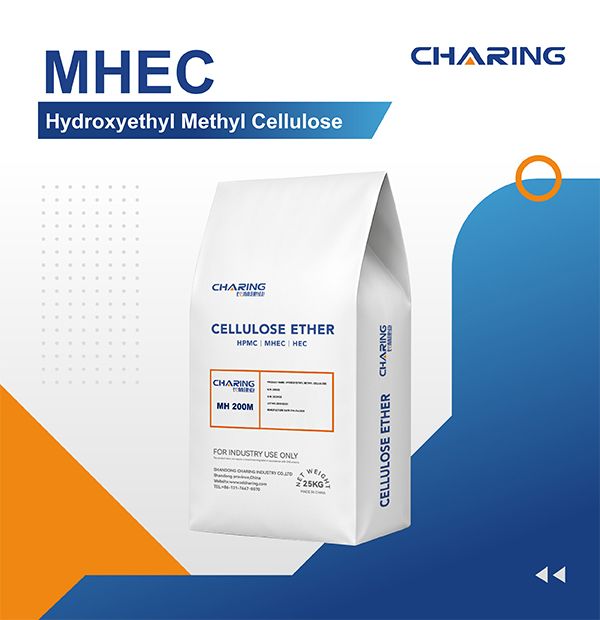
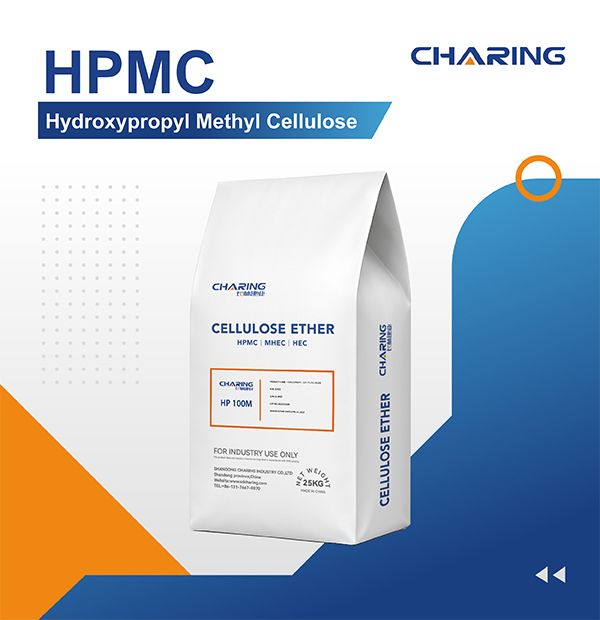
| HPMC (HP 100M or HK 100M) | 2–3 |
| Starch ether (HPS) | 0.3–0.8 |
| RDP (RD 7015H / RD 7003M) | 12–18 |
Water: 23–25%
C2S1 — Flexible, for Porcelain
| Material | Amount (kg/t) |
| Cement 42.5 | 350–400 |
| Sand 40–70 mesh | 380–450 |
| Sand 70–140 mesh | 100–150 |
| Silica fume | 15–40 |
| HPMC (HP 60M) | 2–3 |
| Starch ether (HPS) | 0.5–1.0 |
| RDP (RD 8080F, Tg −8°C) | 30–40 |
Water: 23–24%
C0 — Basic (Thick-Bed, Small Tiles)
| Material | Amount (kg/t) |
| Cement 42.5 | 250–400 |
| Sand 40–70 mesh | 400–500 |
| Sand 70–140 mesh | 80–120 |
| Calcium carbonate | 30–100 |
| HPMC (HP 100M) | 2–3 |
| RDP (RD 7015H) | 5–10 |
Water: 23–25%
C2TES1 — Large-Format Tiles (≥ 1200 mm)
| Material | Amount (kg/t) |
| Cement 42.5 | 350–400 |
| RDP (RD 8080F) | 45–55 (raised from C2S1) |
| Sand 70–140 mesh | 150–220 (more fines = longer open time) |
| Cellulose fiber | 2.0–4.0 |
6. CHARING Product Recommendations
| Function | Product | C0 | C1 | C2 |
| Water retention, temperate | HP 100M | 2–3 | 2–3 | — |
| Water retention, tropical | HP 200M | 2–3 | 2–3 | — |
| Water retention, cold | HP 60M / HP 40M | 2–3 | 2–3 | — |
| Water retention, C2 temperate | HP 60M | — | — | 2–3 |
| Water retention, C2 tropical | HK 100M | — | — | 2–3 |
| Economy alternative (hot climates) | HK 100M | 2–3 | 2–3 | — |
| Anti-slip | HPS starch ether | — | 0.5–0.8 | 0.5–1.0 |
| Adhesion, C0/C1 | RD 7015H / RD 7003M | 5–10 | 12–18 | — |
| Adhesion + flexibility, C2 | RD 8080F (Tg −8°C) | — | — | 30–40 |
| Waterproof C2 | RD W8050 (Tg −11°C) | — | — | 30–50 |
| Workability (optional) | PC 3010 / PC 2018 | — | 0.3–0.8 | 0.5–1.0 |
| Early strength (optional) | Calcium formate | 3–8 | 3–5 | 3–8 |
| Water resistance (optional) | Hydrophobic agent S500 | 1–3 | 1–3 | 1–3 |
| Surface quality (optional) | Defoamer D802 | — | — | 0.5–1.5 |
7. Selection Guide by Application
| Tile Type | Recommended Grade | HPMC | RDP |
| Small ceramic tile (≤ 600 mm), indoor, C0/C1 | C1 | HP 100M | RD 7015H / 7003M |
| Porcelain wall tile (≥ 800 mm), C2 | C2 / C2S1 | HP 60M | RD 8080F |
| Large-format porcelain (≥ 1200 mm) | C2TES1 | HP 60M | RD 8080F 45–55 kg/t |
| Tropical climate (≥ 35°C) | C1 or C2 + HK 100M | HK 100M | same as above |
| Cold climate (< 10°C) | C1 + calcium formate | HP 60M | RD 7003M |
| Gypsum board / drywall | C1 | HP 100M | RD 7015H |
8. Common Mistakes to Avoid
1. Using C1 on porcelain wall tiles over 600 mm. C1 cannot bond to dense, non-porous surfaces. Upgrade to C2 — there is no shortcut.
2. Cutting RDP to save cost. Below 12 kg/t in C1, the freeze-thaw test fails. Below 25 kg/t in C2, the 1.0 MPa requirement cannot be met. RDP is not optional.
3. Adding calcium carbonate to C2. It is an inert filler — no strength, no water resistance. C2 should be cement + sand + silica fume only. Calcium carbonate dilutes the polymer matrix.
4. Wrong HPMC grade for the climate. Standard HPMC (55–60°C gel temperature) loses water retention on substrates above 50°C. Use HK series (65–70°C) for tropical regions, MH series (70–75°C) for extreme heat.
5. Skipping HPMC because "it is just thickener." HPMC holds water. Without it, cement does not finish hydrating, and adhesion drops by half. Use 2–3 kg/t for all grades.
For technical support, free COA samples, or help with your tile adhesive formula:
Shandong Charing Industry Co., Ltd.
Email: info@sdcharing.com
Website: www.sdcharing.com

E-mail: sdcharing@sdcharing.com
Phone: +86 131 7667 0070
WhatsApp: +8615066133527
Add.: No.605-606,NO1 BUILDING,WANGYUE ZHIGU INDUSTRY PARK,NO.1919 WANGYUE ROAD, SHIZHONG AREA,JINAN CITY, SHANDONG PROVINCE,CHINA