- Home
- Products +
- Industries +
- About Us +
- News
- Contact Us



- Home
- Products
- Industries
- About Us
- News
- Contact Us

Jan. 15, 2025
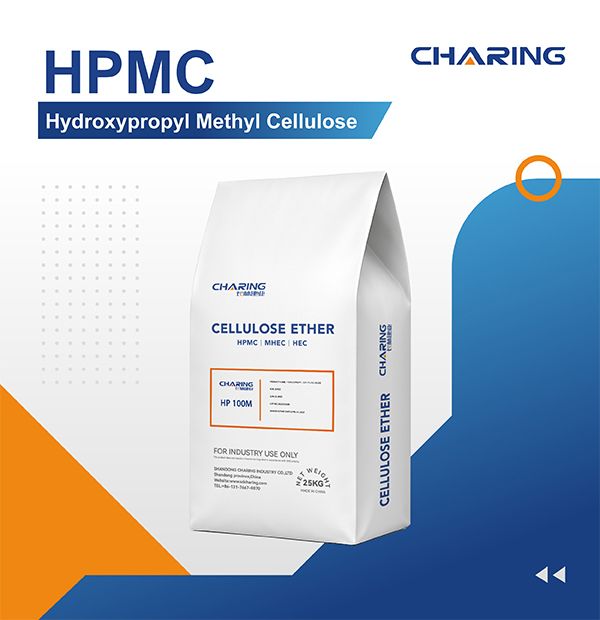
HPMC (Hydroxypropyl Methylcellulose) is a water-soluble polymer derived from natural cellulose through chemical modification. It is one of the most critical additives in dry-mix mortars, putties, tile adhesives, self-leveling compounds, and other dry building powder materials. Although the addition rate is typically only 0.1%–0.5% of the total mortar weight, it plays a decisive role in the overall performance of the mortar—"a small dose with a huge impact."
一. The Effects of HPMC on Mortar
The core functions of HPMC in mortar can be summarized in four words: water retention, thickening, lubrication, and film-forming. However, its influence goes far beyond these. The following is a detailed breakdown from seven key dimensions:
1. Water Retention
This is the most essential function of HPMC. It significantly improves the water retention rate of mortar (achieving over 90%), preventing moisture from being rapidly absorbed by the substrate or evaporated. This ensures that the cement has sufficient water for thorough hydration, preventing premature drying and loss of strength due to water loss.
2. Improved Workability
HPMC imparts excellent thixotropy and a lubricious feel to the mortar, making plastering and troweling smooth and effortless, greatly enhancing worker efficiency and experience. The mortar does not feel dry or stick to the trowel when applied to walls, offering a broader working window.
3. Enhanced Adhesive Strength
Through its water-retention and film-forming actions, HPMC improves the interfacial bonding between the mortar and the substrate (brick walls, concrete, insulation boards, etc.). Adequate water retention allows for more complete cement hydration, resulting in higher interface strength and effectively reducing the risk of hollowing and detachment.
4. Anti-Sagging Performance
The thickening effect of HPMC endows the mortar with excellent resistance to sagging/dripping. During wall plastering, thick-layer construction, or tile installation on vertical surfaces, the mortar does not slide down due to gravity, ensuring uniform thickness and construction safety on vertical faces.
5. Extended Open Time
HPMC delays surface moisture evaporation, extending the "open time"—the effective time window during which the mortar remains adjustable and workable after application. This is particularly critical for tile adhesives, as it prevents hollow tiling issues caused by insufficient open time.
6. Lubrication and Pumpability
HPMC acts as a lubricant between mortar particles, reducing internal friction. For mortars used in mechanized spray application, it significantly improves pumpability, reduces pipe clogging, and ensures smoother, more uniform material output during spraying.
7. Reduced Shrinkage Cracking
Because its water-retention capability minimizes early rapid moisture loss, drying shrinkage is noticeably reduced, effectively inhibiting shrinkage cracks. This is of great significance for large-area plastering and leveling layers in terms of crack resistance.
8. Regulation of Setting Time
HPMC has a moderate retarding effect on cement hydration, appropriately extending both the initial and final setting times. This is particularly beneficial during high-temperature construction, as it prevents the mortar from "flash-setting" due to excessive heat and ensures workability.
Key Insight
Although added in very small amounts (typically 0.1%–0.5%), HPMC is almost irreplaceable as the "soul additive" in mortar. It does not enhance mortar strength through its own mechanical properties, but rather by regulating water behavior and rheological performance, allowing the main materials—cement and aggregates—to achieve their optimal effects.
二. Characteristics of High-Quality HPMC
The HPMC market is highly varied, with huge price differences. The performance of high-quality HPMC versus inferior products in mortar is worlds apart. The following eight core indicators will help you identify and select the right product:
| Core Indicator | Characteristics of High-Quality HPMC | Why It Matters |
| Stable Viscosity | The labeled viscosity matches the measured viscosity; batch-to-batch viscosity fluctuation ≤ ±5%, with excellent batch-to-batch reproducibility. | Viscosity directly determines the mortar's workability and anti-sagging performance. Unstable batches lead to inconsistent results for the same formulation, severely compromising quality control. |
| High Water Retention | Water retention rate ≥ 90% (some premium grades reach 95%+), and the product maintains good water-retention performance even under high-temperature conditions. | Water retention is HPMC's most essential function. Low water retention leads to insufficient cement hydration, rapid moisture loss after mortar application, and subsequent hollowing and cracking. |
| High Purity | Active cellulose content ≥ 95%; ash content (residue on ignition) ≤ 5%; no obvious impurities. | Low-purity HPMC is often adulterated with large amounts of cheap fillers (e.g., starch, dextrin). While the dosage may appear economical, actual performance is significantly compromised. |
| Uniform Fineness | Powder fineness typically 80–100 mesh; uniform particle size distribution; no agglomerates or coarse particles. | Fineness directly affects the dispersion and dissolution rate of HPMC in dry-mix mortars. Non-uniform particles lead to poor dissolution and the formation of "fish-eye" lumps. |
| Rapid Dispersion | Disperses quickly in water without agglomerating; good solubility in cold water; no gel particle residues. | Poorly dispersible products form hard-to-dissolve gel clumps during mixing, resulting in localized concentration unevenness in the mortar and compromising overall performance. |
| Gel Temperature | Appropriate gel temperature (typically 60–85°C); maintains effective water retention and thickening functions even during high-temperature summer construction. | Once HPMC reaches its gel temperature, it transitions from a solution state to a gel state and loses its water-retention capability. Products with too low a gel temperature will fail under hot conditions. |
| High Light Transmittance | High light transmittance (≥ 80%) when prepared as an aqueous solution; the solution is clear and transparent without turbidity. | Light transmittance is a direct visual indicator of purity. Turbid solutions usually indicate insoluble impurities or unreacted raw materials, signaling unreliable quality. |
| Environmentally Safe | Low VOC, no unpleasant odor; complies with environmental standards; free from harmful residues (e.g., free formaldehyde, etc.). | Mortars used in interior decoration are subject to strict environmental requirements. Excessive harmful substances not only affect construction workers' health but can also lead to indoor air quality issues. |

E-mail: sdcharing@sdcharing.com
Phone: +86 131 7667 0070
WhatsApp: 8615066133527
Add.: No.605-606,NO1 BUILDING,WANGYUE ZHIGU INDUSTRY PARK,NO.1919 WANGYUE ROAD, SHIZHONG AREA,JINAN CITY, SHANDONG PROVINCE,CHINA