- Home
- Products +
- Industries +
- About Us +
- News
- Contact Us



- Home
- Products
- Industries
- About Us
- News
- Contact Us

Jul. 08, 2026
Waterproofing mortar is indeed a systematic engineering effort, not something that can be achieved by a single "water repellent" alone. It is more like a sophisticated collaborative network, requiring each component to work together from multiple dimensions—"blocking pathways," "strengthening the matrix," and "building defenses."
The specific roles of the main additives are as follows:
Foundation and Skeleton: Cement and Silica Fume
Sufficient cement: Provides an alkaline hydration environment and the basic strength framework. If cement content is insufficient, the mortar itself will have high porosity and low strength, making any waterproofing measures a "castle in the air." An adequate amount of cement ensures that hydration products (such as C-S-H gel) fill the internal spaces.
Sand (Aggregate) – Dimensional Stability and Crack-Resistant Skeleton
Sand is the physical skeleton of mortar. Its core role is not in chemical waterproofing, but in controlling deformation and inhibiting cracking.
Gradation and Particle Size: A reasonable mix of coarse and fine sand (i.e., "gradation") minimizes gaps between particles, allowing the cement paste to better envelop and fill them. Fewer voids mean fewer that need to be filled by cement paste, resulting in a denser intrinsic structure—this is the most basic physical waterproofing.
Rigid Support: Cement shrinks during hydration, and materials expand and contract with temperature changes. As a rigid aggregate, sand effectively restrains the volume change of the cement stone, preventing the formation of shrinkage cracks. If there is too little sand or if it is too fine, the mortar becomes highly prone to cracking; once cracks appear, the waterproof layer fails completely.
Silica Fume (Microsilica,Microsilica powder) – As a pore structure optimizer, it plays two core roles:
Pozzolanic Effect: It reacts with calcium hydroxide produced during cement hydration to generate additional C-S-H gel, further filling pores.
Microfiller Effect: Its particle size is much smaller than that of cement particles, allowing it to fill the tiny gaps between cement particles—much like using fine sand to fill the spaces between stones. This significantly refines the pore structure and increases density, forming the foundation of physical waterproofing.
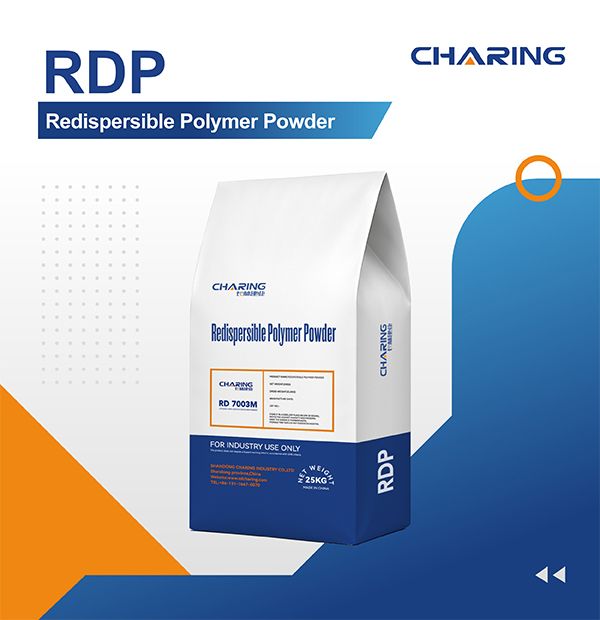
Structure and Adhesion: Redispersible Polymer Powder(RDP)
The polymer powder acts as an organic binder and flexibilizer in the system, forming a flexible polymer network within the mortar:
Physical Film Formation: During cement hydration, the polymer particles aggregate and form films at capillary pores and cracks. This not only blocks water infiltration pathways but also imparts flexibility to the brittle cement stone, helping it resist microcracks caused by temperature and humidity changes.
Chemical Bridging: Active groups in the polymer molecules undergo crosslinking reactions with cement hydration products, enhancing the bond strength between the mortar and the substrate, making the waterproof layer more robust.
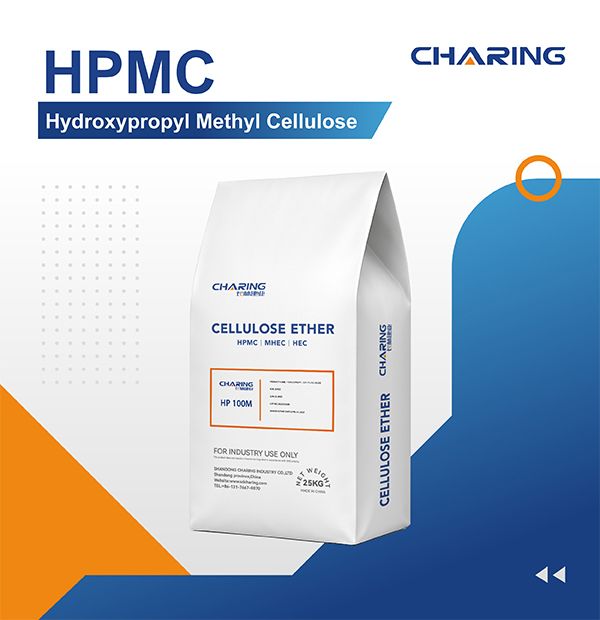
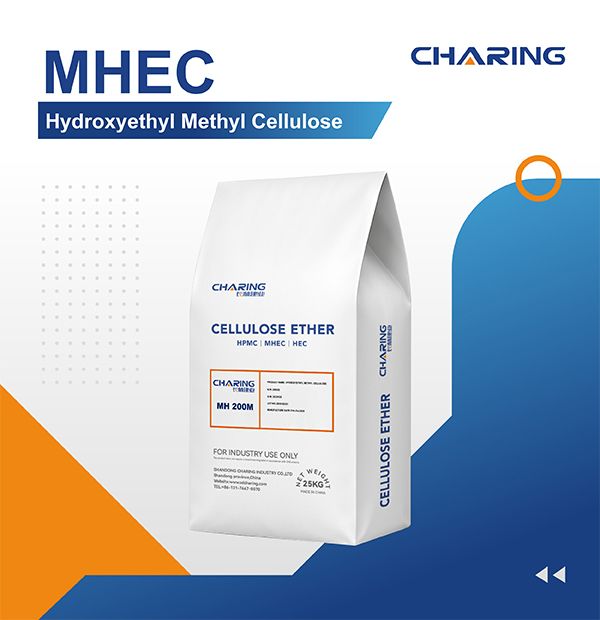
Process and Quality: Cellulose Ether(HPMC,MEHC)
Cellulose ether is the guarantor of construction quality, with its core functions being "water retention" and "thickening":
Water Retention and Thickening: It significantly improves the water-retention capacity of fresh mortar, preventing water from being absorbed too quickly by the substrate or evaporating. This ensures that the cement has sufficient time to hydrate fully, avoiding cracking and dusting caused by insufficient hydration.
Providing a Working Window: By retarding the setting time of cement, it provides adequate working time for construction, ensuring that the waterproof layer can be applied evenly and compactly.
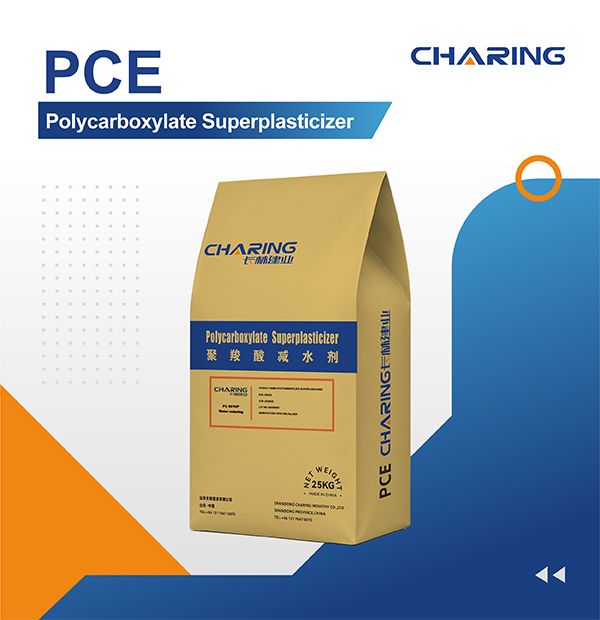
Water Reducer(Polycarboxylate Superplasticizer )– A "Multiplier" for Density
This is the core technology in modern high-performance waterproof mortars. Its role is to "wet" and "disperse."
Reducing Water Demand: Cement particles tend to aggregate during mixing, requiring a large amount of water for lubrication to achieve flowability. Water reducers "push" cement particles apart through electrostatic repulsion or steric hindrance, allowing the mortar to achieve the required workability with less water.
Reducing Capillary Pores: With less water, the number of capillary channels left behind by evaporation of excess water after hydration is greatly reduced. By lowering the water-to-cement ratio, water reducers fundamentally reduce "water infiltration pathways"—this is the prerequisite for the physical filling performed by silica fume and cement.
Enhancing Density: A lower water-to-cement ratio directly leads to higher compressive strength and lower permeability. This increase in density is the foundation on which water repellents and polymer powders rely—the denser the matrix itself, the more effective the surface hydrophobic coating.
Defoamer (Defoamer Powder,Anti-foaming agent)– A "Cleaner" for Density (Essential)
Your understanding is entirely correct. During mixing, due to the presence of surfactants such as water reducers and polymer powders, the mortar inevitably entrains a large number of tiny air bubbles.
Mechanism of Action: Defoamers (usually silicone-based or mineral-oil-based) reduce the surface tension of bubbles, causing the bubble films to rupture and releasing the trapped air.
Core Value: Eliminating harmful large bubbles. It is important to distinguish here: tiny, uniformly distributed bubbles introduced by air-entraining agents are beneficial (they improve freeze-thaw resistance), but the irregular large bubbles introduced during mixing are "water infiltration pathways" and "stress concentration points."
Synergistic Effect: Without a defoamer, even if you add sufficient water reducer and silica fume, these "voids" will become weak points in waterproofing. The role of the defoamer is to ensure that the "pore-filling" achievements of the water reducer and silica fume are not compromised by bubbles, allowing the mortar to achieve the maximum density required by the design.
Surface and Final Stage: Silane Powder(Silicone Hydrophobic Agent Powder,Hydrophobic agent)
This is the "waterproofing agent" you are most familiar with, acting as the surface water-repelling layer:
Common Types: Silicone-based (e.g., silanes, siloxanes) or fatty acid salts.
Mechanism of Action: They react with active components in the mortar to form a hydrophobic film or network on the capillary pore walls and the material surface. This film significantly reduces the surface energy of the mortar, making it difficult for water droplets to wet and penetrate, thereby greatly lowering water absorption—achieving the "lotus effect."
Early Strength Agent – An "Accelerator" for Construction Schedules (Used as Needed)
Early strength agents are primarily used to meet tight construction schedules or for low-temperature construction.
Mechanism of Action: They accelerate the hydration rate of cement clinker (especially tricalcium silicate, C₃S), promoting the rapid formation of early hydration products such as ettringite. This allows the mortar to quickly reach demolding or load-bearing strength within 24 hours.
Core Value: At low temperatures (5°C–10°C), cement hydration is inherently slow. Without an early strength agent, the waterproof layer may be damaged by rainwater before it hardens. Early strength agents help the mortar rapidly establish initial strength under harsh conditions, protecting the waterproof layer as it forms.
Synergy and Risks: Early strength agents typically increase the drying shrinkage of mortar. Therefore, the formulation must simultaneously increase the amount of polymer powder to compensate for flexibility. Otherwise, while early strength is achieved, the risk of cracking also increases (i.e., "early strength, easy cracking").
Bentonite – A "Leak Stopper" for Special Conditions (Used as Needed)
Bentonite (especially sodium bentonite) is not a routine component in waterproofing mortars, but it is widely used in underground engineering, back-side waterproofing, or self-healing waterproofing.
Mechanism of Action: Bentonite expands upon contact with water, increasing its volume by several to more than ten times, forming a viscous gel.
Core Value – Self-Healing: If the waterproof layer develops fine cracks (<0.4 mm) later due to foundation settlement, water seeping into the cracks triggers bentonite expansion, which acts like a "band-aid" to seal the cracks on its own—an active repair capability that neither polymer powder nor water repellents possess.
Synergistic Effect: A Closed-Loop System
These components do not work in isolation; they form a complete closed loop:
Cement and silica fume build a relatively dense matrix through hydration reactions and physical filling.
Cellulose ether provides the necessary time and moisture environment for this building process, ensuring matrix quality.
The polymer powder forms a flexible polymer network within the matrix, on one hand blocking potential cracks and channels, and on the other hand enhancing the overall structural integrity.
The water repellent establishes a hydrophobic barrier on the already dense internal structure and surface, providing the final interception against water molecules.
Synergy and Constraints: Bentonite is a thickener that significantly increases mortar viscosity and water demand. Therefore, when bentonite is added, the formulation must simultaneously increase the dosage of water reducer to adjust workability. Additionally, bentonite consumes some water, so the water-retention rate of cellulose ether needs to be increased accordingly to compensate.
A Complete "All-In-One" Formulation Logic
In summary, the complete logical chain of this waterproofing mortar is:
Material Selection and Foundation Building: Use well-graded sand as the skeleton to ensure dimensional stability.
Water Reduction and Density Increase: Add water reducer to greatly reduce water demand while maintaining workability, fundamentally reducing capillary pores.
Filling and Plugging: Silica fume enters the nanoscale pores that cement and sand cannot reach, carrying out secondary filling.
Water Retention and Curing: Cellulose ether locks in moisture, ensuring that cement can fully hydrate even at a low water-to-cement ratio, without dusting due to water deficiency.
Flexibility and Crack Resistance: Polymer powder forms a flexible network, imparting crack resistance and deformation capacity to the mortar to cope with structural micro-movements.
Film Formation and Water Repellency: Finally, the water repellent, on the basis that all internal pathways have already been sealed, forms a "lotus-effect" water-repellent film on the surface and pore walls, achieving the ultimate barrier.
Complete Closed Loop: A "Toolkit" for On-Demand Use
At this point, a complete and flexibly adjustable waterproofing mortar system has been fully presented. Depending on your actual needs (whether it is for ordinary indoor waterproofing or deep underground foundation waterproofing; whether it is for fast-drying summer construction or winter construction), you can flexibly select from the following toolkit as needed.
| Function Module | Core Component | Core Function | Usage Prerequisite |
| Foundation Skeleton | Graded Sand | Crack resistance, dimensional stability | Mandatory |
| Water Reduction & Densification | Water Reducer + Silica Fume + Defoamer | Lower water-cement ratio, nano-filling, eliminate bubble voids | Mandatory (high-performance system) |
| Water Retention & Workability | Cellulose Ether(HPMC,MHEC) | Water retention, thickening, providing construction working window | Mandatory |
| Flexibility & Adhesion | Redispersible Polymer Powder | Crack resistance, toughening, bonding to substrate | Mandatory (flexible waterproofing) |
| Surface Water Repellency | Water Repellent (Silicone-based) | Reduce surface energy, lotus effect | Mandatory (surface-layer waterproofing) |
| Schedule Acceleration | Early Strength Agent | Low-temperature early strength, rapid hardening | On-demand (winter / tight schedule) |
| Self-Healing Repair | Bentonite | Swells upon water contact, seals micro-cracks | On-demand (underground / back-side waterproofing) |

E-mail: sdcharing@sdcharing.com
Phone: +86 131 7667 0070
WhatsApp: 8615066133527
Add.: No.605-606,NO1 BUILDING,WANGYUE ZHIGU INDUSTRY PARK,NO.1919 WANGYUE ROAD, SHIZHONG AREA,JINAN CITY, SHANDONG PROVINCE,CHINA