- Home
- Products +
- Industries +
- About Us +
- News
- Contact Us



- Home
- Products
- Industries
- About Us
- News
- Contact Us
Jul. 31, 2026
External Thermal Insulation Composite Systems (ETICS) — also called EIFS in North America — are one of the most demanding applications for dry-mix mortar additives. We have seen this quite a lot: a customer sends us a formulation, says “our base coat cracks” or “the boards are falling off”, and when we check the additives — wrong RDP type, wrong viscosity, no hydrophobic agent. Three mistakes, very easy to make, very expensive to fix.
This guide is what we learned from working with ETICS formulators. Some data comes from international industry research we have studied over the years, some from our own lab work. The goal is simple: help you get the right additives in the right layer, the first time.
1. The ETICS Structure — Three Layers, Three Different Jobs
Before choosing additives, you need to understand what each layer actually does. ETICS is not one mortar — it is three different mortars, each with different technical requirements.
1.Adhesive Mortar → bonds insulation board to the wall
2.Insulation Board → EPS / Mineral Wool
3.Base Coat (Reinforcing Mortar) → covers the board + embeds glass fiber mesh
4. Primer + Finish Coat → decorative + weather protection
1.1 Adhesive Mortar — The “Glue” Layer
| Requirement | Why It Matters |
| Bond strength to EPS board | ≥0.10 MPa — the board must not separate from the wall under wind load |
| Bond strength to concrete substrate | ≥0.60 MPa — the whole system hangs on this bond |
| Open time | ≥2 hours — workers need time to place and adjust the boards |
| Sag resistance | Boards must not slide down before the mortar sets |
The adhesive mortar is the easy one in some ways — but if it fails, the entire system fails.
1.2 Base Coat — The “Armor” Layer
This is the technically challenging layer. It must:
1.Bond to the EPS board
2.Embed and protect the glass fiber mesh from alkaline attack
3.Resist impact (3 J for standard, 10 J for reinforced)
4.Absorb very little water (≤500 g/m² per industry standard)
5.Allow water vapor to pass through (the wall must “breathe”)
6.Resist cracking under thermal stress (a dark facade in summer can reach 70°C)
Five of these six requirements depend directly on the additives you choose. The cement and sand alone cannot deliver this.
1.3 Finish Coat — The “Skin”
The finish coat is typically a ready-mixed textured render or paint. While not in this guide’s scope, the compatibility between base coat and finish coat is critical — especially the base coat’s water absorption directly affects the finish’s adhesion.
2. HPMC Selection for ETICS — Viscosity, Modification, and Climate
2.1 The Right Viscosity Range
ETICS mortars need medium-to-high viscosity HPMC — but not blindly high. Here is what works in practice:
| Application | Recommended Viscosity (2%, 20°C) | CHARING Product | Why |
| Adhesive mortar | 40,000–75,000 mPa·s | HP 50M, HP 75M | Sag resistance + open time balance. Too high viscosity makes the mortar “sticky” and hard to spread. |
| Base coat (standard) | 40,000–100,000 mPa·s | HP 50M, HP 100M | Water retention for thin-layer application + workability. |
| Base coat (premium / hot climate) | 100,000–150,000 mPa·s | HP 150M | Extended open time for large panel areas in hot weather. |
Dosage range: 1.5–3.0 kg per ton (0.15–0.3%).
2.2 Surface-Treated vs Non-Treated
Always use glyoxal-treated (cold-water dispersible) grades for ETICS. The mixing time on site is short — 3 to 5 minutes. Untreated HPMC will form lumps (“fish eyes”) that never dissolve, creating weak spots in a 3 mm base coat. Not acceptable.
2.3 Gel Temperature — ETICS is Not a Summer-Only Application
We discussed gel temperature in detail in our HPMC Supplier Evaluation Guide. For ETICS, here is the practical summary:
| Climate | Recommended Gel Temp | CHARING Series | Rationale |
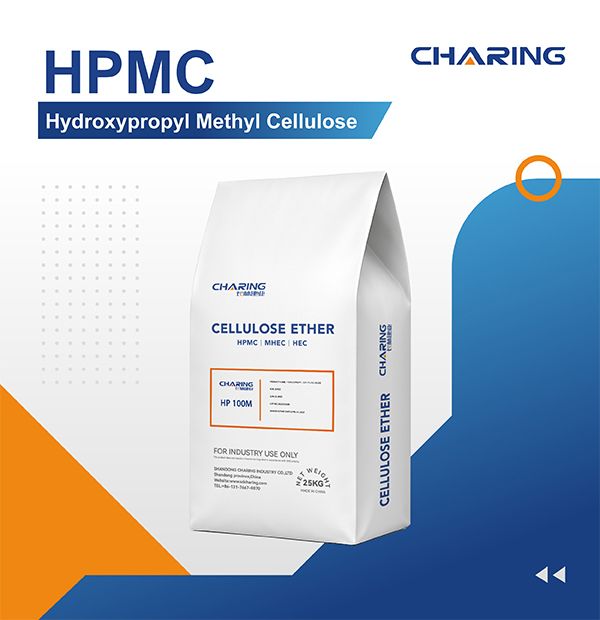
| Temperate / cold regions | 55–64°C (Type 60RT) | HP Series | CHARING HP Series (methoxy 23–25%) provides excellent surface wetting and long open time in normal temperatures. The workhorse. |
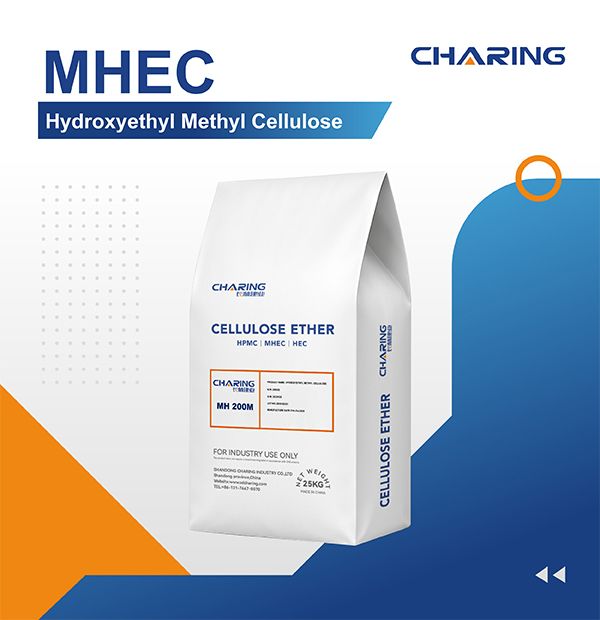
| Hot climate / dark facades | 70–90°C | MH Series (MHEC) | A black south-facing ETICS facade in the Middle East can reach 70°C+. Regular HPMC will gel and lose water retention. Use MHEC. |
| Transitional (warm temperate) | 62–68°C (Type 65RT) | HK Series | Use only if HP Series open time is insufficient for your climate. |
A real story: One customer in Saudi Arabia used HP Series (60RT) for their ETICS base coat. In winter, it was fine. In July — the black finish coat absorbed heat, the base coat temperature exceeded 65°C, the HPMC gelled, and the surface skinned in 10 minutes. Workers couldn’t finish a panel. We switched them to MH Series (MH 100M, MHEC), problem solved. Same formulation, right HPMC type — that’s the difference.
3. RDP Selection — The Four-System Reality
This is the section most formulators agonize over — and for good reason. The RDP is the most expensive additive in ETICS, and the wrong choice costs both money and performance.
3.1 The Four RDP Options — Tested and Compared
Based on extensive industry testing (standard test formulation: 28% OPC, 0.2% HPMC, 3% RDP, quartz sand balance), here is how four common RDP approaches compare:
| System | RDP Type | CharING Equivalent | Key Characteristics |
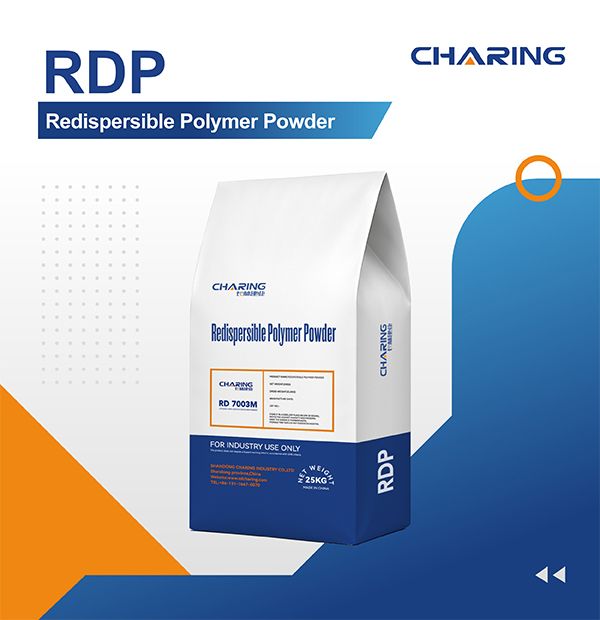
| A: EVA (standard) | VA/E copolymer, 3% | RD 7015H | Best adhesion + impact resistance. Weakness: high water absorption |
| B: EVA + Silane | VA/E 2.5% + SEAL80 0.3% | RD 7015H + Hydrophobic Powder | Best overall balance — good adhesion + very low water absorption |
| C: VA-VeoVa | VA/VeoVa copolymer, 3% | Special grade | Moderate all-around. More expensive. Used where UV/weather resistance matters |
| D: Hydrophobic RDP | Hydrophobic VA/E, 3% | Special grade | Low water absorption but poor adhesion and impact resistance |
3.2 Bond Strength to EPS Board
| System | Dry Bond (14d) | Wet Bond (14d+2d water+1d) | Wet Bond (7d+7d water) |
| A: 3% EVA | 0.14–0.16 MPa | 0.12–0.14 MPa | 0.10–0.12 MPa |
| B: EVA + Silane | 0.13–0.15 MPa | 0.11–0.13 MPa | 0.10–0.11 MPa |
| C: VA-VeoVa | 0.10–0.12 MPa | 0.08–0.10 MPa | 0.07–0.09 MPa |
| D: Hydrophobic RDP | 0.08–0.10 MPa | 0.07–0.09 MPa | 0.06–0.08 MPa |
Standard requirement: ≥0.10 MPa. System D (hydrophobic RDP alone) barely passes dry and fails wet. Do not use it alone for ETICS base coat.
3.3 Impact Resistance
| System | Impact Resistance (J) | Meets Standard? |
| A: 3% EVA | 10–12 J | Yes — exceeds reinforced grade (≥10 J) |
| B: EVA + Silane | 8–10 J | Yes — standard (≥3 J), close to reinforced |
| C: VA-VeoVa | 3–4 J | Barely — standard grade only |
| D: Hydrophobic RDP | 2–3 J | FAIL — below standard (≥3 J) |
This is where the difference becomes obvious. EVA-based RDP forms a tough, flexible polymer film. Hydrophobic RDP forms a stiffer, more brittle film. The impact test is brutal and honest — it exposes film quality.
3.4 Water Absorption (24h)
| System | Water Absorption (g/m²) | Meets Standard? |
| B: EVA + Silane | 200–400 | Yes — well below 500 g/m² |
| D: Hydrophobic RDP | 300–500 | Yes — borderline |
| C: VA-VeoVa | 600–800 | No — exceeds 500 |
| A: 3% EVA | 900–1000 | No — far exceeds 500 |
Now you see the dilemma: System A gives the best adhesion and impact resistance, but the worst water resistance. System D gives good water resistance, but fails impact. System B (EVA + silane hydrophobic powder) gives you both.
3.5 Why EVA + Silane is the Industry Standard Choice
The data is clear:
1.EVA (VA/E copolymer) forms the toughest, most flexible polymer film — its stress-strain curve area (toughness) is approximately 3 times higher than VA-VeoVa or hydrophobic RDP films.
2.Silane hydrophobic powder (0.2–0.3%) reduces water absorption from ~1,000 g/m² to ~200–400 g/m² — a 60–80% reduction — without compromising adhesion.
3.The combination gives you reinforced-grade impact resistance (8–10 J) AND water absorption well below the 500 g/m² industry standard.
| Property | 3% EVA Only | 2.5% EVA + 0.3% Silane |
| EPS bond (dry) | 0.14–0.16 MPa | 0.13–0.15 MPa |
| EPS bond (wet) | 0.10–0.12 MPa | 0.10–0.11 MPa |
| Impact resistance | 10–12 J | 8–10 J |
| Water absorption | 900–1000 g/m² | 200–400 g/m² |
| Overall | Adhesion king, water problem | Best balance |
3.6 RDP Dosage — How Much is Enough?
| Dosage of EVA RDP | Impact Resistance |
| 1% | 2–3 J — below standard |
| 2% | 5–6 J — meets standard grade |
| 3% | 10–12 J — meets reinforced grade |
| 4% | 13–15 J — premium |
For standard-grade ETICS: 2.0–2.5% (20–25 kg/ton).
For reinforced-grade (ground floor, public areas): 3.0–3.5% (30–35 kg/ton).
For premium (schools, hospitals, high-impact zones): 3.5–4.0% (35–40 kg/ton).
The math: Going from 2% to 3% RDP costs about $15–20 extra per ton of dry mix — but it doubles impact resistance (from ~5 J to ~10 J). If your ETICS fails an impact test on site, the repair cost is many times that. Don’t save on RDP.
4. Hydrophobic Agent — The Underrated Hero
ETICS is an external system. Rain, humidity, freeze-thaw cycles — water is the number one enemy. A base coat that absorbs water will:
1.Lose bond strength after moisture exposure
2.Freeze and crack in winter
3.Trap moisture behind the finish coat, causing blistering and peeling
4.1 Silane Powder vs Silicone vs Stearate
| Type | Mechanism | Durability | Cost | Recommendation |
| Silane powder | Chemical bonding to silicate substrate — permanent | 20+ years | Higher | Recommended for ETICS |
| Silicone emulsion | Surface hydrophobicity — physically deposited | 5–8 years | Medium | Acceptable but less durable |
| Metal stearate | Pore-blocking — physically fills capillaries | 3–5 years | Low | Not recommended for external systems |
4.2 Silane Dosage — The Dose-Response Curve
| Silane Dosage | Water Absorption (g/m²) |
| 0% | 900–1,000 |
| 0.05% | 700–800 |
| 0.10% | 500–600 |
| 0.15% | 350–450 |
| 0.20% | 250–350 |
| 0.25% | 150–250 |
| 0.30% | 100–200 |
Recommended dosage: 0.20–0.30% (2–3 kg/ton). Below 0.15%, the effect is insufficient. Above 0.30%, you pay more but gain little — and risk reducing bond strength slightly (though the data shows this effect is minimal up to 0.30%).
5. Reference Formulations
5.1 ETICS Adhesive Mortar
| Component | Dosage (kg/ton) | Function | CHARING Product |
| Portland cement (OPC 42.5R) | 300–350 | Binder | — |
| Quartz sand (0.1–0.5 mm) | 550–600 | Aggregate | — |
| HPMC (40,000–75,000 mPa·s) | 2.0–3.0 | Water retention, open time, sag resistance | HP 50M / HP 75M |
| RDP (VAE) | 15–25 | EPS board adhesion, flexibility | RD 7015H |
| Wood fiber | 1–3 | Anti-crack, workability | — |
Target performance:
EPS bond (dry): ≥0.10 MPa
EPS bond (wet): ≥0.10 MPa
Concrete bond: ≥0.60 MPa
Open time: ≥2 hours
5.2 ETICS Base Coat (Reinforcing Mortar) — Standard Grade

E-mail: sdcharing@sdcharing.com
Phone: +86 131 7667 0070
WhatsApp: 8615066133527
Add.: No.605-606,NO1 BUILDING,WANGYUE ZHIGU INDUSTRY PARK,NO.1919 WANGYUE ROAD, SHIZHONG AREA,JINAN CITY, SHANDONG PROVINCE,CHINA