- Home
- Products +
- Industries +
- About Us +
- News
- Contact Us



- Home
- Products
- Industries
- About Us
- News
- Contact Us

Aug. 06, 2026
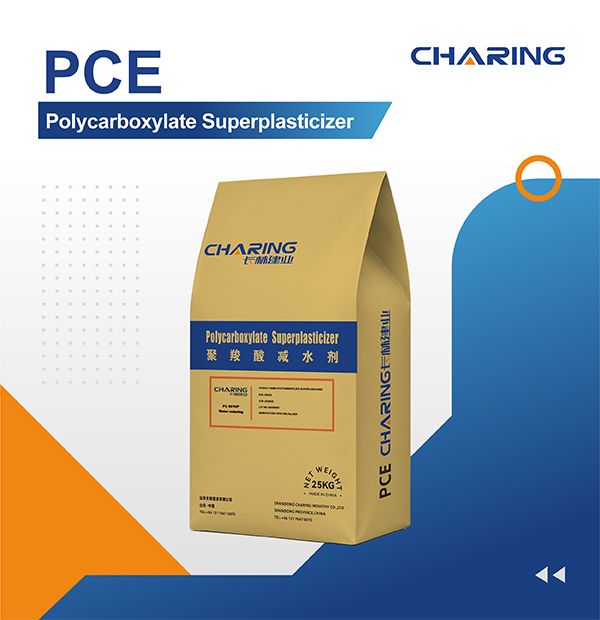
PCE (polycarboxylate ether) superplasticizer is the third generation of water reducing agents — and honestly, it has completely changed how we formulate dry-mix mortar and concrete. We have been supplying PCE to customers in Southeast Asia, Middle East, and Africa for years. The question we hear most is not "do you have PCE?" — it is "which PCE grade should I use for my specific application?"
That is actually a quite important question. PCE is not one-size-fits-all. The grade you choose for a self-leveling compound is very different from what you need for high-slump concrete or gypsum plaster. Pick the wrong one, and you get bleeding, set retardation, or just poor flow. So we wrote this guide — covering the three generations of water reducers, PCE chemistry basics, and a grade-by-grade selection matrix.
1. Three Generations of Water Reducing Agents
Before we talk about PCE selection, it helps to understand where PCE sits in the bigger picture. Concrete admixtures and dry-mix mortar additives have evolved through three generations:
| Generation | Type | Water Reduction | Slump Retention | Air Entrainment | Typical Dosage | Cost |
| 1st | Lignosulfonate | 8–12% | Poor | High | 0.2–0.5% | Lowest |
| 2nd | SNF (sulfonated naphthalene formaldehyde) | 15–20% | Fair | Medium | 0.5–1.0% | Medium |
| 3rd | PCE (polycarboxylate ether) | 25–40% | Excellent | Low | 0.05–0.3% | Higher |
Why PCE dominates modern formulations
1.Much higher water reduction — 25–40% vs 15–20% for SNF. This means lower water-cement ratio, higher strength, better durability.
2. Superior slump retention — concrete stays workable for 90+ minutes even in hot weather. SNF loses slump fast.
3. Low air entrainment — critical for self-leveling compounds where air bubbles cause surface pinholes.
4. Extremely low dosage — 0.05–0.3% of binder weight. SNF needs 3–5x more.
One thing we notice: Some customers still ask for SNF because it is cheaper per kilogram. But when you calculate cost per unit of water reduction, PCE is actually more economical. And the performance gap is huge. We always say: do not compare price per kg — compare price per result.
Important compatibility note: PCE and SNF should not be mixed in the same mix. They use different dispersion mechanisms and can interfere with each other. If you are switching from SNF to PCE, clean your mixing equipment thoroughly.
2. PCE Chemistry: HPEG and EPEG — Macromonomer Evolution
PCE superplasticizers are synthesized from macromonomers. The industry has evolved through several generations of monomers — from MPEG, to HPEG/TPEG, to EPEG. This is a progression, not a competition. Each monomer has its strengths.
| Macromonomer | Full Name | Key Characteristics | CHARING Grades |
| HPEG / TPEG | Hydroxypropyl / Triethylene glycol-based | Higher active content (≥92%); strong initial dispersion; cost-effective; available in powder form | PC 3010 (cement systems), PC 3030 (gypsum systems) |
| EPEG | Ethylene glycol monovinyl polyethylene glycol | Versatile chemistry; available in flake, powder, and granule forms; easier to produce mature flake products | PC 6010F/P, PC 2018, PC 6020RT-F/P, PC 6030E |
What is the real difference?
Quite often people ask us: "Is EPEG better than HPEG?" The answer is — it depends on what you need.
1. HPEG/TPEG can also make excellent water-reduction types and slump-retention types. It is not limited to "basic" grades. But HPEG is typically produced as powder — it is not easy to make flake form from HPEG.
2. EPEG is easier to process into mature flake products. That is why our flake grades (PC 6010F, PC 6020RT-F) are all EPEG-based. EPEG chemistry also allows us to tune the side-chain density for different functions: water reduction, slump retention, or early strength.
So the monomer type does not determine performance class — the formulation does. Both HPEG and EPEG can produce high-quality water-reduction or slump-retention PCE. The main practical difference is what physical forms are available and which forms suit your production process.
ASTM C494 classification
ASTM C494 classifies chemical admixtures by function. Here is how our grades map to these types:
| ASTM C494 Type | Description | CHARING Grades (Solid) | CHARING Grades (Liquid) | Usage |
| Type F | High-range water-reducing | PC 6010F (flake), PC 6010P (powder) | PC L10 | Can be used standalone |
| Type G | High-range water-reducing + retarding (slump retention) | PC 6010 + PC 6020RT combo | PC L10 + PC L11 combo | Must be used as a two-component system |
| Type E | Water-reducing + accelerating (early strength) | PC 6030E (granule) | — | Can be used standalone |
Important — Type G is a two-component system: PC 6020RT and PC L11 are high slump retention types. They cannot be used alone. If you dose them by themselves, the concrete will not achieve adequate initial flow — the slump just will not open up. They must be combined with the water-reduction component (PC 6010 for solid, PC L10 for liquid) to form a complete Type G system. PC 6010 provides the initial dispersion and water reduction; PC 6020RT maintains slump over time. Same logic applies to the liquid pair: L10 opens the flow, L11 holds it.
Type F liquid option: If you need high-range water reduction in liquid form but do not need slump retention, use PC L10 alone. L10 is our Type F liquid grade — it provides water reduction and can be used standalone. Only when you need slump retention do you add L11 to form the Type G combo.
Practical advice: For most dry-mix mortar applications, the HPEG vs EPEG difference is less important than getting the right dosage and the right grade for your application. Do not overthink the chemistry — focus on performance testing with your actual raw materials.
3. PCE Grade Selection by Application
This is the core of this guide. Different applications need different PCE grades.
3.1 Self-Leveling Compound (SLC)
SLC is the most demanding application for PCE powder. You need maximum flow at very low water content, with zero bleeding and minimal air.
| Requirement | Why It Matters |
| Ultra-high water reduction | Achieve flow diameter 130–150 mm at w/c 0.20–0.25 |
| Low air entrainment | Air bubbles = surface pinholes |
| No excessive retardation | SLC must set in 4–6 hours |
| Powder form | Dry-mix mortar requires powdered additives |
Recommended grades:PC 3010 — TPEG/HPEG type, ≥90% active content, ≥25% water reduction. Cost-effective, reliable flow performance. Dosage: 1–3 kg/ton of mortar.
Pro tip from our lab: When testing PCE for SLC, always check the flow ring test (ASTM C1708) at 5 minutes and 15 minutes after mixing. If flow drops more than 15% between the two readings, your PCE may have insufficient slump retention — try combining with a small amount of PC 6020RT.
3.2 Concrete (Ready-Mix and Precast)
Concrete needs two things from PCE: high water reduction for strength, and slump retention for workability over time.
| Sub-Application | Key Need | Recommended Grade | Dosage |
| High-strength concrete | Maximum water reduction | PC 6010F (flake), PC 6010P (powder), or PC 2018 (high-temp resistant) | 0.05–0.3% of binder |
| Slump retention (hot climate) | Maintain workability 60–90 min | PC 6010 + PC 6020RT combo (Type G system) | 0.1–0.2% combined |
| General ready-mix | Balance of reduction + retention | PC 6010 + PC 6020RT combo | 0.05–0.3% of binder |
| Liquid Type F (batch plant) | Water reduction only, no retention needed | PC L10 (standalone, Type F) | 1.0–2.0% of binder |
| Liquid Type G (batch plant) | Water reduction + slump retention | PC L10 + PC L11 combo (Type G system) | 1.0–2.0% combined |
About PC 6020RT — cannot be used alone: PC 6020RT is a high slump retention type PCE. It is NOT a standalone product. If you use it by itself, the concrete's initial flow will not open up — you get poor workability from the start. It must be combined with PC 6010 (the water-reduction component) to form a complete ASTM C494 Type G system. PC 6010 opens the initial flow, PC 6020RT maintains it. This two-component approach gives you much better control — you can adjust the ratio between the two to fine-tune for cement type, temperature, and haul time.
About PC L10 and PC L11 — Type F vs Type G: These are liquid PCE grades at 55% solid content, designed for concrete batch plants that dose admixtures directly into the mixer. L10 is a Type F grade — it provides water reduction and can be used standalone when you do not need extended slump retention. L11 is the high slump retention type — it cannot be used alone (initial flow will not open up). When you need both water reduction and slump retention, blend L10 + L11 to form a Type G system: L10 opens the flow, L11 holds it. The blending ratio depends on your concrete design and ambient conditions.
High mud content in aggregates — a common field problem: In many markets, the sand and gravel used for concrete contain high levels of clay and silt (mud). This is a serious issue because mud absorbs PCE — the clay particles adsorb the superplasticizer molecules onto their own surfaces, effectively "eating up" a portion of your PCE before it can work on the cement particles. The result: the effective dosage reaching the cement is much lower than what you actually added.
How to deal with it depends on when the problem shows up:
If the initial concrete flow is poor (slump does not open up right after mixing) → the mud is consuming the water-reduction component. Increase the dosage of the water-reduction type PCE (PC 6010 for solid, PC L10 for liquid). More PCE is needed because part of it is being absorbed by the mud.
If the initial flow is fine, but slump drops quickly over time (concrete loses workability within 30–60 minutes) → the mud is consuming the slump-retention component. Increase the dosage of the slump-retention type PCE (PC 6020RT for solid, PC L11 for liquid) in your Type G blend. The retention component is being depleted by the mud, so you need more to maintain workability through the haul and placement time.
Key takeaway: High mud content does not mean PCE does not work — it means you need more of it, and you need to adjust which component to increase based on whether the problem is initial flow or slump retention. Always test with your actual aggregates to determine the right adjustment.
3.3 Gypsum-Based Products
Gypsum systems are tricky for PCE. The pH is near-neutral (6–8), and the setting mechanism is crystallization, not hydraulic. PCE can cause excessive retardation in gypsum — which sounds nice until your plaster takes 8 hours to set.
Here is the key point: the choice depends on what you need from your gypsum product.
1. If you need good flow / fluidity → use PCE. PC 3030 is our recommended grade for gypsum systems — it provides strong water reduction and good dispersion without excessive retardation. But watch the dosage — too much PCE will retard the gypsum setting significantly.
2. If you need short setting time (fast setting) → do not use PCE. Use melamine-type (SMF — sulfonated melamine formaldehyde) superplasticizer instead. This is critical for gypsum prefabricated parts (Gypsum Precast) — where molds are released in 15–30 minutes and the product must hold its shape. Melamine-based water reducers provide good flow in gypsum without the retarding side effect. They work through electrostatic repulsion rather than steric hindrance, and they do not interfere with gypsum crystallization.
We covered gypsum additives in more detail in our upcoming gypsum article — including retarder selection (protein vs citric acid vs tartaric acid) and the full additive package.
3.4 Non-Shrink Grout and Early-Strength Applications
Grouts need high fluidity, zero bleeding, and rapid strength development. Some applications also need early strength — for example, machine foundation grouting that must bear load in 24 hours.
| Application | Key Need | Recommended Grade | Dosage |
| Non-shrink / high-strength grout | High flow + volume stability | PC 3010 (powder, ≥90% active, ≥25% water reduction) | 3–5 kg/ton |
| Early-strength grout | Fast strength gain | PC 6030E (granule, early-strength type, ASTM C494 Type E) | 3–5 kg/ton |
PC 6030E note: This grade is in coarse granule form. It contains an early-strength accelerator component. Should not be mixed with naphthalene-based (SNF) water reducers — they will counteract each other.
3.5 Tile Adhesive and Other Dry-Mix Mortar
Tile adhesives, waterproofing mortars, and repair mortars use PCE at low dosages primarily to reduce water content and improve workability.
| Application | Recommended Grade | Dosage |
| C2 tile adhesive | PC 3010 or PC 2018 | 1–2 kg/ton |
| Waterproofing mortar | PC 3010 or PC 2018 | 2–3 kg/ton |
| Repair mortar | PC 3010 or PC 2018 | 2–3 kg/ton |
4. PCE Dosage Guide: Powder vs Liquid
One of the most common confusions is dosage. Here is a clear breakdown:
Solid PCE (for dry-mix mortar)
| Application | PCE Grade | Dosage per ton of mortar |
| Self-leveling compound | PC 3010 / PC 2018 | 1–3 kg |
| High-strength grout | PC 3010 / PC 6030E | 3–5 kg |
| C2 tile adhesive | PC 3010 / PC 2018 | 1–2 kg |
| Waterproofing mortar | PC 3010 / PC 2018 | 2–3 kg |
| JS waterproof coating (powder component) | PC 3010 / PC 2018 | 2–3 kg |
Liquid PCE (for concrete batch plants)
| Grade | Solid Content | Water Reduction | Slump Retention | Typical Dosage |
| PC L10 | 55 ± 1.0% | ≥ 25% | Medium | 1.0–2.0% of binder weight |
| PC L11 | 55 ± 1.0% | ≥ 15% | High | 1.0–2.0% of binder weight |
About L10/L11 water reduction rates: L10 is a Type F water-reduction liquid — it can be used standalone, with ≥25% water reduction. L11 is a high slump retention type — it must be blended with L10 to form a Type G system. L11's direct water reduction is ≥15% (lower because it is optimized for retention, not reduction). Both are at 55% solid content.
Solid advantage over liquid: Our solid PCE can be dissolved to 20% solid content within 10 minutes. No need for specialized dissolving equipment. Transport cost is cut by ~50% compared to liquid (no water shipping). And no water quality compatibility issues — you dissolve it in whatever water you have on site.
5. PCE and Cement Compatibility
This is something we always tell customers: always test PCE with your actual cement before committing to production.
PCE works by adsorbing onto cement particle surfaces and creating a steric hindrance layer that disperses the particles. The adsorption efficiency depends on:
| Cement Factor | Effect on PCE Performance |
| C₃A content | High C₃A cements absorb more PCE — may need higher dosage |
| Alkali content (Na₂O, K₂O) | High alkali reduces PCE effectiveness; may cause false set |
| SO₃ content | Sulfate competes with PCE for adsorption sites; gypsum type matters |
| Cement fineness | Finer cement = more surface area = more PCE needed |
| Fly ash / slag addition | May improve or reduce PCE adsorption depending on carbon content (fly ash) |
Real case: A customer in Saudi Arabia was using a local cement with very high C₃A (9.5%). Their PCE dosage was 50% higher than our standard recommendation. We tested their cement in our lab and confirmed — it was the C₃A. Once they adjusted the dosage, everything worked fine. So pitty they had struggled with this for months before asking us.
Quick compatibility test method
1. Prepare two mortar samples — one with your standard water reducer, one with PCE at the same dosage
2. Measure flow spread (mini-slump cone) at 5 min, 30 min, 60 min
3. Measure setting time (Vicat needle)
4. Check for bleeding or segregation
5. If flow at 60 min drops < 20% of initial flow — good compatibility
6. CHARING PCE Product Line Overview
Here is the complete selection matrix — all solid grades from our brochure plus liquid grades:
Solid Grades (Powder / Flake / Granule)
| Grade | Monomer | Form | Active Content | Water Reduction | pH | Target Binder | Special Function | ASTM C494 | Dosage |
| PC 3010 | TPEG/HPEG | Powder | ≥92% | ≥25% | 7.0–9.0 | Cement | General purpose | — | 0.05–0.3% |
| PC 3030 | TPEG/HPEG | Powder | ≥92% | ≥25% | 7.0–9.0 | Gypsum | Gypsum-specific grade — high recommended for gypsum plaster, gypsum-based mortar, and other gypsum products | — | 0.05–0.3% |
| PC 6010F | EPEG | Flake | ≥97% | ≥25% | 5.0–7.0 | Cement | Water reduction component | Type F | 0.05–0.3% |
| PC 6010P | EPEG | Powder | ≥97% | ≥25% | 5.0–7.0 | Cement | Water reduction component | Type F | 0.05–0.3% |
| PC 2018 | EPEG | Powder | ≥92% | ≥25% | 5.0–7.0 | Cement | High-temperature resistant (6010P + ash filler); versatile — can be used in any application where PC 6010P is used, especially hot climates and high-temperature environments | Type F | 0.05–0.3% |
| PC 6020RT-F | EPEG | Flake | ≥97% | ≥20% | 5.0–7.0 | Cement | Slump retention — must pair with 6010, cannot use alone | Type G (with 6010) | 0.05–0.2% |
| PC 6020RT-P | EPEG | Powder | ≥97% | ≥20% | 5.0–7.0 | Cement | Slump retention — must pair with 6010, cannot use alone | Type G (with 6010) | 0.05–0.2% |
| PC 6030E | EPEG | Coarse granule | ≥97% | ≥25% | 5.0–7.0 | Cement | Early strength | Type E | 0.05–0.3% |
Liquid Grades (for concrete batch plants)
| Grade | Solid Content | Water Reduction | Slump Retention | ASTM C494 | Typical Dosage |
| PC L10 | 55 ± 1.0% | ≥ 25% | Medium | Type F (standalone) | 1.0–2.0% of binder |
| PC L11 | 55 ± 1.0% | ≥ 15% | High — must pair with L10, cannot use alone | Type G (with L10) | 1.0–2.0% of binder |
L10 = Type F liquid: L10 can be used alone as a Type F high-range water reducer. It is the liquid equivalent of PC 6010. Use it standalone when you need water reduction without extended slump retention.
L11 = retention component: L11 is the high slump retention type. Using it alone will result in poor initial concrete flow. It must be blended with L10 to form a Type G system — L10 opens the flow, L11 maintains it. The blending ratio depends on your concrete mix design, cement type, and ambient temperature.
Quick guide: If your application is dry-mix mortar (SLC, tile adhesive, grout), use powder grades. If you are at a concrete batch plant with liquid dosing: use L10 alone for Type F (water reduction only), or L10 + L11 combo for Type G (water reduction + slump retention). You can also dissolve flake 6010F into solution on site.
7. Common PCE Problems and Solutions
| Problem | Likely Cause | Solution |
| Bleeding / segregation | Over-dosage or wrong grade for application | Reduce dosage by 20%; switch to a lower-dispersion grade |
| Excessive retardation (gypsum) | PCE retards gypsum crystallization | Switch to melamine-type (SMF) water reducer for fast-setting gypsum products (especially prefabricated parts); reduce PCE dosage |
| Excessive retardation (cement) | C₃A too low in cement; or PCE overdose | Check cement mineralogy; reduce PCE dosage |
| Flash set | Incompatible cement (high C₃A + low SO₃) | Increase PCE dosage slightly; add set retarder |
| Rapid slump loss | Using water-reduction-only grade; no retention component | Add PC 6020RT to your PC 6010 system to form a Type G combo |
| High mud content in aggregates | Clay/silt in sand and gravel absorbs PCE, reducing effective dosage | If initial flow is poor → increase water-reduction component (PC 6010 / L10); if slump drops over time → increase retention component (PC 6020RT / L11) |
| Air entrainment / pinholes | Some PCE grades entrain more air | Add defoamer (0.2–1.0 kg/ton); use low-air PCE grade |
| Inconsistent batch-to-batch | PCE moisture absorption in storage | Store in sealed bags; check moisture before use (≤ 2%) |
8. Storage and Handling
PCE powder is hygroscopic — it absorbs moisture from the air. Once moisture gets in, the powder clumps and the active content drops.
| Parameter | Requirement |
| Storage temperature | Below 30°C, away from direct sunlight |
| Humidity | Below 60% RH; keep bags sealed |
| Shelf life | 1 year in original sealed packaging (solid); 6 months (liquid) |
| Packaging | 25 kg moisture-proof bags (inner PE bag + outer HDPE bag) |
| Signs of degradation | Clumping, color darkening, reduced flow at same dosage |
For liquid PCE (L10/L11): Store above 5°C. If product freezes, it can be thawed and stirred back to uniform state — but test before use. Shelf life is 6 months in sealed containers.
9. Summary: Quick Selection Decision Tree
1.Making self-leveling compound?→ PC 3010 or PC 2018 (cost-effective, reliable flow)
2.Making concrete — water reduction only? → PC 6010F/P (solid Type F), or PC L10 alone (liquid Type F)
3. Making concrete that needs slump retention?→ PC 6010 + PC 6020RT combo (solid Type G), or PC L10 + L11 combo (liquid Type G)
4.Making gypsum products? → For good flow: PC 3030 (watch dosage); for fast setting (e.g., gypsum prefabricated parts): use melamine-type (SMF) superplasticizer instead of PCE
5. Making non-shrink grout?→ PC 3010 (high reduction) or PC 6030E (early strength)
6.Making tile adhesive or waterproofing? → PC 3010 or PC 2018 (general purpose, cost-effective)
7.Not sure? → Start with PC 3010 at 0.1% dosage and adjust based on test results

E-mail: sdcharing@sdcharing.com
Phone: +86 131 7667 0070
WhatsApp: 8615066133527
Add.: No.605-606,NO1 BUILDING,WANGYUE ZHIGU INDUSTRY PARK,NO.1919 WANGYUE ROAD, SHIZHONG AREA,JINAN CITY, SHANDONG PROVINCE,CHINA