- Home
- Products +
- Industries +
- About Us +
- News
- Contact Us

- Home
- Products
- Industries
- About Us
- News
- Contact Us
Nov. 23, 2026
| Question | Short Answer |
| What does cellulose ether (HPMC) do? | Holds water, thickens, controls open time. |
| What does RDP do? | Makes the mortar stick and flex. |
| What does PCE do? | Makes the mortar flow with less water. |
| What does starch ether do? | Stops sag, makes the mortar feel smooth. |
| What does a defoamer do? | Removes trapped air, no pinholes. |
| What does a hydrophobic agent do? | Repels water. |
| What does fiber do? | Controls cracks. |
| What does calcium formate do? | Speeds setting in cold weather. |
Dry-mix mortar is not just cement and sand. It is a bag of small powders. Each powder does one job. Get the right powders in the right doses, and the mortar works. Miss one, or use the wrong dose, and the bag fails on site.
Here is the whole picture on one table.
| Additive | What it does | Typical dose | You need it when |
| Cellulose ether (HPMC) | Holds water, thickens, controls open time | 1–4 kg/t | Always — every mortar |
| RDP (polymer powder) | Makes it stick and flex | 5–55 kg/t | Tile adhesive, putty, waterproof |
| PCE (superplasticizer) | Flows with less water | 0.3–5 kg/t | Self-leveling, grout, flowable mixes |
| Starch ether | Stops sag, smooth feel | 0.5–1.0 kg/t | Tile adhesive, putty, grout |
| Defoamer | Removes air, no pinholes | very small | Self-leveling, grout, dense mortar |
| Hydrophobic agent | Repels water | 5–20 g per kg cement | Waterproof, exterior, grout |
| Fiber (wood / PP) | Controls cracks | 1–4 / 1–2 kg/t | Putty, EIFS, render |
| Calcium formate | Speeds setting in cold | 0.5–2% | Winter, below 10°C |
Cellulose ether is in every dry-mix mortar. Its job is simple: hold water.
Cement needs water to harden. If the water leaves too fast, the cement never finishes hardening. The mortar turns weak and dusty.
Cellulose ether traps water and lets it out slowly. That gives three things:
1.Water retention. The mortar stays wet. The cement hydrates fully.
2.Thickening. The mortar gets body. It is easy to spread and stays on the trowel.
3.Open time. The mortar stays workable longer. You have time to adjust the tile or the layer.
Typical dose: 1–4 kg per tonne.
How to choose. Two things matter: viscosity and gel temperature.
Viscosity sets the body and the water hold. Higher viscosity holds more water. Tile adhesive C0/C1 uses about 100,000. C2 uses about 60,000. Self-leveling uses a very low grade (around 400) so the mix still flows. Grout uses a medium-low grade (40,000–60,000).
Gel temperature matters in heat. Normal weather: a standard grade is fine. Hot climate (40°C+): the grade must have a high gel temperature, or it loses its power.
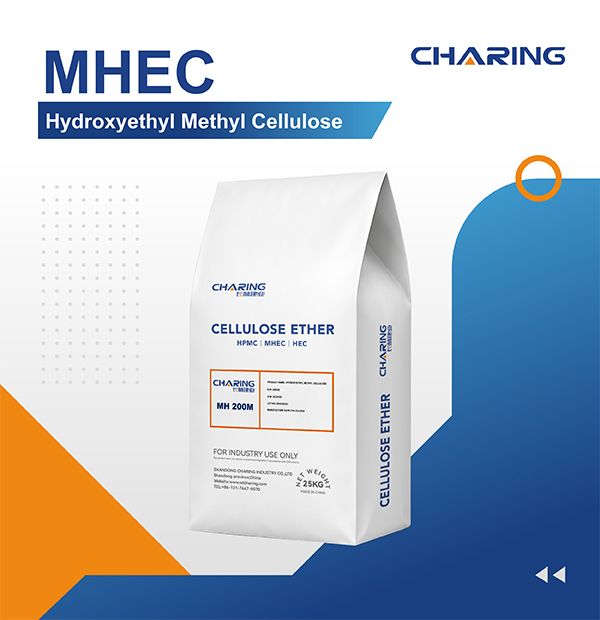
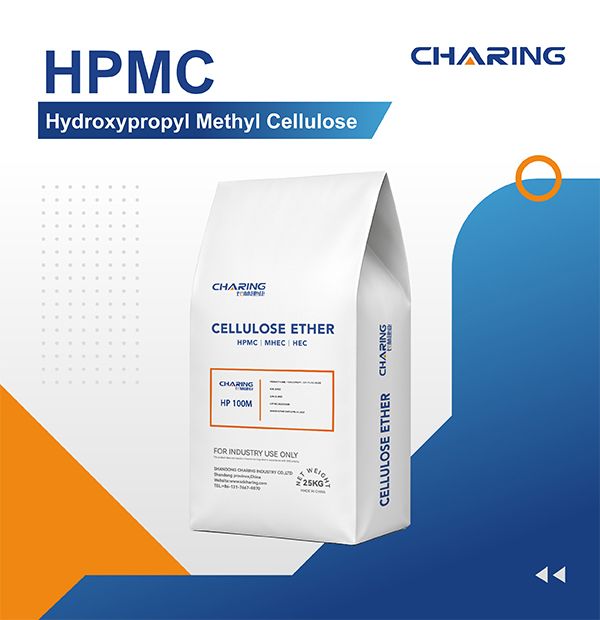
CHARING grades: HP (standard, open time 30–40 min), HK (hot climate, short open time ~20 min), MH (MHEC, hot climate + long open time).
RDP stands for redispersible polymer powder. It is a dry glue. When you add water, it turns back into a soft film.
That film does two jobs:
1.Bonding. It glues the mortar to the surface and the tile to the mortar.
2.Flexibility. It lets the mortar bend a little instead of cracking.
Typical dose. The dose changes a lot by job:
| Application | RDP dose |
| Tile adhesive C0 | 5–10 kg/t |
| Tile adhesive C1 | 12–18 kg/t |
| Tile adhesive C2 | 30–40 kg/t |
| Tile adhesive C2S1 | 45–55 kg/t |
| Wall putty (dry area) | 4–25 kg/t |
| Wall putty (humid area) | 15–25 kg/t |
| Tile grout | 10–30 kg/t |
How to choose. The key number is the glass transition temperature (Tg). Lower Tg = softer and more flexible.
| Grade | Tg | Character |
| RD 7015H | 12°C | Rigid, high bond |
| RD 7003M | 3°C | Neutral, semi-flexible, most widely used |
| RD 8080F | -8°C | Flexible |
| RD W8050 | -11°C | Flexible + hydrophobic |
For tile adhesive C2 and waterproof mortar, pick a flexible or hydrophobic grade. For grout, the neutral semi-flexible grade (RD 7003M) is a safe pick.
PCE makes the mortar flow. It does this by reducing water.
Here is the trick: you want a mix that flows, but extra water weakens the mortar. PCE lets the mix flow at a much lower water content. Less water, same flow, higher strength.
Typical dose: 0.3–5 kg/t.
Powder vs flake — do not mix them up.
Powder PCE goes into dry-mix mortar. You dry-blend it into the bag. Self-leveling, tile adhesive, grout.
Flake PCE is for concrete only. You dissolve it in water first (10–20% solution), then add it to the concrete. Do not put flake into a dry-mix bag.
This is the most common mistake we see. Concrete and dry-mix are two different worlds.
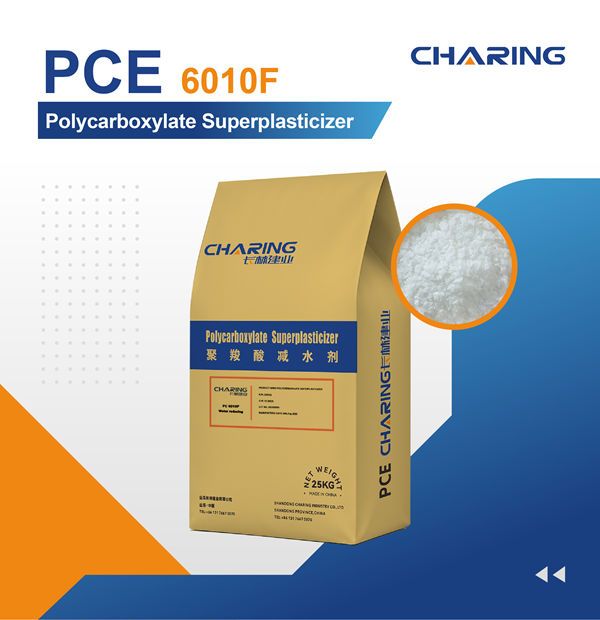
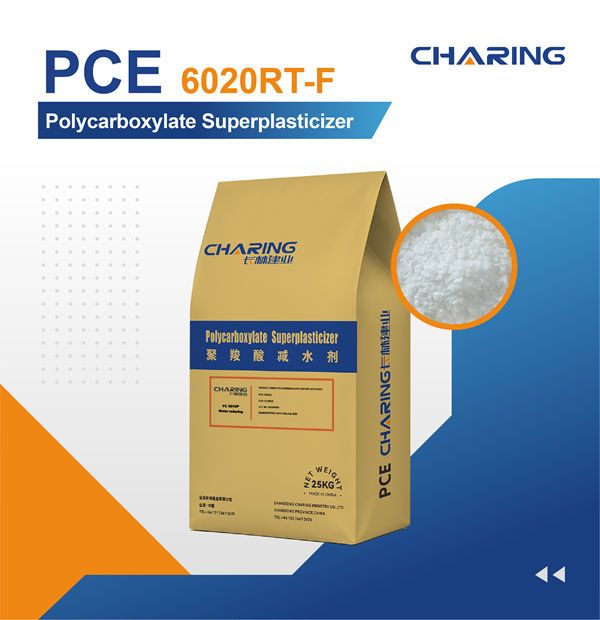
CHARING powder grades: PC 3010 (general, for self-leveling, tile adhesive, grout), PC 2018 (heat-resistant). Flake grades (concrete): PC 6010F/P, PC 6020RT (slump retention, pair with 6010), PC 6030E (early strength).
Starch ether is a small powder with two jobs:
1.Anti-sag. It stops the tile or mortar from sliding down a vertical wall.
2.Smooth feel. It makes the mortar easy to work. The trowel glides.
Important: starch ether never works alone. It must be used together with cellulose ether. Cellulose ether holds the water and gives body. Starch ether adds the anti-sag and the feel. They are a team.
Typical dose: 0.5–1.0 kg/t (0.05–0.1%).
How to choose.
| Grade | Raw material | Groups | Job |
| 612 | Cassava starch | One group (hydroxypropyl) | Basic lubrication, smooth feel |
| ST 806 | Potato starch | Two groups | Strong anti-sag + high surface wetting |
Need to stop heavy tiles from sliding, or stop sag on a vertical wall? Use ST 806. Just want a smoother feel? Use 612.
When you mix mortar, air gets trapped inside. That air makes the mortar weak and leaves pinholes on the surface.
A defoamer removes the air. The mortar comes out denser and stronger, with a clean surface.
Where you need it most: self-leveling compound, tile grout, decorative mortar, waterproof mortar. Any mix that must be dense and pinhole-free.
Typical dose: very small — far less than HPMC or RDP. Always test to find the right amount.
How to choose.
| Grade | Character |
| D802 | Standard, general use |
| D804 | Fast defoaming + reduces greasy surface |
| D803T | A lighter version of D804, same anti-greasy type |
| D808H | Heat-resistant to 120°C, for hot countries |
All are non-ionic white powder, free-flowing, easy to dissolve.
A hydrophobic agent makes the mortar push water away. Water beads on the surface instead of soaking in.
There are three chemistries, and they are not equal:
| Chemistry | How it works | Cost | Durability |
| Stearate | Physical coating | Low | Short, can weaken the mortar |
| Silicone | Forms a film | Middle | Middle |
| Silane | Chemical bond | Higher | Permanent, breathable |
Cheap stearate works for a while, then fades. Silane bonds to the mortar itself and lasts. You get what you pay for.
Typical dose: 5–20 g per kg of cement.
How to choose.
| Grade | Form | What it gives |
| S300 | Powder | Strong surface effect (water beads and rolls off) |
| S500 | Powder | Lower water absorption through the body |
| L600 | Silicone emulsion | For mixing in, or spray on (dilute 1:6) |
For a visible water-beading surface, pick S300. For lower overall water absorption, pick S500. For a liquid or a spray, pick L600.
Fiber comes in two kinds, and they are not the same thing:
| Wood fiber | PP fiber | |
| Material | Natural wood pulp | Polypropylene plastic |
| Absorbs water? | Yes | No |
| Main job | Water hold + anti-sag + anti-crack | Pure crack bridging |
| Dose | 1–4 kg/t | 1–2 kg/t |
The one word that splits them: water.
Wood fiber drinks water. It holds water, stops shrinkage, and fights sag. Use it in putty, tile adhesive, and EIFS.
PP fiber ignores water. It only bridges cracks. Use it in concrete and structural mortar.
Cement hardens slowly in cold weather. Below 10°C, the reaction nearly stops. The mortar stays soft and weak.
Calcium formate speeds the reaction up. It is the standard early-strength agent for winter work.
Typical dose: 0.5–2%.
When to use it: winter, or any job below 10°C. In normal weather, you usually do not need it.
Most of these additives are not used alone. They work as teams.
Anti-sag trio (tile adhesive). Cellulose ether + starch ether + wood fiber. Three powders that stop a tile from sliding down the wall.
Flex + water resistance (waterproof, exterior). RDP + hydrophobic agent. The RDP gives the film and the flex. The hydrophobic agent keeps water out.
Flow + density (self-leveling). PCE + defoamer. PCE makes it flow. Defoamer takes out the air so the surface is clean and the body is dense.
Cold weather. Calcium formate gets the set going when the temperature drops.
| Application | Core additives |
| Tile adhesive | HPMC + RDP + starch ether (+ wood fiber) |
| Self-leveling compound | PCE + defoamer + low-viscosity HPMC + RDP |
| Wall putty | HPMC + RDP + starch ether + wood fiber |
| Tile grout | HPMC + RDP + hydrophobic agent (+ defoamer) |
| Waterproof mortar | Hydrophobic RDP + hydrophobic agent + HPMC |
| EIFS render | HPMC + RDP + wood fiber (+ a little PP fiber) |
This table is a starting point. The exact doses depend on your local climate, raw materials, and cost.
1. More additives = better. Wrong. Over-dosing makes the mortar stiff, weak, or slow. Each powder has a sweet spot.
2. Starch ether alone. Starch ether must pair with cellulose ether. Alone, it does almost nothing.
3. PCE flake in a dry-mix bag. Flake PCE is for concrete. Dissolve it first, and never dry-blend it into tile adhesive or self-leveling. For dry-mix, use powder PCE.
4. Too little RDP in a C2 tile adhesive. C2 needs real flexibility. Skimp on the RDP and the tiles pop off when the wall moves.
5. Defoamer where you need workability. Some air is fine. Over-dose the defoamer and the mortar loses its workability.
Do I need all eight additives in every mix?
No. Most mixes use three to five. Tile adhesive uses HPMC + RDP + starch ether. Self-leveling uses PCE + defoamer + HPMC. Pick what the job needs.
Which additive matters most?
Cellulose ether. Every dry-mix mortar needs water retention. Without it, the mortar dries before it hardens.
Why not just add more cement for strength?
More cement costs more and cracks more. The additives let you get strength from the right mix, not from brute force.
Can I use flake PCE in tile adhesive?
No. Flake PCE is for concrete. Dissolve it first, and use it in concrete. For tile adhesive and self-leveling, use powder PCE.
Do starch ether and cellulose ether do the same thing?
No. Cellulose ether holds water and gives body. Starch ether stops sag and gives a smooth feel. They work together.
How much RDP for a C2 tile adhesive? About 30–40 kg/t. For C2S1 (extra flexible), 45–55 kg/t.

E-mail: sdcharing@sdcharing.com
Phone: +86 131 7667 0070
WhatsApp: +8615066133527
Add.: No.605-606,NO1 BUILDING,WANGYUE ZHIGU INDUSTRY PARK,NO.1919 WANGYUE ROAD, SHIZHONG AREA,JINAN CITY, SHANDONG PROVINCE,CHINA