- Home
- Products +
- Industries +
- About Us +
- News
- Contact Us

- Home
- Products
- Industries
- About Us
- News
- Contact Us
Aug. 10, 2026
| Question | Short Answer |
| What HPMC viscosity for tile adhesive? | C1: 80,000-120,000 mPa·s. C2: 45,000-75,000 mPa·s. Tropical climates: increase by one viscosity grade |
| What gel temperature for hot climates? | ≥65°C minimum. HK series (65°C) or MH series (70-90°C) for extreme heat |
| Can I use the same HPMC grade for all my products? | No. Match the grade to the application: C0/C1 tile adhesive uses HP 100M or HK 100M. C2 uses HP 60M. Self-leveling uses HP 400 |
| What is the most common mistake in HPMC selection? | Choosing viscosity by price, not by performance. Cheap HPMC often has inconsistent substitution uniformity |
| What is the difference between HP, HK, and MH series? | HP = standard (60°C gel), HK = higher temperature (65°C, shorter open time), MH = highest temperature (70-90°C, tropical/extreme heat) |
| How does HPMC viscosity affect bond strength? | Too high = excessive air entrainment, poor wetting, lower strength. Too low = insufficient water retention. Medium viscosity gives the best balance |
1.1 Viscosity — The Most Visible Parameter
Viscosity is reported in mPa·s, but the numerical value depends entirely on the test method. The same HPMC sample measured under different methods produces vastly different numbers.
| Method | Instrument | Conditions | Used By |
| Brookfield LV / NDJ | Brookfield LV / NDJ | 2% solution, 20°C | CHARING, most Chinese manufacturers |
| Brookfield RV | Brookfield RV | 2% solution, 20°C, 20 rpm | Some manufacturers |
| Haake | Haake RV 100 | 2% solution, 20°C, shear rate 2.55 s⁻¹ | Dow (WALOCEL) |
| Höppler | Höppler viscometer | 2% solution, 20°C | Shin-Etsu (Tylose) |
Note: Brookfield LV and NDJ give comparable readings at low to medium viscosities (up to ~60,000 mPa·s). At higher viscosities (100,000 mPa·s and above), NDJ readings are approximately 40-50% of Brookfield LV readings. For example, HP 100M shows 80,000-120,000 mPa·s on Brookfield LV but 40,000-50,000 mPa·s on NDJ. CHARING uses NDJ as the standard method. All viscosity values in this guide use Brookfield LV unless otherwise noted.
Key conversion reference: Dow WALOCEL datasheets report viscosity using the Haake method. At 2%, a Dow viscosity of 40,000-45,000 mPa·s (Haake) corresponds approximately to 100,000 mPa·s on Brookfield LV. A Dow viscosity of 60,000-80,000 corresponds approximately to 200,000 on Brookfield LV. Always verify which test method a viscosity number refers to before comparing products.
Commercial construction grades range from 400 mPa·s to 200,000 mPa·s (Brookfield LV).
| Application | Recommended Viscosity | Reason | |
| Self-leveling compound | 300-500 | Ultra-low viscosity for flow | |
| Tile grout | 20,000-100,000 | Wide range: lower for flowable grout, higher for standard grout | |
| Gypsum plaster / joint filler | 40,000-60,000 | High retention, avoids delayed setting | |
| EIFS skim coat (high water retention) | 40,000-60,000 | Smooth finish, crack resistance | |
| EIFS adhesive | ~100,000 | High water retention + high viscosity | |
| Cement render / plaster | ~100,000 | Thick coat stability, water retention | |
| Tile adhesive C0/C1 | 80,000-120,000 | Water retention + sag resistance | |
| Tile adhesive C2 / large format | 45,000-75,000 | Lower viscosity for better wetting and open time; RDP provides strength | |
| Tile adhesive C0/C1, tropical | 170,000-220,000 | High viscosity compensates rapid water evaporation | |
Note: Viscosity recommendations for other applications (EIFS, render, putty, grout, gypsum plaster) depend on local conditions, formulation goals, and raw material quality. The above table only covers applications with established CHARING product recommendations.
Why large-format tile adhesive uses lower viscosity: Large tiles require longer open time for positioning and better surface wetting to achieve full contact between the adhesive and the low-porosity tile surface. Higher viscosity HPMC reduces wetting and can trap air at the interface. At C2 level, RDP provides the primary strength and flexibility contribution — the HPMC grade can be lower viscosity to optimize workability without sacrificing water retention. Standard C1 tile adhesive uses 80,000-120,000 mPa·s because it relies more heavily on HPMC for both water retention and sag resistance.
1.2 Gel Temperature — The Hidden Performance Parameter
Gel temperature is the temperature at which an HPMC solution transitions from liquid to gel, losing its water-retention capability. Standard HPMC gels around 55-65°C.
Why this matters: In hot climates where substrate temperatures exceed 40-50°C (common in the Middle East, North Africa, South and Southeast Asia), standard HPMC can gel prematurely on the substrate surface. The result is a dramatic drop in open time — from 20 minutes to as little as 7-10 minutes.
| Gel Temperature Range | Suitable Climate | CHARING Series |
| 55-65°C | Temperate (15-40°C) | HP series |
| 65-70°C | Warm / subtropical | HK series |
| 70-90°C | Tropical / extreme heat | MH series (MHEC) |
1.3 Methoxy and Hydroxypropyl Content
Methoxy (DS): 1.3-2.0 for construction grades. Higher DS improves water solubility and raises gel temperature.
Hydroxypropyl (MS): 0.1-0.3 for construction grades. Higher MS improves cold-water solubility.
Standard HP series: methoxy 23-27%. HK series: methoxy 19-22% — lower methoxy but higher gel temperature (65°C vs 60°C). This trade-off is deliberate: HK sacrifices some water retention for better high-temperature stability.
1.4 Surface Treatment — S vs Non-S Grades
Non-surface treated (M grades): Dissolve rapidly in cold water but can form lumps if not dispersed properly before water contact. Examples: HP 60M, HP 100M.
Surface treated (MS grades): Dissolve slowly and uniformly, preventing lump formation during on-site mixing. Examples: HP 60MS, HP 100MS.
For factory-produced dry mix mortar with controlled mixing, non-surface-treated grades are standard. For on-site applications or where mixing quality cannot be guaranteed, surface-treated grades provide insurance against lumping.
2.1 What HPMC Viscosity for Tile Adhesive?
This is the most frequently asked question by formulators. The answer depends on three factors:
By tile format:- Standard ceramic tiles (≤600 mm), C1: 80,000-120,000 mPa·s- Large-format porcelain (≥800 mm), C2: 45,000-75,000 mPa·s — lower viscosity for better wetting and longer open time
Large-format tiles need better surface wetting to achieve full bond contact with low-porosity surfaces. Lower viscosity HPMC improves wetting and extends open time for tile positioning. At C2 level, the high RDP dosage (30-55 kg/t) provides the primary strength and flexibility — HPMC can be lower viscosity to optimize workability.
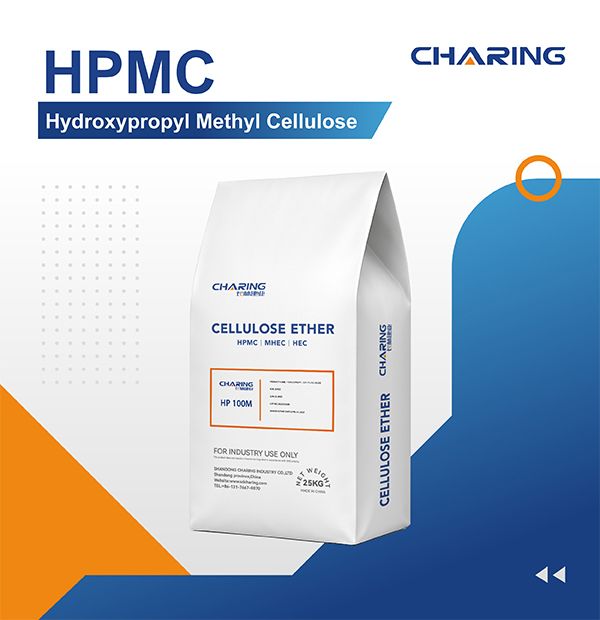
By adhesive grade:- C0/C1: HP 100M or HK 100M (80,000-120,000 mPa·s) is the workhorse grade- C2: HP 60M (45,000-75,000 mPa·s) — lower viscosity balances workability with high RDP loading- C2S1/C2TES1 (flexible, large format): HP 100M, or HP 60M depending on climate
By climate (this is the biggest variable):- Tropical (Southeast Asia, Middle East, Africa, South America): HP 200M for C0/C1, HP 100M for C2. HK 100M is also very popular in these markets due to its 65°C gel temperature — higher heat resistance, but shorter open time (within 20 minutes).- Temperate (China, Europe, North America): HP 100M for C1, HP 60M for C2.- Cold (Russia, Canada, Northern Europe): HP 60M or HP 40M. Lower viscosity dissolves faster and improves cold-weather workability.
2.2 How Does HPMC Dosage Vary with Application Thickness?
This is a real-world consideration that many guides overlook. Thicker applications (5 mm or more) lose water more slowly through the mortar body, so HPMC dosage can be at the lower end of the range (2.0-2.5 kg/t). Thin-bed applications (3 mm or less) expose more surface area relative to volume, accelerating water loss — dosage should be at the upper end (2.5-3.0 kg/t). This variation is more significant than the difference between C1 and C2 formulations.
3.1 Tile Adhesive
| Tile Type | Recommended CHARING Grade | Viscosity | Key Reason |
| Standard ceramic, C0/C1, temperate | HP 100M or HK 100M | 80,000-120,000 | Balanced water retention + workability |
| Standard ceramic, C0/C1, tropical | HP 200M or HK 100M | 170,000-220,000 | High viscosity compensates heat |
| Porcelain / large format, C2, temperate | HP 60M | 45,000-75,000 | Lower viscosity for better wetting + open time |
| Porcelain / large format, C2, tropical | HP 100M | 80,000-120,000 | Higher temperature stability |
| Heavy natural stone / large format, vertical | HP 60M | 45,000-75,000 | Lower viscosity for wetting + open time; use high-grade C2 adhesive |
| Economy alternative, C0/C1 | HK 100M | 80,000-120,000 | Lower cost, 65°C gel, shorter open time |
3.2 Self-Leveling Compound
| Application | Recommended CHARING Grade | Viscosity | Dosage |
| Cement-based SLC | HP 400 | 320-480 | 0.05-0.15% |
| Gypsum-based SLC | HP 400 + PC 3030 (PCE) | 320-480 | 0.05-0.10% |
3.3 EIFS / ETICS
| Layer | Recommended CHARING Grade | Viscosity | Key Property |
| Adhesive mortar | HP 100M | 80,000-120,000 | High water retention, high bond |
| Base coat / skim coat (high water retention) | HP 60M | 45,000-75,000 | Crack resistance, smooth finish |
| Decorative render | HP 100M | 80,000-120,000 | Thick coat stability |
Self-leveling demands ultra-low viscosity. Higher viscosity traps air and reduces flow. HP 400 is purpose-built for this application.
3.4 Plaster and Render
| Application | Recommended CHARING Grade | Viscosity | Notes |
| Cement render | HP 100M | 80,000-120,000 | Thick-coat stability |
| Gypsum hand plaster | HP 60M | 45,000-75,000 | Fast enough setting |
| Gypsum machine plaster | HP 60M | 45,000-75,000 | Spray application |
3.5 Wall Putty and Skim Coat
| Application | Recommended CHARING Grade | Viscosity | Notes |
| Wall putty (temperate) | HP 60M or HP 100M | 45,000-120,000 | Smooth finish |
| Wall putty (tropical) | HP 200M | 170,000-220,000 | High viscosity for hot climates |
3.6 Cementitious Grout
| Application | Recommended CHARING Grade | Viscosity | Notes |
| Tile grout (standard) | HP 40M or HP 60M | 30,000-75,000 | 0.05-0.10% |
| Tile grout (high-flow) | HP 400 | 320-480 | 0.03-0.08% |
| Tile grout (wide joints / heavy) | HP 100M | 80,000-120,000 | Higher sag resistance |
3.7 Masonry Mortar (AAC Block)
| Application | Recommended CHARING Grade | Viscosity | Notes |
| AAC masonry mortar (temperate) | HP 100M or HP 200M | 80,000-220,000 | Low dosage (1.0 kg/t) — shorter setting needed |
| AAC masonry mortar (tropical) | HP 200M | 170,000-220,000 | High viscosity for hot climates |
| Climate Zone | Regions | Gel Temperature Needed | C1 Recommendation | C2 Recommendation |
| Cold (0-15°C) | Russia, Canada, N. Europe | 55-65°C | HP 60M or HP 40M | HP 40M |
| Temperate (15-40°C) | China, Europe, N. America | 55-65°C | HP 100M | HP 60M |
| Warm / subtropical (25-35°C) | S. Europe, N. India, Australia | 65-70°C | HP 100M or HK 100M | HP 60M or HP 100M |
| Tropical / hot (30-45°C) | SE Asia, Middle East, Africa, S. America | ≥65°C | HP 200M or HK 100M | HP 100M |
| Extreme heat (≥45°C substrate) | Gulf States, Sahara, Central India | ≥70°C | MH 50M or MH 100M | MH 50M |
Key insight for tropical markets: Many manufacturers in hot countries use low HPMC dosage with high-viscosity grades (HP 200M or HK 100M). The high viscosity compensates for low dosage by holding more water in the matrix. The trade-off is reduced surface moisture and workability. HK 100M is particularly popular in Southeast Asia and the Middle East — its 65°C gel temperature provides better heat resistance than HP series, and the cost is lower. The downside is a shorter open time, typically within 20 minutes.
| Series | Methoxy | Gel Temp | Open Time | Cost | Best For | |||
| HP | 23-27% | 55-65°C | Long | Standard | Temperate climates, export markets requiring certification | |||
| HK | 19-22% | 65-70℃ | Short (≤20 min) | Lower | Tropical climates, cost-sensitive C0/C1, high-temperature stability | |||
| MH (MHEC) | — | 70-90°C | Long | Higher | Extreme heat, tropical regions, applications where gel temperature is the bottleneck | |||
5.1 Why MH Series Exists
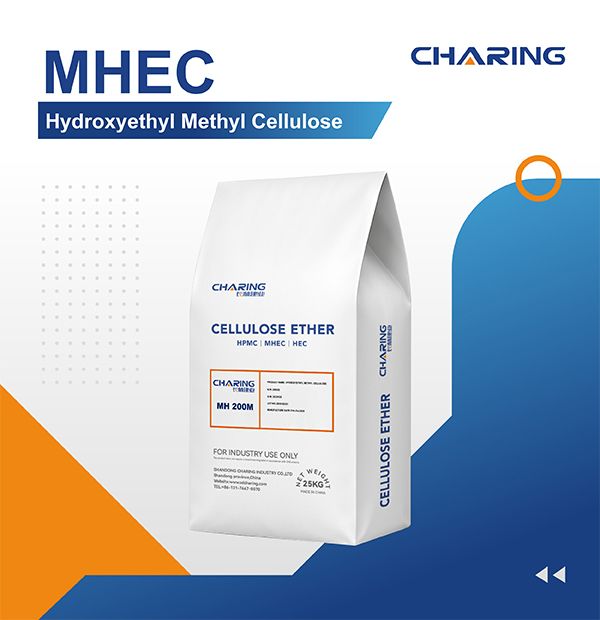
MHEC (Methyl Hydroxyethyl Cellulose) is produced with ethylene oxide instead of propylene oxide, resulting in a fundamentally higher gel temperature. Where HP series gels at 55-65°C and HK at 65-70°C, MH series maintains full performance up to 70-90°C. This is not a marketing claim — it is a chemical difference in the etherification process.
For formulators in Gulf states or equatorial regions where substrate temperatures routinely exceed 50°C in summer, MH series is the only reliable option. Standard HPMC at 55°C gel temperature will lose water retention within minutes on a 50°C substrate.
5.2 Surface Treatment: When to Choose S Grades
Non-S (M grades): HP 60M, HP 100M, HK 100M — for factory dry mix production with controlled mixing. Standard choice.
S grades (MS): HP 60MS, HP 100MS — for on-site mixing or applications where operators may not follow precise mixing procedures. The delayed solubility prevents lump formation.
What is the most common mistake when choosing HPMC?
Selecting viscosity based on price rather than performance. Inexpensive HPMC often has poor substitution uniformity, causing batch-to-batch water retention variation. One batch may hold water for 20 minutes, the next for only 10. Always test gel temperature alongside viscosity before committing to bulk supply.
Can I use the same HPMC grade for wall and floor tile adhesives?
No. The choice depends on the adhesive grade, not on whether the tile goes on a wall or floor. Most floor tile adhesives are C0 or C1 grade — these use HP 100M or HP 200M, or HK 100M or HK 200M. Wall applications are more varied: standard wall tiles may also be C1 using the same HPMC, but large-format or porcelain wall tiles require C2 grade, which calls for HP 60M. The HPMC changes because the grade changes, not because the surface changes. HP 60M is a premium grade with a higher cost structure — there is no reason to use it in a basic floor tile formulation where HP 100M or HP 200M, or HK 100M or HK 200M already performs well.
What gel temperature do I need for Middle East markets?
Substrate temperatures in the Gulf can reach 50-65°C in summer. Standard HPMC with 55-65°C gel temperature will fail. Use HK series (65°C minimum) or MH series (70-90°C). HK 200M is the most commonly used grade in Saudi Arabia and UAE markets — the high viscosity compensates for rapid water evaporation while the 65°C gel temperature provides adequate heat resistance at a competitive cost. Installers must work within the shorter open time window typical of HK series.
How do I extend open time without increasing HPMC dosage?
1. Replace part of coarse sand with fine sand (70-140 mesh)
2. Avoid rapid-hardening cement
3. Use HP series instead of HK — HP has inherently longer open time
4. Add cellulose fiber (1-3 kg/t)
Does higher HPMC viscosity always mean better performance?
No. Above certain thresholds, high viscosity reduces substrate wetting, entrains air, and can decrease tensile bond strength. The effect is application-specific: in self-leveling, high viscosity is a defect. In tile adhesive, 100,000-150,000 mPa·s is the upper practical limit for most formulations. Beyond this, workability suffers without proportional gain in water retention.
What happens if I use too little HPMC?
Water retention drops below the level needed for complete cement hydration. The result: a weak, powdery bond layer at the tile-adhesive interface. This is the number one cause of tile debonding in hot, dry conditions. The minimum water retention rate for a professional tile adhesive is 94%.
What is the difference between HPMC and MHEC?
MHEC (Methyl Hydroxyethyl Cellulose) uses ethylene oxide in the etherification process, giving it a higher gel temperature (70-90°C vs 55-65°C for standard HPMC). In temperate climates, MHEC offers no advantage. In tropical and desert climates, the higher gel temperature is the deciding factor between a formulation that works and one that fails. MHEC is also used where the local market standard requires it — for example, some European specifications mandate MHEC for exterior applications.
| Grade | Viscosity (Brookfield LV, 2% solution, mPa·s) | Viscosity (NDJ, 2% solution, mPa·s) | Series Type | Gel Temp | Primary Application | ||
| HP 400 | 320-480 | 320-480 | HP | 55-65°C | Self-leveling | ||
| HP 40M | 30,000-50,000 | 30,000-50,000 | HP | 55-65°C | Putty, grout, cold-climate C1 | ||
| HP 60M | 45,000-75,000 | 45,000-75,000 | HP | 55-65°C | C2 tile adhesive, render, plaster, putty, grout | ||
| HP 100M | 80,000-120,000 | 40,000-50,000 | HP | 55-65°C | Tile adhesive, EIFS, putty | ||
| HP 150M | 120,000-170,000 | 50,000-60,000 | HP | 55-65°C | Large-format tile, EIFS | ||
| HP 200M | 170,000-220,000 | 60,000-80,000 | HP | 55-65°C | Tropical C1, insulation mortar | ||
| HK 100M | 80,000-120,000 | 40,000-50,000 | HK | 65-70°C | Economy / tropical C1 | ||
| HK 200M | 170,000-220,000 | 60,000-80,000 | HK | 65-70°C | Saudi Arabia / UAE market C0/C1 | ||
| MH 50M | 45,000-75,000 | 45,000-75,000 | MH (MHEC) | 70-90°C | Extreme heat C1/C2 | ||
| MH 100M | 80,000-120,000 | 40,000-50,000 | MH (MHEC) | 70-90°C | Extreme heat C2, tropical EIFS | ||
| Suffix | Meaning | |||||
| M | Non-surface-treated, standard factory use | |||||
| MS | Surface-treated, delayed solubility, anti-lumping | |||||
Note: All recommendations are based on typical formulation conditions. Cement quality, sand gradation, and local climate vary. Laboratory trials with your specific raw materials are essential before production.
For technical inquiries: info@sdcharing.com
Shandong Charing Industry Co., Ltd.

E-mail: sdcharing@sdcharing.com
Phone: +86 131 7667 0070
WhatsApp: +8615066133527
Add.: No.605-606,NO1 BUILDING,WANGYUE ZHIGU INDUSTRY PARK,NO.1919 WANGYUE ROAD, SHIZHONG AREA,JINAN CITY, SHANDONG PROVINCE,CHINA