- Home
- Products +
- Industries +
- About Us +
- News
- Contact Us

- Home
- Products
- Industries
- About Us
- News
- Contact Us
Nov. 18, 2026
Short answer: they solve different problems. Self-leveling compound is a thin, flowable floor underlayment — 2–10 mm neat, up to 30 mm with coarse aggregate — spread across a whole slab to create a flat surface before flooring. Self-leveling grout is a high-flow, high-strength, non-shrink grout poured into a confined space — under base plates, anchor bolts, machine beds, joint voids — usually 10–100 mm thick. Compound levels area; grout fills volume. Both are pourable powders with similar additive packages, which is exactly why buyers mix them up.
Self-leveling compound (SLC / floor underlayment)
A cement- or gypsum-based dry mortar that is mixed with water to a self-flowing consistency and poured onto a prepared substrate, where it spreads by gravity and is assisted only lightly with a spike roller. Its job is to correct surface irregularity, not to carry load. Typical binder systems are Portland cement + calcium aluminate cement + gypsum for shrinkage compensation, or high-alumina cement for fast-drying grades. In China the reference standard is JC/T 985-2005; in Europe EN 13813 classifies it as a flooring screed material (CT-C25-F7 type products are common).
Self-leveling grout (precision / non-shrink grouting)
A pourable grout designed to fill a gap completely under a rigid element and then develop high early and ultimate strength without shrinking away from the contact surfaces. It is judged against ASTM C1107 (non-shrink grout) or the equivalent GB/T 50448 in China, and the mechanical target is 40–70 MPa at 28 days with controlled expansion in the plastic state. Flow is much higher than compound — 200–250 mm spread on a flow table versus 130–150 mm for compound — and aggregate is coarser and more graded.
Tile grout — the third product people mean
When a tiler says "grout", he usually means the joint filler between tiles (ANSI A118.6 / A118.7), applied at 1–15 mm joint width with a float, not poured. It is polymer-modified and thixotropic — it must not be self-leveling, otherwise it runs out of vertical joints. If your search intent was tile joints, this article's comparison still applies: what you want is a tile grout, and neither of the two products above is a substitute.
| Property | Self-leveling compound | Self-leveling grout |
| Primary job | Flatten a floor area | Fill a confined void completely |
| Typical thickness | 2–10 mm neat; 10–30 mm with 4–8 mm aggregate | 10–100 mm; 25–50 mm most common under base plates |
| Flow (flow-table spread) | 130–150 mm | 200–250 mm, self-consolidating |
| Max aggregate | 0.6–1.2 mm (fine silica sand) | 3–8 mm graded, sometimes 16 mm for deep pours |
| 28-day compressive strength | 20–40 MPa (JC/T 985 requires ≥20 MPa for C20) | 40–70 MPa, often ≥50 MPa at 3 days for machinery |
| Shrinkage / expansion | Compensated, target <0.05%; hairline curling still possible | Positive plastic expansion 0.02–0.2%, non-shrink by standard |
| Bond requirement | Bond to substrate helps, primer is standard practice | Complete contact with both surfaces is mandatory — voids are a rejection |
| Key additives | PCE 0.2–0.5%, HPMC 0.03–0.08%, defoamer 0.05–0.15%, RDP 1–3%, casein 0.5–1.5% or Li₂CO₃ 0.05–0.2% | PCE or melamine 0.3–1.0%, anti-bleed gum 0.02–0.06%, expansive agent 3–8%, defoamer 0.05–0.1%, low or zero HPMC |
| Cost driver | Binder ratio and RDP content | Aggregate grading and expansive agent |
| Typical failure | Curling, delamination, pinholes, fast drying out | Bleeding, segregation, settlement, strength loss at the top surface |
| Price band (FOB China, bulk) | USD 180–320/t depending on RDP and aluminate content | USD 220–450/t depending on strength class and expansion system |
Ranges are typical industrial practice, not a specification. Always verify against the project standard and the local test method before quoting a formulation.
Both are called "self-leveling". The word describes rheology, not function: any pourable mortar that spreads under its own weight gets the label.
Both ship as 25 kg paper bags of grey powder. At the pallet level they look identical, and warehouse staff mix them up more often than formulators admit.
Both use the same additive family. PCE for flow, a cellulose ether for water retention, a defoamer for pinholes. A compound formulator and a grout formulator buy from the same supplier — you.
Marketing copy blurs it. Many suppliers list "self-leveling compound / grout" on one page because the search demand overlaps. That is convenient for SEO and confusing for the buyer.
| Additive | In self-leveling compound | In self-leveling grout |
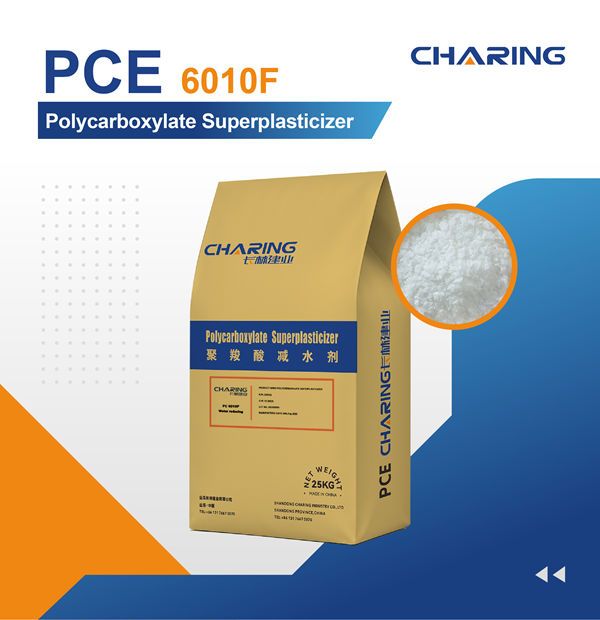
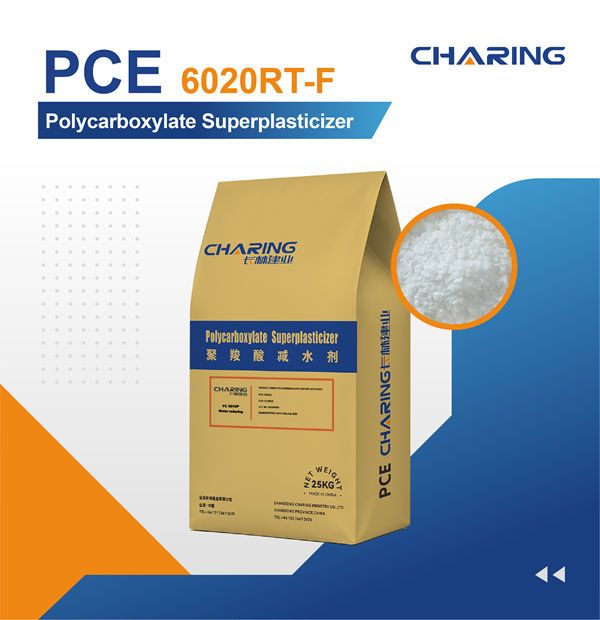
| PCE superplasticizer | 0.2–0.5% of binder; powder PCE preferred for dry-mix | 0.3–1.0%; higher dose to reach 200+ mm spread without bleeding |
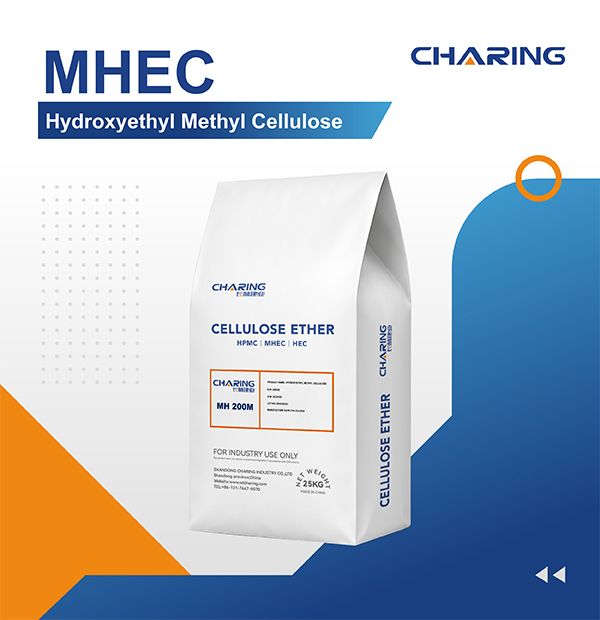
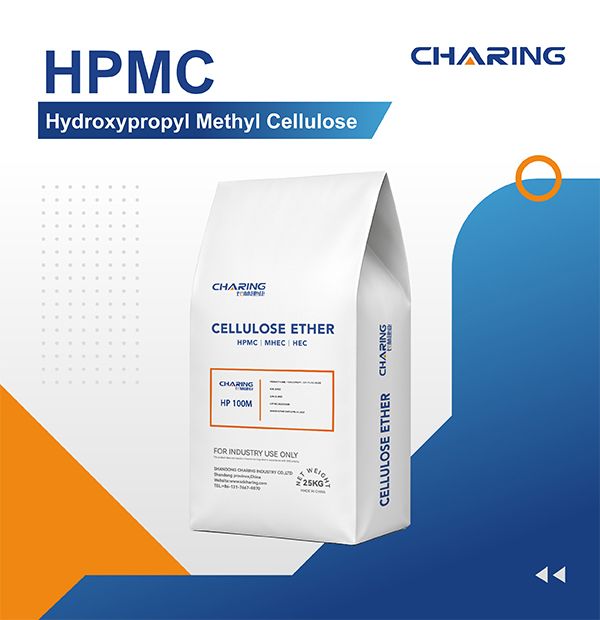
| Cellulose ether (HPMC / MHEC) | 0.03–0.08%, viscosity 20,000–60,000 mPa·s; controls water retention and anti-sag on the thin edge | 0–0.02%, or none. Too much ether holds air and cuts strength — the opposite of what a grout needs |
| Defoamer | 0.05–0.15% powder; pinholes are the number-one cosmetic complaint on a floor | 0.03–0.10%; controls surface crust and density loss, less critical than on compound |
| Redispersible polymer (RDP) | 1–3%; improves flexural bond over wood, old tile, heated screeds | Usually 0–1%; strength and modulus matter more than flexibility |
| Setting control | Casein 0.5–1.5% for open time; tartaric acid 0.05–0.15% retarder; Li₂CO₃ 0.05–0.2% accelerator for cold weather | Retarder 0.02–0.1% for pumpability; accelerator for 1-day strength |
| Expansive agent | Not typical — shrinkage is handled by the binder system | 3–8%, essential. This is the single biggest formulation difference |
| Anti-bleeding / anti-settlement | Rarely needed | 0.02–0.06% welan gum or diutan gum; without it coarse aggregate sinks and water rises |
No — and this is where money gets lost. Three concrete scenarios:
Compound used as grout under a base plate. The 1.2 mm sand cannot fill a 50 mm void; the mix segregates, the top layer is water-rich and weak, and the plate rocks under load. You get a rejected installation and a claim.
Grout used as floor compound. At 3–5 mm the 3–8 mm aggregate simply cannot pass under the gauge rake; the surface is rough, and the high expansion plus high modulus causes curling at the edges. It also costs 40–60% more per square metre than it needs to.
Either used as tile grout. Both are designed to flow; in a vertical 3 mm joint they run out. The joint must be thixotropic. Use a polymer-modified tile grout and keep the self-leveling products for horizontal work.
1.Is the space open or confined?
Open floor area → compound. Gap under a plate, rail, machine or anchor → grout.
2.How thick is the layer?
Under 10 mm → compound. Over 10 mm and load-bearing → grout, or compound with coarse aggregate up to 30 mm.
3.Does it carry load or just receive flooring?
Load path (machinery, columns, crane rails) → grout with 50 MPa+ and positive expansion. Flooring only → compound at C20–C30 is enough.
4.What is the strength and shrinkage standard on the drawing?
JC/T 985 / EN 13813 points to compound. ASTM C1107 / GB/T 50448 points to grout. Quote against the standard named, not against the word "self-leveling".
Is self-leveling grout the same as self-leveling compound?
No. Grout fills a confined volume and develops high, non-shrink strength; compound spreads over an open area to create a flat surface. They share additives but differ in aggregate, thickness, flow and expansion system.
Can self-leveling compound be used to grout a machine base?
Only for very shallow bedding under 10 mm with a fine-aggregate grade. For 25–100 mm voids it will segregate and lose strength at the top; use a proper non-shrink precision grout.
Which one do I need for floor leveling under vinyl or laminate?
Self-leveling compound, at 2–5 mm, over a primed substrate. Check the residual moisture requirement of the flooring adhesive before choosing a gypsum-based grade.
How much HPMC goes into a self-leveling compound?
Typically 0.03–0.08% of the dry mix, with viscosity between 20,000 and 60,000 mPa·s. Higher viscosity at the low end of the dose range controls edge slump better without holding air.
Why does my self-leveling compound have pinholes?
Almost always entrained air: insufficient defoamer, over-dosing of cellulose ether, or mixing at too high a shear for too long. Add 0.05–0.1% powder defoamer and cut mixing speed before pouring.
Can I use one additive package for both products?
Partly. PCE and defoamer can be shared; cellulose ether dose, expansive agent and anti-bleeding gum must be re-tuned. Selling one blend for both applications is a common cause of field failures.
Formulating either product? CHARING supplies the full additive package for self-leveling systems — PCE superplasticizer powder, HPMC / MHEC cellulose ether, redispersible polymer powder, powder defoamer, casein and lithium carbonate — with TDS and COA for each lot. Tell us your target standard (JC/T 985, EN 13813, ASTM C1107) and layer thickness, and we will propose the dosage set.
Contact: sdcharing.com/contact-us | WhatsApp +86 150 6613 3527

E-mail: sdcharing@sdcharing.com
Phone: +86 131 7667 0070
WhatsApp: +8615066133527
Add.: No.605-606,NO1 BUILDING,WANGYUE ZHIGU INDUSTRY PARK,NO.1919 WANGYUE ROAD, SHIZHONG AREA,JINAN CITY, SHANDONG PROVINCE,CHINA