- Home
- Products +
- Industries +
- About Us +
- News
- Contact Us

- Home
- Products
- Industries
- About Us
- News
- Contact Us

CHARING manufactures HPMC, RDP, and PCE for dry-mix mortar and concrete — supplying high quality products across Southeast Asia, the Middle East, South America and Africa for over a decade. We share what we know.
1. Three Paint Systems, Three Jobs
| System | Substrate | What it needs |
| Stone paint (textured) | Exterior wall | Thicken + water resistance + texture hold |
| Latex paint (emulsion) | Interior wall | Thicken + flow + levelling |
| Industrial coating | Concrete, metal | Thicken + anti-sag + salt resistance |
2. What the Cellulose Ether Does
In water-based paints, the cellulose ether is the rheology controller. It:
Thickens the liquid so it does not run off the brush or roller
Holds water so the paint film stays workable long enough to level
Stabilises the pigment and filler in suspension
Improves flow and levelling so the surface is smooth
For exterior use (stone paint), heat resistance and water resistance matter more. For interior (latex paint), flow and clarity matter more. For industrial, salt and alkali resistance matter.
3. CHARING Grades by Application
Stone paint (textured exterior)
| Grade | Type | Viscosity (2%) | Why |
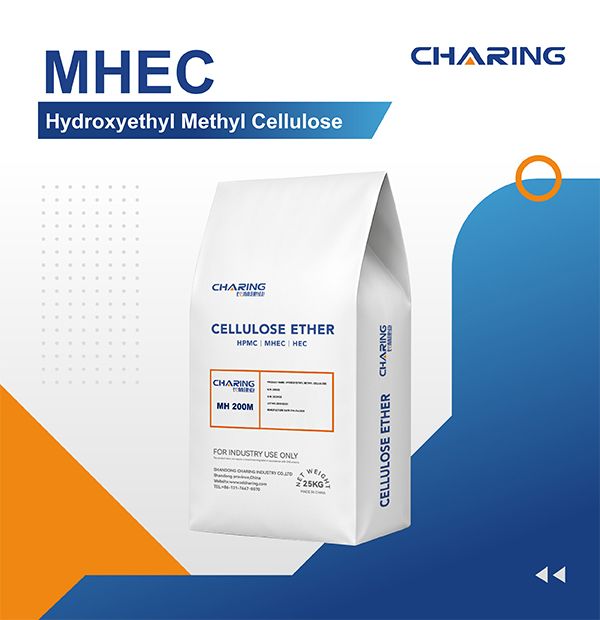
| MH 100MS | MHEC, surface-treated | ~100,000 mPa·s | Heat resistance (75°C gel), flow + texture hold |
| HE 100000 | HEC | 80,000–120,000 cps | Thickener, water retention |
| HE 150000 | HEC | ~150,000 cps | Higher viscosity for thicker textures |
Stone paint takes a beating — sun, rain, thermal cycling. MHEC's higher gel temperature (70–75°C) and HEC's water retention hold the texture on a hot wall.
Latex paint (interior wall)
| Grade | Type | Viscosity (2%) | Why |
| MH 100MS | MHEC, surface-treated | ~100,000 mPa·s | Surface-treated — disperses fast, no lumps |
| HE 30000 | HEC | 30,000 cps | Low viscosity, good flow |
| HE 50000 | HEC | 50,000 cps | Mid viscosity, balanced flow and thickening |
Surface-treated grades (the "MS" suffix) are critical for paint. They disperse in cold water within 30 seconds without forming lumps ("fish eyes"). Without surface treatment, undissolved particles ruin the surface.
Industrial coating
| Grade | Type | Viscosity | Why |
| HE 300 | HEC | 250–400 cps (1%) | Low viscosity, deep penetration on porous substrate |
| HE 100000 | HEC | 80,000–120,000 cps | Anti-sag on vertical surfaces |
HEC is the workhorse here. It resists salt, alkali, and pH swings — important when the substrate is concrete (alkaline) or the coating faces chemical exposure.
4. Surface-Treated vs Non-Treated — the Critical Difference
Paint is mixed at the factory or on site, often in minutes. There is no time for undissolved lumps.
Surface-treated grades (the "MS" suffix): disperses in cold water within 30 seconds. Use these for paint.
Non-treated grades: take 10+ minutes to dissolve. Risky in paint — any undissolved lump becomes a surface defect.
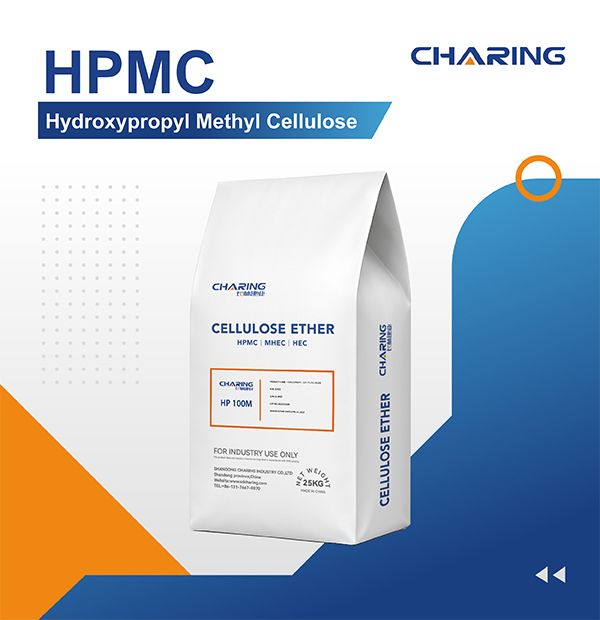
For paint applications, always specify surface-treated. MH 100MS, MH 200MS, HP 200MS — all are surface-treated grades.
5. Common Mistakes
1. Using non-treated grade in paint. Lumps form, surface defects appear. Always use surface-treated (MS suffix) in paint.
2. Too high viscosity. High viscosity improves thickening but kills flow. Match viscosity to the application — HE 30000 for latex paint, HE 100000 for stone paint.
3. Wrong type for exterior. Standard HPMC gels at 55–60°C. On a sun-exposed dark facade in the Middle East, it loses thickening. Use MHEC (MH series) or HEC for exterior.
4. No anti-sag additive for vertical application. On a wall, a low-viscosity paint sags before setting. Add thickener (HE 100000+) or use the right viscosity grade.
For technical support, free samples, or help with your paint formulation:
Shandong Charing Industry Co., Ltd.
Email: info@sdcharing.com
Website: www.sdcharing.com

E-mail: sdcharing@sdcharing.com
Phone: +86 131 7667 0070
WhatsApp: +8615066133527
Add.: No.605-606,NO1 BUILDING,WANGYUE ZHIGU INDUSTRY PARK,NO.1919 WANGYUE ROAD, SHIZHONG AREA,JINAN CITY, SHANDONG PROVINCE,CHINA