- Home
- Products +
- Industries +
- About Us +
- News
- Contact Us

- Home
- Products
- Industries
- About Us
- News
- Contact Us

Oct. 10, 2026
Concrete Admixture Technical Guide · No. 18
Machine-made sand is now the main fine aggregate in many markets, but it often carries clay and stone powder that drive up the demand for polycarboxylate superplasticizer (PCE). This guide explains why, and how to keep the concrete workable without washing the sand.
Natural river sand is running out, or its extraction is restricted for environmental reasons. Machine-made (manufactured) sand — crushed from rock — has become the standard fine aggregate.
But it is not the same as river sand:
| River Sand | Machine-Made Sand | |
| Particle Shape | Rounded, smooth | Angular, rough |
| Clay Content | Usually low | Can be high |
| Stone Powder (<75 µm) | Little | Significant |
| Water Demand | Lower | Higher |
Machine-made sand brings two things that raise the PCE dose — and they are not the same.
| Stone Powder | Clay | |
| What It Is | Fine rock dust from crushing | Clay minerals (montmorillonite, kaolin) |
| Effect on PCE | Mild — raises water demand | Severe — consumes the PCE |
| How to Tell Them Apart | Does not absorb methylene blue | Absorbs methylene blue (high MB value) |
The distinction matters. A high stone-powder content is not the same as a high clay content. The methylene blue (MB) value tells them apart: clay absorbs the dye, stone powder does not.
Clay minerals — especially montmorillonite — have a layered structure. The long side chains of the PCE slip between the layers and are trapped, a process called intercalation. A small amount of clay can therefore consume a large amount of PCE, leaving little to disperse the cement.
Stone powder is milder: it mainly adds surface area and fine particles, raising the water demand, but it does not trap the PCE in the same way.
Many sites cannot wash the sand — there is no water, space or equipment. The realistic answer is to adjust the two water reducers, reading the timing:
| Symptom | Timing | Remedy |
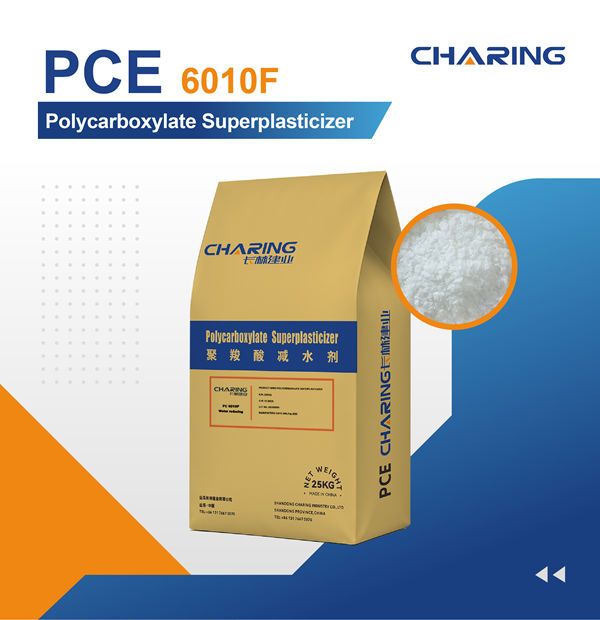
| Concrete stiff from the start | Immediately | Raise the standard reducer (PC 6010) |
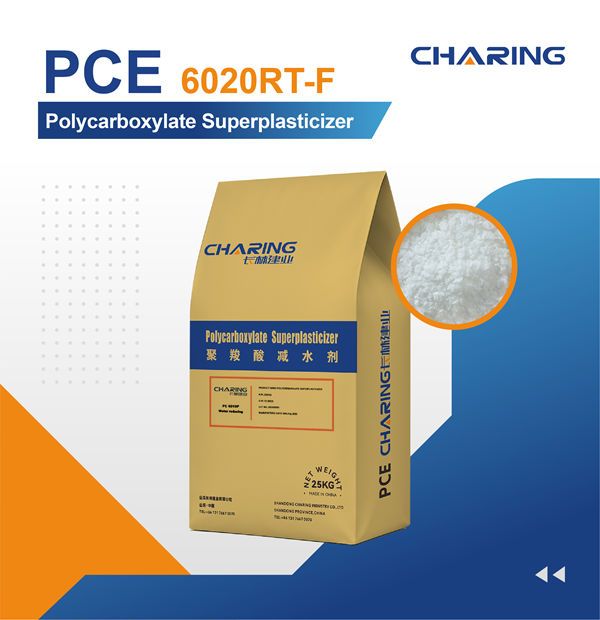
| Fine at first, then loses slump fast | After ~30 minutes | Raise the high slump-retention PCE (PC 6020RT) |
The clay consumes PCE from the first minute, so the initial dose must be raised. Later, more clay keeps consuming PCE, so the retention component must be raised.
Test, do not guess. Raise in small steps and watch the timing.
Do not overdose. Beyond the saturation point, more PCE causes bleeding, segregation or delayed setting.
Measure the MB value. It tells you whether the real problem is clay or stone powder, and how much dose you need.
Do not confuse stone powder with clay. They need different treatment.
Machine-made sand is not going away. The sites that succeed are the ones that read their sand correctly — clay or stone powder, how much, and when it eats the PCE — and adjust the two water reducers accordingly.
Why does my PCE dose keep rising?
Because the machine-made sand carries clay that consumes the PCE.
Is stone powder the same as clay?
No. Stone powder raises water demand; clay consumes the PCE. The methylene blue value tells them apart.
Do I have to wash the sand?
No. Most sites cannot. Adjust the dose instead — raise PC 6010 for early stiffness, PC 6020RT for later slump loss.
What is a high MB value?
It means the sand carries clay that absorbs methylene blue. A higher MB value means more clay, and a higher PCE dose.
Can I just keep adding PCE?
No. Beyond the saturation point, more PCE does not help — it causes bleeding and delayed setting.
For a complete overview of every concrete admixture and when to use each, read Concrete Admixtures: The Complete Guide.
To see why PCE sometimes underperforms, read Why Does Polycarboxylate Superplasticizer (PCE) Sometimes Not Work?.
To see the right dosage for different concrete, read How Much Polycarboxylate Superplasticizer (PCE) Do You Need?.

E-mail: sdcharing@sdcharing.com
Phone: +86 131 7667 0070
WhatsApp: +8615066133527
Add.: No.605-606,NO1 BUILDING,WANGYUE ZHIGU INDUSTRY PARK,NO.1919 WANGYUE ROAD, SHIZHONG AREA,JINAN CITY, SHANDONG PROVINCE,CHINA