- Home
- Products +
- Industries +
- About Us +
- News
- Contact Us

- Home
- Products
- Industries
- About Us
- News
- Contact Us

Oct. 09, 2026
Concrete Admixture Technical Guide · No. 17
Dry-mix mortar is a pre-blended dry powder. It cannot carry water, so its water reducer must be a powder. This guide explains which powder to use — and the choice is more subtle than it looks.
"Mortar needs a powder" is only half the story. There are two kinds of mortar, and they use the admixture differently.
| Type | What It Is | Admixture Form |
| Dry-Mix Mortar | Pre-blended dry powder, bagged and shipped dry | Must be a powder |
| Wet-Mix Mortar | Mixed with water at the plant or on site | Can be a liquid (or a flake dissolved in water) |
Only the dry-mix form — grouts, self-leveling compounds, tile adhesive, repair mortars — requires a powder.
A powder polycarboxylate superplasticizer (PCE) can come from two routes — and the milled route splits again.
| Powder | How It Is Made | Heat Behaviour | Best For |
| Spray-dried (PC 3010) | Liquid dried with hot air | Heat-stable by nature | Dry-mix mortar |
| Flake-milled, protected (PC 2018) | Flake milled + heat-protection agent | Heat-stable | Dry-mix mortar, hot regions |
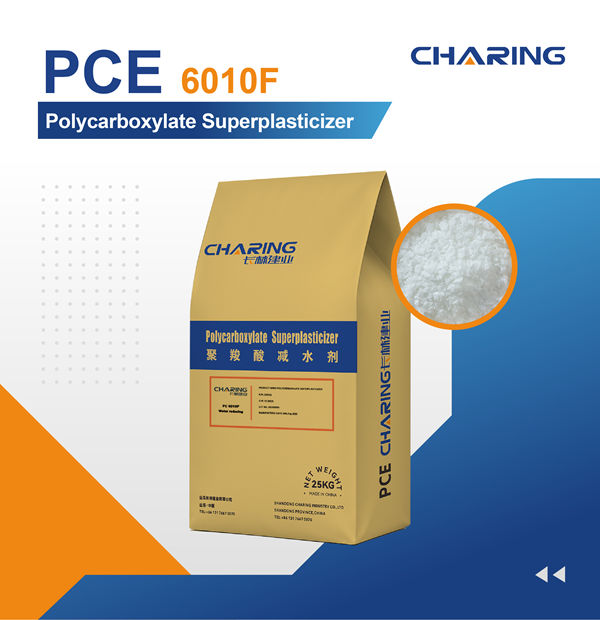
| Flake-milled, plain (PC 6010P) | Flake milled, no protection | Softens around 50 °C | Concrete (dissolve in water) |
The key distinction: milled powder comes in two kinds — with a heat-protection agent, or without. In a hot country, this decides whether a dry-mix mortar works or clumps in the bag.
PC 3010 — Spray-Dried, the Mortar Standard
PC 3010 is our spray-dried powder for dry-mix mortar. Three properties make it well suited:
1.Heat resistance — it has already passed through a high-temperature drying step, so it does not soften easily.
2.Adaptability to different cements — it works well across a wide range, including difficult local cements.
3.Excellent mortar flow — the flow that self-leveling and grouting compounds need.
Where the cement is poor, and a self-leveling or grouting mix must hold its flow, a spray-dried reducer is the reliable choice.
PC 2018 — Milled Powder with a Heat-Protection Agent
PC 2018 is flake-milled, but with a heat-protection agent added. The milled route keeps the polymer fully intact, and the protection agent stops it from softening at high temperature.
This makes it the right choice for dry-mix mortar in hot regions, where a plain milled powder would soften and clump.
The trade-off is active content: the protection agent takes up about 9%, so PC 2018 carries 91% active content, versus 97% for the plain milled powder. You accept a slightly lower active content to gain heat stability.
| Property | PC 2018 |
| Form | Flake-milled powder + heat-protection agent |
| Active Content | 91% min |
| Water Reduction | ≥ 25% |
| Dosage | 0.05%–1.5% of cementitious material |
| Key Strength | Heat-stable, good adaptability to different cements |
PC 6010P — Plain Milled Powder, for Concrete
PC 6010P is flake-milled with no protection agent. The milling keeps the polymer fully intact — it dissolves quickly in water and performs exactly like the flake.
Its one weakness is heat: it begins to soften around 50 °C. For concrete this does not matter, because you dissolve it in water. But in dry-mix mortar it does — a powder that softens will clump and mix poorly with the other dry powders.
This is the advantage a solid PCE brings:
| From the Same Flake | Result |
| Dissolved in Water | Liquid admixture for concrete |
| Milled into Powder | Powder admixture for dry-mix mortar |
One product, two markets. A liquid mother liquor cannot do this.
In dry-mix mortar, the water reducer does the same core job as in concrete — but tuned for flow and early strength rather than raw water reduction.
| Application | What the Reducer Delivers |
| Self-Leveling Compound | High flow, smooth self-levelling surface |
| Grout | Flow that fills narrow joints, low shrinkage |
| Tile Adhesive | Workability, open time, wetting of the tile |
A lower water demand also means higher strength and lower shrinkage in the finished mortar.
| Model | Form | Water Reduction | Dosage |
| PC 3010 | Spray-dried | ≥ 25% | 0.05%–0.3% |
| PC 2018 | Milled + protection | ≥ 25% | 0.05%–1.5% |
The exact dosage depends on the mix design and the cement. Always run a trial batch.
Do not overdose. Beyond the saturation point, extra reducer does not improve flow — it causes bleeding or delayed setting.
Check compatibility with other powders. Dry-mix mortar also contains cellulose ether, redispersible polymer powder and other additives. Verify the combination works together.
Match the powder to the climate. For hot regions, choose PC 3010 (spray-dried) or PC 2018 (protected milled) — not the plain milled PC 6010P, which softens in heat.
Does mortar always need a powder reducer?
No. Only dry-mix mortar does. Wet-mix mortar can use a liquid or a dissolved flake.
What is the difference between 3010, 2018 and 6010P?
3010 is spray-dried; 2018 is milled with a heat-protection agent; 6010P is plain milled and softens in heat.
Why does 2018 have only 91% active content?
Because about 9% is the heat-protection agent — the trade-off for heat stability.
Which powder for a hot region?
PC 3010 or PC 2018. Avoid the plain milled PC 6010P in hot climates.
Can I mill a flake into powder for mortar?
Yes — that is exactly what PC 2018 and PC 6010P are. The difference is the protection agent.
Can one product serve both concrete and mortar?
Yes — a flake can be dissolved for concrete or milled for mortar. A liquid cannot do this.
For a complete overview of every concrete admixture and when to use each, read Concrete Admixtures: The Complete Guide.
To see what solid PCE is and how it works, read What Is Solid Polycarboxylate Superplasticizer (PCE)?.
To see how flake PCE is made and why it keeps full performance, read Bulk Polymerization vs Spray Drying.

E-mail: sdcharing@sdcharing.com
Phone: +86 131 7667 0070
WhatsApp: +8615066133527
Add.: No.605-606,NO1 BUILDING,WANGYUE ZHIGU INDUSTRY PARK,NO.1919 WANGYUE ROAD, SHIZHONG AREA,JINAN CITY, SHANDONG PROVINCE,CHINA