- Home
- Products +
- Industries +
- About Us +
- News
- Contact Us

- Home
- Products
- Industries
- About Us
- News
- Contact Us

Sep. 14, 2026
Concrete Admixture Technical Guide · No. 02
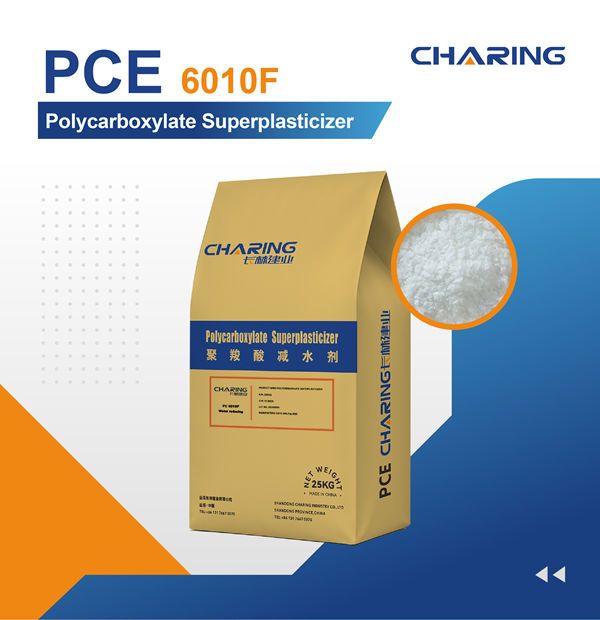
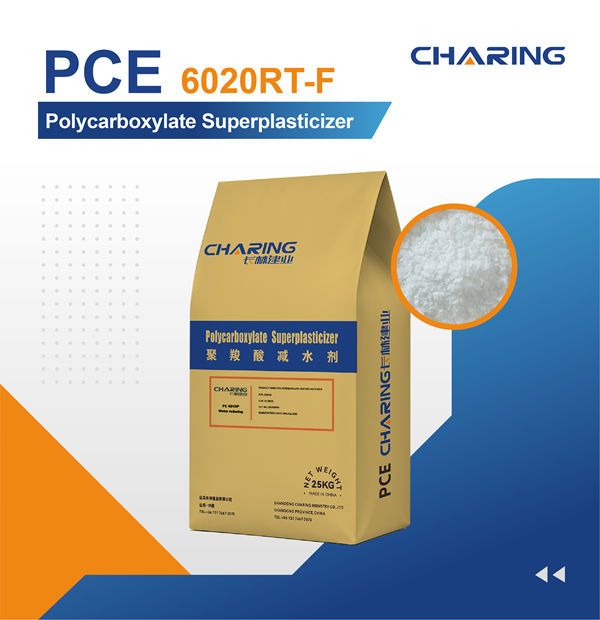
Not all solid polycarboxylate superplasticizer (PCE) is the same. Flake PCE is made by bulk polymerization, while one kind of powder is made by spray drying. The difference is heat — and heat can damage the polymer. Flake avoids heat, so it keeps full performance.
A Quick Look at the PCE Molecule
PCE is a comb-shaped polymer with a main chain and long side chains. The main chain anchors to the cement particle, while the side chains separate the particles — this is how PCE disperses the cement and makes concrete flow.
The side chains are the sensitive part. They are made of polyether, and heat can break or oxidise them. When the side chains are damaged, the PCE performs worse.
How the solid form is produced therefore matters greatly.
Three Ways to Make PCE
| Route | Result | Water | Heat | Notes |
| Water-Solution Polymerization | Liquid mother liquor (40% to 55% active) | Present | None | The most common route |
| Spray Drying | Powder | Removed by hot air | High | Heat can damage the side chains; a carrier or filler (often >10%) is added |
| Bulk Polymerization | Flake | None | Low (flaking only) | Monomers react directly; molecule stays intact |
1. Water-solution polymerization. Most PCE starts as a liquid — the monomers react in water, producing a liquid of about 40% to 55% active content.
2. Spray drying. To make powder, the liquid is dried with hot air. This removes the water, but the heat can damage the side chains, and a carrier or filler — often more than 10% — is added, which lowers the active content.
3. Bulk polymerization. The monomers react directly, with no water and no solvent, producing a near-solid polymer that is then cut into flakes at low temperature. No water means no drying step; low temperature means no heat damage.
Why Bulk Polymerization Is Hard
Bulk polymerization has a real cost: it is difficult to control.
In water-solution polymerization, the water acts as a coolant — it absorbs the heat of the reaction and keeps the mixture fluid. In bulk polymerization there is no water, so:
The reaction releases considerable heat, with nothing to carry it away.
As the chains grow, the mixture becomes increasingly viscous.
The more viscous the mixture, the harder it is to stir and to hold the temperature steady.
If the temperature runs away, the molecular weight drifts and the batch is spoiled.
This is why flake PCE was not common for many years: controlling bulk polymerization at production scale is genuinely difficult. Only recently has the process become stable enough for reliable output. The difficulty is also the reason flake is a mark of real technical capability.
Flake vs Powder: The Key Difference
| Flake (bulk Polymerization) | Powder (spray Drying) | |
| How It Is Made | Monomers react directly, then flaked at low temperature | Liquid dried with hot air |
| Water in the Process | None | Removed by heat |
| Heat damage to the polymer | None | Possible |
| Active Content | 97% to 100% | Lower, often with more than 10% filler |
| Performance | Matches liquid mother liquor | Can be weaker |
Why This Matters for You
You want a solid PCE that performs like the liquid. Flake delivers that — it is the same polymer as the liquid, simply without the water.
Spray-dried powder is a compromise: liquid that has passed through heat. It can work, but it can also be weaker.
Flake is the better solid form. That is the simple answer.
The Second Kind of Powder
There are two powders. One is spray-dried; the other is milled from flake.
| Powder | Process | Performance |
| Spray-Dried | Dried from liquid with hot air | Can lose performance |
| Flake-Milled | Flake crushed into powder | Keeps full performance |
If you need powder, ask for flake-milled powder — it is the better kind.
FAQ
Is flake PCE the same as liquid PCE?
Yes, in performance. Flake is the same polymer, just dry.
Why is spray-dried powder sometimes weaker?
Because the hot air can damage the polymer side chains, and the active content is often lower.
Does flake PCE use heat?
It uses low-temperature flaking, not hot-air drying, so there is no heat damage.
What is bulk polymerization?
The monomers react directly, with no water and no solvent.
Which should I choose, flake or powder?
Flake, or flake-milled powder. Both keep full performance. Avoid spray-dried powder if you want the best result.
Related reading
For a complete overview of every concrete admixture and when to use each, read Concrete Admixtures: The Complete Guide.
To see what solid PCE is and how it works, read What Is Solid Polycarboxylate Superplasticizer (PCE)?.
To compare solid and liquid PCE side by side, read Solid vs Liquid Polycarboxylate Superplasticizer (PCE).

E-mail: sdcharing@sdcharing.com
Phone: +86 131 7667 0070
WhatsApp: +8615066133527
Add.: No.605-606,NO1 BUILDING,WANGYUE ZHIGU INDUSTRY PARK,NO.1919 WANGYUE ROAD, SHIZHONG AREA,JINAN CITY, SHANDONG PROVINCE,CHINA