- Home
- Products +
- Industries +
- About Us +
- News
- Contact Us

- Home
- Products
- Industries
- About Us
- News
- Contact Us

Sep. 15, 2026
Concrete Admixture Technical Guide · No. 04
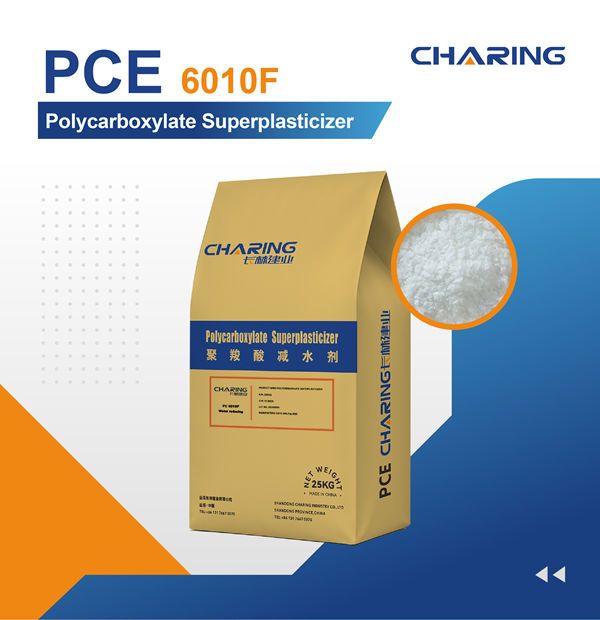
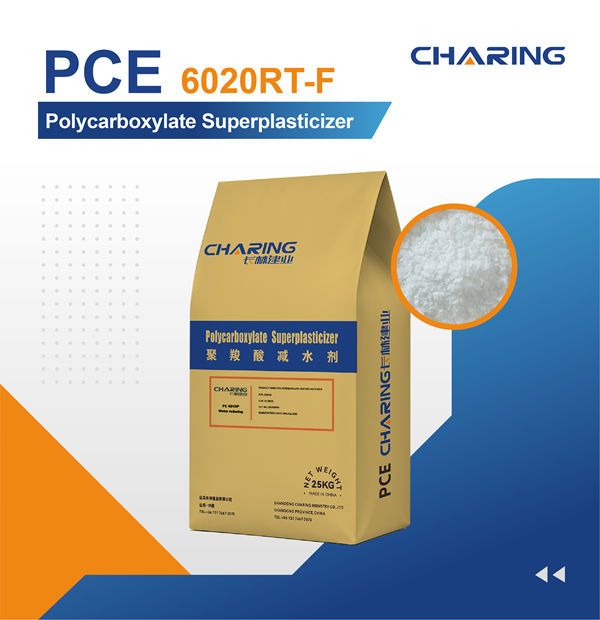
Flake and liquid polycarboxylate superplasticizer (PCE) are the same polymer. The only difference is water: liquid carries it, flake does not. That single difference changes the freight, the storage, the quality, and the dosing. Here is the full picture.
The Basic Numbers
| Liquid Mother Liquor | Solid Flake | |
| Active Content | About 40% to 55%, usually around 50% | 97% to 100% |
| The Rest | Water | Almost nothing |
| Dosage, by Active Content | 0.1% to 0.5% of cement weight | 0.1% to 0.5% of cement weight |
The dosage is the same, because the active PCE is the same. By weight, you use about half as much flake as 50% liquid.
Freight: You Ship Product, Not Water
Liquid mother liquor is roughly half water. You pay to ship that water across the ocean. Flake is nearly all product, so one container of flake carries more active PCE than one container of liquid.
| Container | Liquid (55% Solids) | Flake (≈100% Solids) |
| 20-foot | 20 t → 11 t active PCE | 18 t → 18 t active PCE |
| 40-foot | — | 28 t → 28 t active PCE |
The same container carries about 60% more active PCE when you ship flake. The saving is real, but the logic is simple: you save the cost of shipping water.
The Deeper Difference: Water Brings Three Problems
Freight is the part everyone sees. The deeper problem is what water does to the product over time.
| Problem | Mechanism | How Flake Avoids It |
| Molecular Drift | The polymer slowly hydrolyses in water, so its performance drifts. High slump-retention types are most sensitive, because their ester groups hydrolyse first. | No water, no hydrolysis. The molecule stays stable. |
| Bacteria | Water plus nutrients feeds bacteria. Purified water prevents it but costs more; tap water can spoil the liquid; bactericide itself can affect quality. | No water, no bacteria. You mix fresh when needed. |
| Concentration Risk | Liquid can be 10%, 20%, 40% or 50% active. A batch labelled "50%" may actually be 45%, so the dose is wrong. | Fixed at 97% to 100% active in every bag. |
This is why flake is not merely equal to liquid — over time, it is better.
Storage
| Liquid | Flake | |
| Container | Drums or tanks | Dry bags |
| Spoilage | Can spoil over time, especially in warm weather | Stable if kept dry |
| Freezing | Can freeze in cold weather | Does not freeze |
| Shelf Life | Limited | About one year (keep dry, cool, away from sun; still usable if not yellowed) |
Handling and Use
Liquid is ready to use — pump it straight into the dosing system.
Flake requires one extra step: dissolve it in water first. A simple tank, pump and stirrer is sufficient, after which it is used like liquid.
That extra step is small, but it lets you produce the exact concentration required for your local cement and sand.
Which Should You Choose?
| Choose Liquid If… | Choose Flake If You Want To… |
| You are close to a supplier | Save freight (ship product, not water) |
| You Use Large Volumes | Keep quality stable (no drift, no bacteria) |
| You Can Control Storage | Know your exact dose (97% to 100% active) |
| Store longer and more safely | |
| Make your own liquid and control the formula |
FAQ
Is flake weaker than liquid?
No. It is the same polymer, and it is more stable over time.
Why does liquid lose quality over time?
The water causes three problems: the polymer slowly hydrolyses, bacteria can grow, and the concentration can drift from what the supplier claimed.
Does flake freeze?
No. It is dry. Liquid can freeze in cold weather.
Is flake dosing more accurate?
Yes. Flake is 97% to 100% active, so the dose is always known. Liquid strength varies and must be taken on trust.
Does flake save freight?
Yes. It carries about 60% more active PCE in the same container. Liquid is about half water.
How long can I store flake?
About one year, if kept dry, cool and away from sunlight.
Related reading
For a complete overview of every concrete admixture and when to use each, read Concrete Admixtures: The Complete Guide.
To see what solid PCE is and how it works, read What Is Solid Polycarboxylate Superplasticizer (PCE)?.
To see why solid PCE saves freight, read Powder or Flake: Which Solid Polycarboxylate Superplasticizer (PCE)?.

E-mail: sdcharing@sdcharing.com
Phone: +86 131 7667 0070
WhatsApp: +8615066133527
Add.: No.605-606,NO1 BUILDING,WANGYUE ZHIGU INDUSTRY PARK,NO.1919 WANGYUE ROAD, SHIZHONG AREA,JINAN CITY, SHANDONG PROVINCE,CHINA