- Home
- Products +
- Industries +
- About Us +
- News
- Contact Us

- Home
- Products
- Industries
- About Us
- News
- Contact Us

Sep. 15, 2026
Concrete Admixture Technical Guide · No. 03
Dissolving solid polycarboxylate superplasticizer (PCE) flake is straightforward. You need water, a tank, a pump and a stirrer — no complex equipment. You can compound your own liquid admixture on site.
The Short Version
1.Add water to a tank.
2.Add the flake.
3.Stir until dissolved.
4.Add any other additives.
5.Use the liquid.
That is the entire process. No heat and no high pressure are required.
What Equipment You Need
A chemical plant is not necessary. A simple mixing line is sufficient.
| Required | Purpose |
| Tank (stainless Steel Preferred) | Mixing vessel, any size to suit your volume |
| Pump | Moves the liquid in and out |
| Stirrer (agitator) | Disperses the flake into the water |
| Not Required | Why You Can Skip It |
| Storage Tank | Catch the finished liquid in an existing drum or tank |
| Hoisting Crane | The flake arrives in bags — feed it by hand, from the top or the bottom |
| Steel Frames or Towers | They add cost without adding value |
Most customers purchase a standard tank locally, or use equipment they already have. Keep it simple.
Step by Step
Step 1. Add water to the tank. Use clean water; room temperature is fine.
Step 2. Add the flake. Feed it from the top or the bottom — both work. Add slowly while stirring.
Step 3. Stir until fully dissolved. The result is a clear liquid with no lumps and no residue. The flake dissolves quickly, so this does not take long.
Step 4. Add your other additives. If the formula requires a retarder, a defoamer or other small additives, add them after the flake is fully dissolved.
Step 5. Pump out and use. Pump the finished liquid to the dosing tank or directly to the batching plant.
How Strong Should You Make It?
You control the concentration — either a strong mother liquor or a ready-to-use liquid, depending on your formula and your local cement and sand.
One tip: prepare a clear, stable solution first, then dilute it to the target concentration. It mixes more uniformly this way.
Always run a trial mix before a large batch.
Compounding: The Small Additives
Dissolving is only half the job. A real admixture is usually compounded — the PCE is combined with small additives that tune the performance.
| Additive | What It Does | Typical Dosage | When to Add |
| Retarder (sodium gluconate, sugar, citric acid) | Slows setting, more placing time | 0.05%–0.2% of cement | After the flake is fully dissolved |
| Defoamer | Controls air content | 0.01%–0.05% | Last, after measuring air |
| Air-Entraining Agent | Fine bubbles for freeze–thaw resistance | 0.005%–0.05% | With the mix water |
The order matters: dissolve the flake first, then add the small additives, then adjust.
Two points to keep in mind:
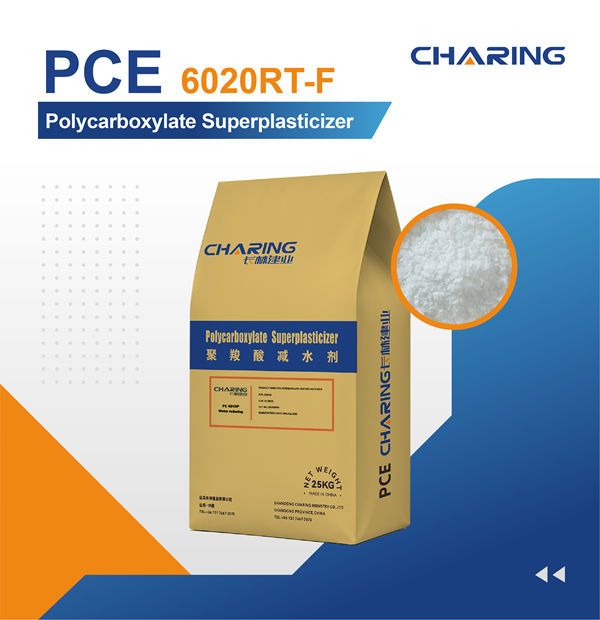
A high slump-retention PCE (PC 6020RT) often needs a defoamer, because it entrains more air.
A well-chosen PCE is compatible with these small additives, which lets you compound freely for your local cement and sand.
The Saudi example above is itself a compound: citric acid and sugar are both retarders, added to the dissolved flake to control setting in hot weather.
Two Simple Rules
Do not mix flake PCE with naphthalene-based water reducers.
Keep the flakes dry before use.
Why Simple Equipment Is Enough
Flake PCE dissolves in plain water, requiring no heat and no high pressure. The equipment therefore stays simple. A tank, a pump and a stirrer are all the hardware needed to turn solid flake into liquid admixture.
A Real Example
A customer in Saudi Arabia followed exactly this procedure.
| Component | Amount |
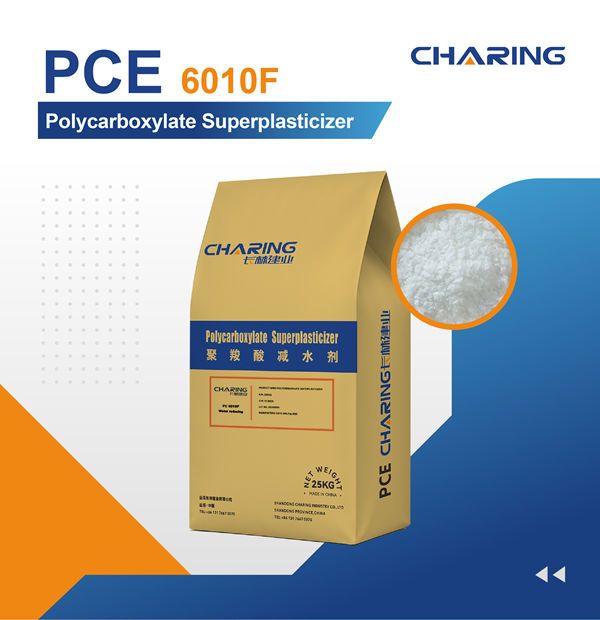
| PC 6010F flake | 15 g |
| Citric Acid (retarder) | 1.5 g |
| Sugar (retarder) | 1 g |
| Water | 85 g |
| Resulting Liquid | ≈ 100 g, about 15% active |
He dosed 1.25 g of this liquid per 100 g of cement — about 0.19% active PCE, at a water-binder ratio of roughly 0.29.
His words: "The result was very good."
Ocean freight in his region had risen sharply, which is why he switched from liquid to flake. He now produces his own liquid in small batches, using simple equipment.
FAQ
Do I need special equipment?
No. A stainless steel tank, a pump and a stirrer are sufficient.
Do I need a storage tank?
No. Catch the finished liquid in an existing drum or tank.
Can I feed the flake from the top or the bottom?
Both work.
Do I need a hoisting crane?
No. Feed the flake by hand — it arrives in bags.
Can I buy the equipment locally?
Yes. Any standard mixing tank works; you do not need to import complex equipment.
Can I add other additives to the liquid?
Yes. Add them after the flake is fully dissolved.
Related reading
For a complete overview of every concrete admixture and when to use each, read Concrete Admixtures: The Complete Guide.
To learn how to compound a PCE admixture, read How to Compound a Polycarboxylate Superplasticizer (PCE) Admixture.
To choose between the PCE models, read Which Polycarboxylate Superplasticizer (PCE) Should You Choose?.

E-mail: sdcharing@sdcharing.com
Phone: +86 131 7667 0070
WhatsApp: +8615066133527
Add.: No.605-606,NO1 BUILDING,WANGYUE ZHIGU INDUSTRY PARK,NO.1919 WANGYUE ROAD, SHIZHONG AREA,JINAN CITY, SHANDONG PROVINCE,CHINA