- Home
- Products +
- Industries +
- About Us +
- News
- Contact Us

- Home
- Products
- Industries
- About Us
- News
- Contact Us

Oct. 12, 2026
Concrete Admixture Technical Guide · No. 19
A polycarboxylate superplasticizer (PCE) is rarely used alone. The admixture that actually reaches the batching plant is usually a compound — the PCE blended with small additives that tune its behaviour. How well it is compounded decides how the concrete performs.
Compounding means taking a PCE and blending it, in the right proportions, with small additives such as a retarder, a defoamer or an air-entraining agent. The result is a formulated admixture matched to a specific job.
Because the cement, the sand and the weather all differ, there is no single "universal" blend. Compounding is how one base PCE serves many different jobs.
A plain PCE does one thing very well: reduce water and increase flow. It does not, on its own, handle every requirement:
| Requirement | What you add |
| More placing time in hot weather | A retarder |
| Control the air content | A defoamer (or an air-entraining agent) |
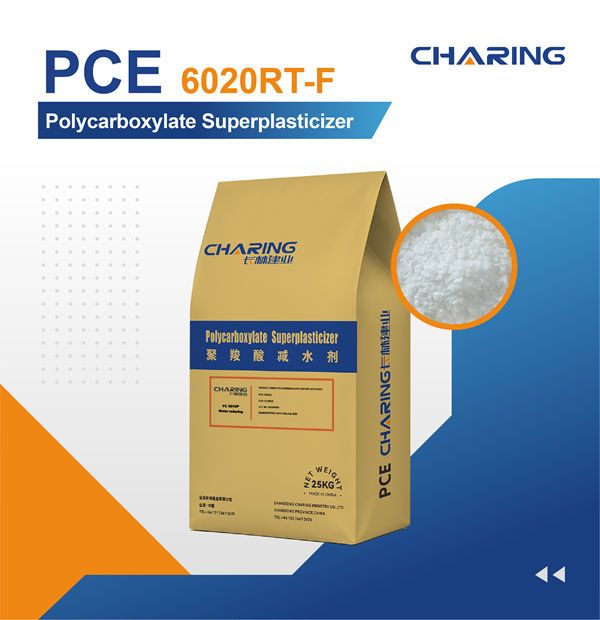
| Hold the slump for hours | A high slump-retention PCE (PC 6020RT) |
| Faster early strength | An early-strength PCE (PC 6030E) |
| Additive | What it does | Typical dosage | When to add |
| Retarder (sodium gluconate, sugar, citric acid) | Slows setting | 0.05%–0.2% of cement | After the PCE is dissolved |
| Defoamer | Reduces air content | 0.01%–0.05% | Last, after measuring air |
| Air-entraining agent | Adds fine bubbles for freeze–thaw resistance | 0.005%–0.05% | With the mix water |
The order matters: dissolve the PCE first, then add the small additives, then adjust.
Dissolve first, then compound. Add the small additives only after the PCE is fully dissolved.
Add in small steps. A little of a retarder or defoamer goes a long way. Measure, then adjust.
Test the combination. Compatibility between the PCE and the other additives is not automatic — verify it in a trial mix.
Do not mix with naphthalene-based reducers. They are incompatible with PCE.
| Situation | Compound | Why |
| Hot weather, long transport | PCE + retarder | Slows setting, holds workability |
| Long transport, large pour | PC 6010 + PC 6020RT (9:1 to 3:1) + defoamer | Sustained slump without delay, controlled air |
| Cold climate | PCE + air-entraining agent | Freeze–thaw resistance |
| Fast demoulding | PC 6030E | Early strength |
The retention combination is worth noting: PC 6020RT is a slow-release reducer, not a reducer with a retarder added, and it is often paired with a defoamer because it tends to entrain air.
A PCE is only as flexible as its compatibility with the other additives. Our PCE is built on EPEG monomer with a comb structure, and customers report that it blends smoothly with retarders, defoamers and other small additives.
That matters in practice: it means you can adjust the compound freely for your local cement and sand, instead of fighting incompatibility at every trial batch.
A customer in Saudi Arabia compounded his own admixture from flake:
| Component | Amount |
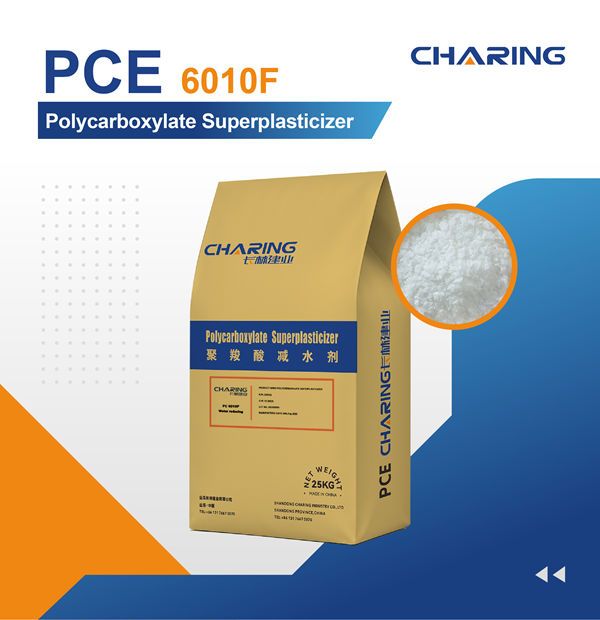
| PC 6010F flake | 15 g |
| Citric acid (retarder) | 1.5 g |
| Sugar (retarder) | 1 g |
| Water | 85 g |
| Resulting liquid | ≈ 100 g, about 15% active |
Two retarders — citric acid and sugar — were added to the dissolved flake to control setting in hot weather. His words: "The result was very good."
Too much retarder and the concrete may not set for a long time, or never set.
Too much defoamer can strip the air you actually need, especially in freeze–thaw concrete.
Never skip the trial mix. Compatibility looks good on paper but must be confirmed with your real materials.
Is a PCE usually used alone?
No. It is usually compounded with a retarder, defoamer or other small additives.
What is the difference between compounding and just mixing?
Compounding is deliberate — you blend in measured proportions to meet a specific requirement, then test the result.
Why do I need a defoamer with PC 6020RT?
Because a high slump-retention PCE tends to entrain air, and excess air lowers strength.
Can I compound my own admixture from flake?
Yes. Dissolve the flake, then add the small additives. Simple equipment is enough.
Do I need to test every compound?
Yes. Test with your own cement and sand before a large batch.
For a complete overview of every concrete admixture and when to use each, read Concrete Admixtures: The Complete Guide.
To see how to dissolve flake and compound your own liquid, read How to Dissolve and Compound Polycarboxylate Superplasticizer (PCE).
To learn how a high slump-retention PCE works, read What Is a High Slump-Retention Polycarboxylate Superplasticizer (PCE)?.

E-mail: sdcharing@sdcharing.com
Phone: +86 131 7667 0070
WhatsApp: +8615066133527
Add.: No.605-606,NO1 BUILDING,WANGYUE ZHIGU INDUSTRY PARK,NO.1919 WANGYUE ROAD, SHIZHONG AREA,JINAN CITY, SHANDONG PROVINCE,CHINA