- Home
- Products +
- Industries +
- About Us +
- News
- Contact Us

- Home
- Products
- Industries
- About Us
- News
- Contact Us
Aug. 12, 2026
| Problem | Most Likely Cause | Check First | Fix |
| Poor flow / stiff mix | PCE dosage too low or PCE type wrong | PCE dosage, water ratio | Adjust PCE to 2-4 kg/t, check water at ~20% |
| Bleeding / water on surface | Too much water or insufficient thickener | Water ratio, stabilizer | Reduce water, add stabilizer 0.3-0.5 kg/t |
| Cracking / shrinkage | Expanding agent ratio wrong | Hardened surface shrinkage | Adjust cement:gypsum ratio, add expanding agent 0.3-0.7 kg/t |
| Slow / uneven setting | Retarder too much or high aluminate ratio off | Setting time vs target | Reduce retarder, adjust high aluminate to ~10% of total binder |
| Low early strength | High aluminate cement insufficient | 6h / 24h compressive strength | Add high aluminate cement 35-40 kg/t, check lithium carbonate |
| Pinholes / surface defects | Trapped air or insufficient defoamer | Surface after curing | Add defoamer 0.5-1.0 kg/t, check mixing speed |
| Delamination from substrate | Substrate not primed or too dry | Tap test for hollow sound | Prime substrate, check substrate moisture |
| Sand / aggregate settling | Stabilizer missing or insufficient | Cross-section of cured mortar | Add stabilizer or silica fume 3-10 kg/t |
Self-leveling compound is the most formulation-sensitive product in dry-mix mortar. It is not like tile adhesive where you have margin for error. SLC is a balance of multiple competing reactions happening simultaneously:
Portland cement provides long-term strength
High aluminate cement provides early strength and adjusts setting time
Calcium sulfate (gypsum/anhydrite) provides expansion to offset cement shrinkage
PCE superplasticizer provides flowability — the defining property of SLC
If any one of these components is out of balance, the whole system fails. Too much gypsum → uncontrolled expansion. Too much high aluminate → flash setting. Too much retarder → no early strength. Too little PCE → no flow.
The water ratio is approximately 20% — much higher than tile adhesive (23-25%) or putty (30-35%). This high water content makes SLC vulnerable to bleeding, segregation, and shrinkage.
Symptoms
The mixed mortar is stiff. It does not spread under its own weight. It requires trowel assistance to level.
Root Cause: PCE Is Not Working
SLC flowability comes from PCE (polycarboxylate ether superplasticizer). If the mortar does not flow, the PCE is either at the wrong dosage, the wrong type, or being consumed by competing reactions.
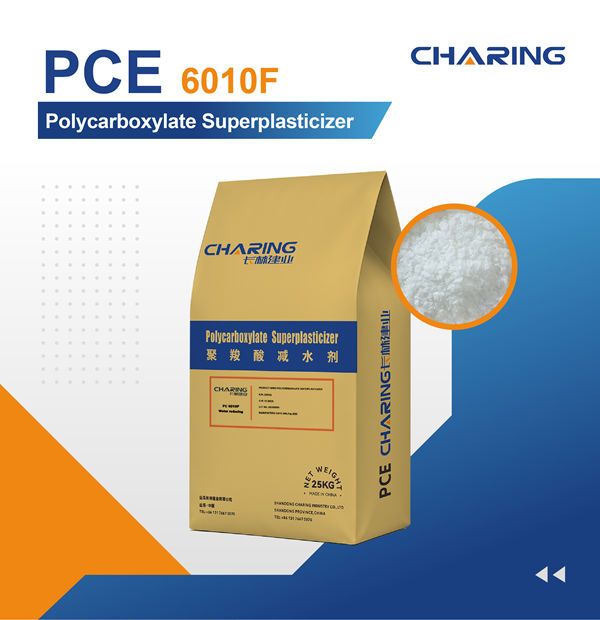
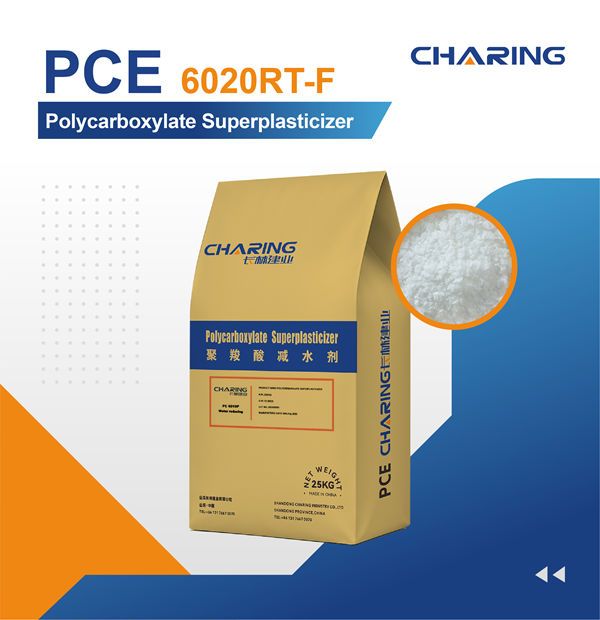
Check 1: PCE dosage. CHARING's formulation uses 3 kg/t of PCE powder. Below 2 kg/t, flow is insufficient. Higher dosages can be used to achieve greater water reduction — more PCE allows less water, improving both flow and final strength.
Check 2: PCE type. Not all PCE grades work for SLC. PC 3010 is the recommended grade — it is designed for high water reduction without excessive retardation. Concrete-grade PCE gives too much slump retention, which slows setting in SLC to unacceptable levels.
Check 3: Water ratio. SLC needs approximately 20% water. Reducing water to "fix" bleeding will destroy flow. The water ratio must be tested precisely — 19% vs 21% is a meaningful difference in SLC.
Check 4: Expired PCE. PCE powder has a shelf life. If stored in hot, humid conditions, the active content degrades and the same dosage produces less flow.
Fix
| Cause | Solution |
| PCE dosage too low | Increase to 3 kg/t or higher; more PCE with less water improves flow |
| Wrong PCE type | Use PC 3010, not concrete-grade PCE |
| Water ratio off | Test at exact 20%, do not estimate |
| Old PCE | Replace with fresh batch |
Symptoms
After pouring, a layer of clear or cloudy water rises to the surface. The surface is weak and dusty after curing. The bleed water carries fine cement particles, leaving a weak laitance layer.
Root Cause: Too Much Water or Insufficient Stabilizer
CHARING's formulation uses approximately 20% water, which is near the bleeding threshold for many cement systems. Two things prevent bleeding:
Stabilizer (special polysaccharide) at 0.5 kg/t — this thickens the water phase just enough to hold cement and sand particles in suspension without reducing flow. It is expensive but effective. Many formulators skip it to reduce cost, then wonder why their SLC bleeds.
Silica fume (3-10 kg/t) — the ultra-fine particles physically block water channels and provide thixotropy without reducing flow. This is the lower-cost approach and works well in most formulations.
Fix
| Cause | Solution |
| No stabilizer | Add stabilizer 0.3-0.5 kg/t |
| No silica fume | Add silica fume 3-10 kg/t (1-5% of cement) |
| Too much water | Reduce to exactly 20% |
| Wrong sand gradation | Use 40-70 mesh:70-140 mesh = 7:3 ratio |
Symptoms
Cracks appear within hours or days after pouring. They may be surface crazing (fine, map-pattern) or through-thickness cracks.
Root Cause: Shrinkage Exceeds Expansion
All cement shrinks as it hydrates. In SLC, this shrinkage must be compensated by expansion from calcium sulfate (gypsum/anhydrite) and/or expanding agents. If shrinkage exceeds expansion, the mortar cracks under its own internal stress.
CHARING's formulation handles this three ways:
Method 1: Calcium sulfate (anhydrite, 30-40 kg/t). Gypsum expands as it hydrates, offsetting cement shrinkage. The ratio of cement to gypsum determines the net expansion. Too much gypsum → swelling and delamination. Too little → cracking.
Method 2: Expanding agent (0.3-0.7 kg/t). Added to formulations that do not use calcium sulfate. Must be tested carefully — different expanding agents have different expansion timing and magnitude.
Method 3: Silica fume + metakaolin. These active materials react with calcium hydroxide to form additional C-S-H gel, densifying the matrix and reducing shrinkage without requiring expansion.
Fix
| Cause | Solution |
| No expansion compensation | Add calcium sulfate 30-40 kg/t or expanding agent 0.3-0.7 kg/t |
| Cement:gypsum ratio wrong | Test cement:gypsum ratio — adjust based on expansion measurement |
| Too much water | Reduce to exactly 20% — excess water increases drying shrinkage |
| Rapid drying (hot/dry conditions) | Cover surface, protect from drafts and direct sun |
Symptoms
Some areas harden while others remain soft. Or the entire floor takes too long to reach walkable strength.
Root Cause: The Ternary System Is Out of Balance
SLC's setting behaviour is controlled by the ternary cement system: Portland + high aluminate + calcium sulfate. These three react with each other, not independently.
High aluminate cement (35-40 kg/t) reacts first, providing early strength. It should be approximately 10% of total cementitious material.
Retarder (tartaric acid or citric acid, 2 kg/t)slows the high aluminate reaction to prevent flash setting. Too much → no early strength. Too little → sets before you can pour.
Lithium carbonate (1 kg/t) accelerates high aluminate. Used when more early strength is needed. Can be omitted.
The problem: Portland and high aluminate compete for calcium sulfate. If the ratios are wrong, one system consumes all the sulfate and the other sets unpredictably.
Fix
| Cause | Solution |
| High aluminate too low | Increase to 35-40 kg/t (~10% of total binder) |
| Retarder too high | Reduce to 1.5-2.0 kg/t |
| Need faster early strength | Add lithium carbonate 1 kg/t or calcium formate 5 kg/t |
| Mixing inconsistent | Standardize mixing time and speed across all batches |
Symptoms
Small holes, craters, or bubbles visible on the cured surface. They may be scattered or concentrated.
Root Cause: Trapped Air
SLC is mixed at high speed and poured thick enough to trap air bubbles. Without defoamer, these bubbles rise to the surface and burst, leaving craters if the surface has already started to set, or remain as pinholes if trapped below the surface skin.
Defoamer (0.5-1.0 kg/t) is the solution. The dosage range is narrow: too little and air remains; too much and the defoamer itself creates surface defects.
Fix
| Cause | Solution |
| No defoamer | Add powder defoamer 0.5-1.0 kg/t |
| Defoamer dosage too low | Increase to 1.0 kg/t |
| Mixing too fast / too long | Reduce mixing speed, mix per product instructions |
| Substrate off-gassing | Apply two coats of primer on porous substrates |
Symptoms
The floor cannot be walked on within the expected time (typically 4-6 hours). Tiles or flooring cannot be installed on schedule.
Root Cause: High Aluminate Cement or Accelerator Missing
Early strength in SLC comes from high aluminate cement. Without it, the mortar relies on Portland cement alone — which takes 24+ hours to develop useful strength.
CHARING's ternary system includes high aluminate cement at 35-40 kg/t plus optional accelerators:
Lithium carbonate (1 kg/t): Accelerates high aluminate cement specifically. Works at very low dosage.
Calcium formate (5 kg/t): General early strength accelerator for Portland cement.
Fix
| Cause | Solution |
| No high aluminate cement | Add 35-40 kg/t |
| Need faster strength | Add lithium carbonate 1 kg/t or calcium formate 5 kg/t |
| Temperature too low | SLC needs >10°C. In cold conditions, both setting and strength development are slower |
| Product | Type | Dosage | Function |
| PC 3010 | PCE powder, ≥92% active | 2-4 kg/t | Flowability — the most critical additive |
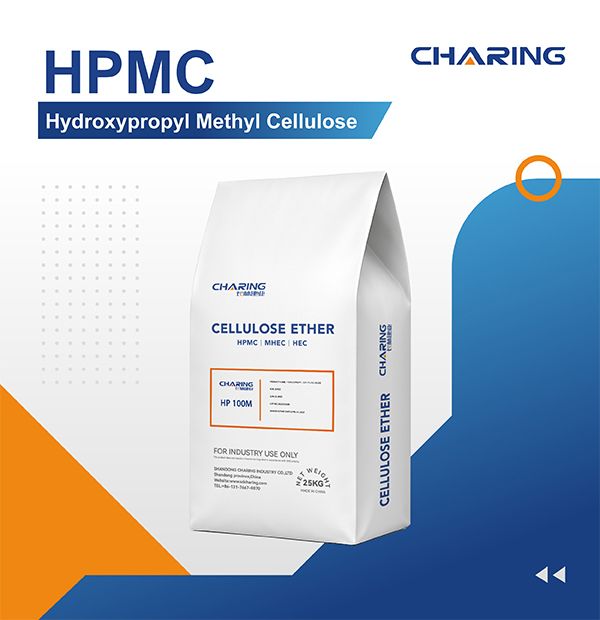
| HP 400 | HPMC, 320-480 mPa·s | 0.5-1.0 kg/t | Minimal water retention without restricting flow |
| RDP (rigid grade) | Tg >15°C | 8-10 kg/t | Surface strength, prevent cratering |
| Defoamer D802 | Powder defoamer | 0.5-1.0 kg/t | Surface quality |
| Silica Fume | Microsilica | 3-10 kg/t | Anti-bleeding, anti-crack |
Why does self-leveling crack even with the right formulation?
The most common cause is not formulation — it is application. Rapid drying from direct sun, wind, or forced ventilation creates a moisture gradient: the surface shrinks while the interior is still wet. Cover the pour and protect from drafts.
Can I use the same PCE for concrete and self-leveling?
No. Concrete-grade PCE is designed for high slump retention over 60-90 minutes. SLC needs the opposite — flow immediately after mixing, followed by rapid setting. PC 3010 is specifically designed for SLC applications.
How much water is too much?
SLC is designed for approximately 20% water. Increasing to 22% may improve flow slightly but will cause bleeding, reduce strength, and increase shrinkage cracking. Never adjust water ratio on site — it is fixed in the formulation.
What sand size for self-leveling?
Fine sand only — 0.15-0.6 mm. A combination of two sizes is ideal: 40-70 mesh and 70-140 mesh, in approximately a 7:3 ratio. Coarse sand settles in the high-water mix and prevents self-leveling.
Why add silica fume or metakaolin?
These active materials serve dual purposes: they react with calcium hydroxide to densify the matrix (reducing shrinkage), and their ultra-fine particle size stabilizes the fresh mortar against bleeding without reducing flow. Dosage is 3-10 kg/t (1-5% of cement weight).
Note: Self-leveling compound is the most complex dry-mix mortar product. The ternary cement system (Portland + high aluminate + calcium sulfate) requires precise ratio control. Small changes in any component affect the entire system. All formulations must be laboratory-tested with local raw materials. Field conditions (temperature, humidity, substrate) affect performance as much as formulation.
For technical inquiries: info@sdcharing.com
Shandong Charing Industry Co., Ltd.

E-mail: sdcharing@sdcharing.com
Phone: +86 131 7667 0070
WhatsApp: +8615066133527
Add.: No.605-606,NO1 BUILDING,WANGYUE ZHIGU INDUSTRY PARK,NO.1919 WANGYUE ROAD, SHIZHONG AREA,JINAN CITY, SHANDONG PROVINCE,CHINA