- Home
- Products +
- Industries +
- About Us +
- News
- Contact Us

- Home
- Products
- Industries
- About Us
- News
- Contact Us
Aug. 12, 2026
Interior putty looks like the simplest product — powder, water, smooth it on. But the same formula that works in northern China fails in the south. The cause is not the recipe. It is the climate.
| Question | Short Answer |
| Why does the same putty fail in the south but not the north? | Humidity. Dry regions use quick-lime putty. Humid regions need white-cement putty |
| What is a quick-lime putty? | Calcium carbonate + quick lime (CaO), no cement. White, smooth, cheap |
| Why does quick-lime putty fail in humid regions? | It absorbs moisture and loses strength over time |
| Which regions are "humid"? | South of the Yangtze River, Southeast Asia, coastal tropics |
| What to use in humid regions? | White-cement-based putty, like a light version of exterior putty |
There is no single "interior putty" that works everywhere. Interior putty splits into two types by climate:
| Climate | Binder | Putty type | Where |
| Dry | Quick lime (CaO), no cement | putty | Northern China, inland, desert regions |
| Humid | White cement | White-cement putty | South of the Yangtze, Southeast Asia, coastal tropics |
The dividing line is humidity. Get it wrong and the wall looks fine for a few months, then powders and peels.
In dry regions, interior putty uses quick lime (CaO) as the binder, with no cement.
Quick lime reacts with water to form calcium hydroxide, then carbonates into calcium carbonate over time. That gives a hard, smooth, white surface — without the grey colour or the higher cost of white cement.
| Material | Amount (kg/t) |
| Heavy calcium carbonate (200 mesh) | 700 |
| Quick lime (CaO) | 300 |
| RDP | 4–25 |
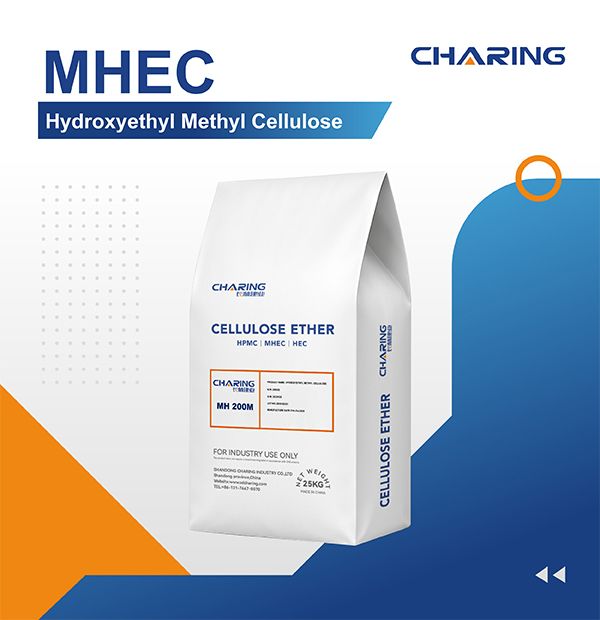
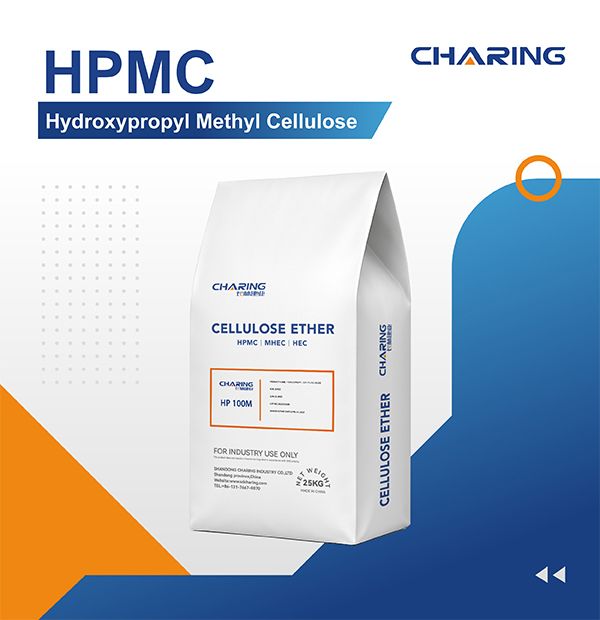
| HPMC | 2–4 |
This is the economical choice for dry rooms. It is white, smooth, and cheap.
South of the Yangtze River, in Southeast Asia, and along tropical coasts, the air is always damp. In these regions, quick-lime putty is the wrong choice.
Why: calcium hydroxide (the hardened form of quick lime) absorbs moisture from the air. Over months, the putty softens, loses strength, and powders or peels off the wall.
In humid regions, switch to a white-cement base:
| Material | Amount (kg/t) |
| White cement | 300 |
| Quartz sand | 200 |
| Heavy calcium carbonate | 400–500 |
| RDP | 15–25 |
| HPMC | 2–4 |
This is close to exterior putty. White cement holds its strength in damp air. Quartz sand adds dimensional stability. Higher RDP adds water resistance.
Do not guess. Check the humidity, not the temperature.
Dry — northern China, inland provinces, Middle East desert, North Africa. Low air humidity, cold or hot but dry.
Humid — south of the Yangtze River, Southeast Asia, coastal tropical areas, near the equator. High air humidity all year.
A simple test: does laundry dry fast indoors, or stay damp? Does metal rust easily? Does the wall "sweat" in spring? If yes, you are in a humid climate — use white-cement putty.
Using quick-lime putty in a humid region.
It is the single most common failure we see. A formulator in a tropical market copies a northern Chinese formula. The putty passes inspection, sells, and six months later customers complain about powdering and peeling walls.
The fix is not more RDP or more HPMC. The fix is changing the binder — quick lime to white cement.
The reverse mistake — using cement putty in a dry region — is less serious. It works, it just costs more and is slightly grey. But the humid-region mistake is fatal.
| Climate | HPMC | RDP | Note |
| Dry (quick-lime putty) | HP 100M / HP 150M | RD 7003M (4–25 kg) | Lower RDP for dry rooms |
| Humid (white-cement putty) | HP 100M / HP 150M | RD 7003M (15–25 kg) | Higher RDP + white cement |
| Tropical (hot + humid) | HP 200M | RD 7003M (15–25 kg) | High viscosity for fast evaporation |
Why does my putty work in the north but powder in the south?
Humidity. Quick-lime putty absorbs moisture from damp air and loses strength. Switch the binder to white cement.
What is the difference between putty and cement putty?
putty uses quick lime (CaO) as the binder — white, smooth, cheap, for dry regions. Cement putty uses white cement — stronger in damp air, for humid regions.
Can I just add more RDP to fix a quick-lime putty in a humid region?
No. More RDP helps water resistance, but it cannot stop the calcium hydroxide from absorbing moisture and losing strength. Change the binder.
How do I know if my market is humid?
Check the air humidity, not temperature. If walls sweat in spring, metal rusts fast, or laundry stays damp indoors — it is humid. Use white-cement putty.
Is white-cement putty more expensive?
Yes, white cement costs more than quick lime. But in a humid region, the quick-lime putty fails, so the "cheaper" option ends up costing more in complaints and rework.
Note: JG/T 298 covers interior putty, JG/T 157 covers exterior. The climate split above applies to interior putty. Always test with your own raw materials and local climate.
For technical inquiries: info@sdcharing.com
Shandong Charing Industry Co., Ltd.

E-mail: sdcharing@sdcharing.com
Phone: +86 131 7667 0070
WhatsApp: +8615066133527
Add.: No.605-606,NO1 BUILDING,WANGYUE ZHIGU INDUSTRY PARK,NO.1919 WANGYUE ROAD, SHIZHONG AREA,JINAN CITY, SHANDONG PROVINCE,CHINA