- Home
- Products +
- Industries +
- About Us +
- News
- Contact Us

- Home
- Products
- Industries
- About Us
- News
- Contact Us
Aug. 11, 2026
| Question | Short Answer |
| Why did my tiles fall off? | Not the adhesive. The flexible waterproofing underneath stretched under the tile weight |
| Which waterproofing is safe to tile on? | Rigid ones — JC/T 984 mortar, K11 Type I. Tile adhesive grips them like concrete |
| Which waterproofing makes tiles fall? | Flexible ones — JS coating, K11 Type II. The membrane moves |
| Already tiled on flexible waterproofing? | Add a 3–5 mm cement screed, or switch to C2S1 adhesive |
| What adhesive is safest? | C2S1 with RD 8080F at 30–40 kg/t |
Tiles are rigid. Tiles are heavy. The layer under them must be rigid too.
When the waterproofing is a flexible membrane, it stretches. A tile presses down. The membrane gives a little. The adhesive on top cannot stretch with it. It cracks. Water gets in. The tiles fall.
Not right away. Months later. That is why nobody blames the waterproofing — by then everyone forgot what was underneath.
| Waterproofing | Type | Tile on top? |
| JC/T 984 waterproof mortar | Rigid | Safe — bonds like concrete |
| K11 Type I | Semi-rigid | Safe |
| K11 Type II | Flexible | Risky — use C2, go slow |
| JS Type II | Flexible | Risky — screed or C2S1 |
| JS Type I | Very flexible | Never tile directly |
The rule is simple: rigid waterproofing holds tiles. Flexible waterproofing sheds them.
C1 tile adhesive is semi-rigid. It bonds well. But it cannot bend.
A JS-I membrane stretches up to 200%. Under tile weight and temperature change, it moves. The C1 adhesive cracks at the interface. Once cracked, water enters, and the failure speeds up.
The problem is not the adhesive strength. It is the mismatch — a flexible base, a rigid adhesive, a heavy tile.
Way 1 — Use a rigid waterproofing. For tiled walls, choose JC/T 984 or K11 Type I. They are cement-based and rigid. Tile adhesive bonds to them almost like bare concrete. This is the cleanest fix — pick the right system from the start.
Way 2 — Add a screed layer. Already have flexible waterproofing? Put a 3–5 mm cement screed between the membrane and the tile adhesive. The screed is rigid. It stops the membrane from moving under the tile.
Way 3 — Use a flexible adhesive. For JS Type II (not JS-I), a C2S1 adhesive with RD 8080F at 30–40 kg/t can absorb small movements. But this has a limit. JS-I at 200% elongation still needs the screed.
1.Check what is underneath. Break off one tile. Is there a rubbery, flexible layer under the adhesive? That is JS or flexible K11. That is your cause.
2.Check the adhesive grade. C1 on a flexible membrane always fails. C2S1 might survive.
3.Check wall vs floor. Walls fail more. Floors carry tiles by weight pressing down. Walls hang them sideways, so the membrane stretches and the adhesive shears.
4.Check for a screed. No screed between a flexible membrane and the adhesive = failure waiting to happen.
| Product | Role |
| RD 8080F | Flexible RDP (Tg -8°C) for C2S1 adhesive over waterproofing, 30–40 kg/t |
| RD W8050 | Hydrophobic RDP (Tg -11°C) for the waterproofing mortar itself |
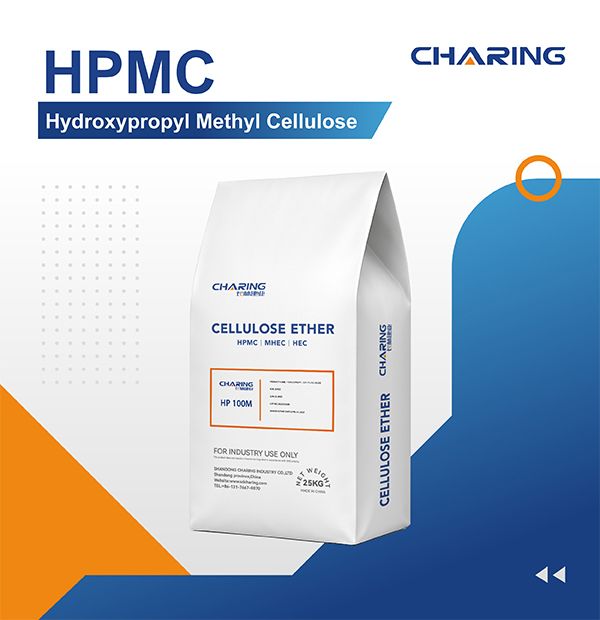
| HP 100M | Water retention in the JS/K11 powder component |
| S500 | Hydrophobic agent for waterproofing mortar, 2–5 kg/t |
Which waterproofing is safe for a tiled bathroom wall?
Rigid — JC/T 984 or K11 Type I. They bond to tile adhesive like concrete.
Can I tile directly on JS waterproofing?
On JS Type III (30% elongation), maybe with C2. On JS Type II, no — use a screed or C2S1. On JS Type I, never — the membrane moves too much.
My tiles fell off. What went wrong?
Almost always a flexible membrane under C1 adhesive. Break off a tile and look. If there is a rubbery layer underneath, that is the cause.
Do I have to redo the waterproofing?
No. If the membrane is intact, add a 3–5 mm screed and retile with C2S1. If the membrane is damaged, redo it.
Why do floors survive but walls fail?
Floors carry tiles by weight pressing down. Walls hang tiles sideways, so the membrane stretches and the adhesive shears.
Note: All waterproofing systems must comply with GB 55030-2022, the mandatory national code for building waterproofing design life.
For technical inquiries: info@sdcharing.com
Shandong Charing Industry Co., Ltd.

E-mail: sdcharing@sdcharing.com
Phone: +86 131 7667 0070
WhatsApp: +8615066133527
Add.: No.605-606,NO1 BUILDING,WANGYUE ZHIGU INDUSTRY PARK,NO.1919 WANGYUE ROAD, SHIZHONG AREA,JINAN CITY, SHANDONG PROVINCE,CHINA