- Home
- Products +
- Industries +
- About Us +
- News
- Contact Us



- Home
- Products
- Industries
- About Us
- News
- Contact Us

Aug. 12, 2026
Quick Answers
| Question | Short Answer |
| What is the difference between interior and exterior putty? | Interior: JG/T 298, less cement, lower RDP, for paint preparation. Exterior: JG/T 157, more cement, higher RDP + hydrophobic agent, weather-resistant |
| Why does wall putty crack after drying? | Water loss too fast — HPMC dosage too low or grade wrong. Also check cement-to-filler ratio |
| Why does wall putty powder (chalk) after drying? | Insufficient cement hydration. Increase HPMC or check if substrate is absorbing water too quickly |
| Why does putty peel in damp areas? | No RDP or RDP dosage too low. Standard putty has no water resistance |
| How much HPMC in wall putty? | 2-4 kg/t. Use HP 100M/HP 150M for temperate, HP 200M for tropical |
| What RDP for interior putty? | RD 7003M at 4-25 kg/t. Lower for dry rooms, higher for wet areas |
| What RDP for exterior putty? | RD 7003M at 15 kg/t |
| Why does exterior putty use quick lime + cement? | Cement for strength + weather resistance. Quick lime for workability and surface finish |
| Can the same putty work for interior and exterior? | No. Interior uses calcium carbonate + quick lime (no cement). Exterior uses 300 kg cement + quartz sand |
1. Two Standards, Two Products
Wall putty is not one product. The Chinese market has two separate standards defining two different materials:
| Standard | Product | Application | Key Difference |
| JG/T 298 | Interior wall putty | Indoor, under paint/wallpaper | Lower cement, no weather requirement |
| JG/T 157 | Exterior wall putty | Outdoor, exposed to weather | Higher cement + RDP + hydrophobic agent |
1.1 Interior Putty (JG/T 298)
The primary job of interior putty is to create a smooth, flat surface for paint or wallpaper. It does not need to resist rain, UV, or freeze-thaw cycles.
| Property | Requirement |
| Bond strength (standard state) | ≥0.30 MPa |
| Bond strength after water immersion | ≥0.15 MPa |
| Surface smoothness | Smooth, no cracks |
1.2 Exterior Putty (JG/T 157)
Exterior putty sits under the exterior paint system and must withstand rain, temperature cycles, and UV exposure for years — without which the paint system fails from the substrate up.
| Property | Requirement |
| Bond strength (standard state) | ≥0.60 MPa |
| Bond strength after water immersion | ≥0.40 MPa |
| Bond strength after freeze-thaw (5 cycles) | ≥0.40 MPa |
| Flexibility (transverse deformation) | ≥2.0 mm |
The bond strength requirement is double that of interior putty. The freeze-thaw requirement is unique to exterior applications. This is why exterior putty must contain more cement, more RDP, and a hydrophobic agent — components that interior putty can minimise or omit.
2. Interior Wall Putty Formula (JG/T 298)
| Component | Dosage (kg/t) | Function |
| Heavy Calcium Carbonate (200 mesh) | 700 | Filler — bulk + smoothness |
| Quick Lime | 300 | Binder — provides cohesion and hardness |
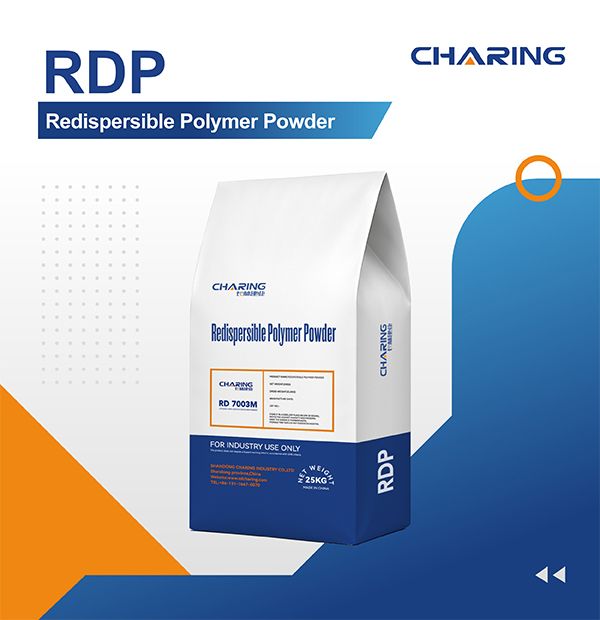
| RDP RD 7003M | 4-25 | Bond strength (higher for wet areas) |
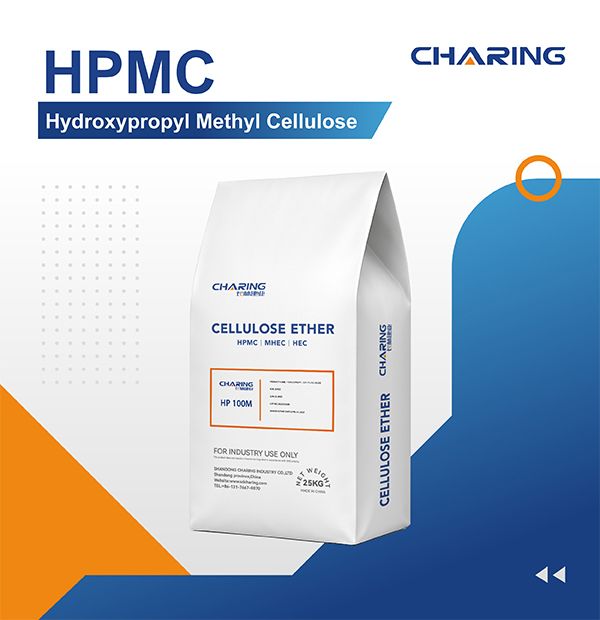
| HPMC HP 100M / HP 150M / HP 200M | 2-4 | Water retention + workability |
Water: 30-35%
Note: This formulation is based on Northern China temperature and humidity conditions. For tropical regions, use the higher end of the HPMC dosage range and select a higher viscosity grade (HP 200M). For humid or moisture-prone regions, increase RDP dosage and treat the interior formulation similarly to exterior putty.
Key Formulation Principles
No cement — quick lime is the binder. Interior putty in the CHARING system uses quick lime (CaO), not cement. Quick lime reacts with water to form calcium hydroxide, which then carbonates over time to create a hard, smooth surface. This gives interior putty its characteristic whiteness and smoothness without the grey colour or higher cost of white cement.
For humid climate regions (southern China, Southeast Asia, coastal tropical areas), switch to a white cement-based formulation. In these conditions, quick lime-based putty absorbs ambient moisture and loses strength over time. Use a formula similar to exterior wall putty — white cement as the primary binder with quartz sand for dimensional stability and higher RDP dosage for water resistance.
Calcium carbonate is the main filler. At 700 kg/t, heavy calcium carbonate provides the bulk of the material. The fine particle size (200 mesh) ensures a smooth surface that requires minimal sanding before painting.
RDP dosage varies widely (4-25 kg/t). For dry interior rooms, 4-10 kg/t is sufficient to prevent powdering. For bathrooms, kitchens, or any area with humidity exposure, increase to 15-25 kg/t — the putty must have enough polymer to resist moisture softening.
HPMC at 2-4 kg/t. HP 100M, HP 150M, or HP 200M depending on climate. Higher viscosity for hot/dry regions, lower for temperate. The dosage range accommodates seasonal variation — higher in summer, lower in winter.
3. Exterior Wall Putty Formula (JG/T 157)
| Component | Dosage (kg/t) | Function |
| White/Grey Cement 42.5 | 300 | Binder — primary strength |
| Quick Lime | 100 | Secondary binder + workability |
| Quartz Powder / Sand | 200 | Aggregate — dimensional stability |
| Heavy Calcium Carbonate (300 mesh) | 400 | Filler — surface quality |
| RDP RD 7003M | 15 | Bond strength + flexibility |
| Hydrophobic Agent S300 or S500 | 1-3 | Water repellency |
| HPMC HP 100M / HP 150M / HP 200M | 2-4 | Water retention + workability |
| Wood Fiber | 2 | Crack resistance |
Water: 28-32%
Note: This formulation is based on Northern China temperature and humidity conditions. For tropical regions, use the higher end of the HPMC dosage range and select a higher viscosity grade (HP 200M). High temperature and low humidity accelerate water evaporation — higher viscosity HPMC compensates without increasing dosage.
Key Differences from Interior Putty
Cement becomes the primary binder. At 300 kg/t, cement provides the strength and weather resistance that exterior putty requires. Quick lime (100 kg/t) remains as a secondary binder for workability and surface finish.
Quartz sand provides dimensional stability. The addition of 200 kg/t quartz sand/quartz powder reduces shrinkage and improves resistance to thermal cycling — essential for exterior applications where the wall surface can reach 60-70°C in summer sun.
RDP is specified at 15 kg/t. RD 7003M (Tg 3°C, semi-flexible) provides the transverse deformation of ≥2.0 mm required by JG/T 157. The polymer film also bridges micro-cracks that develop from thermal cycling.
Wood fibre (2 kg/t) for crack resistance. Fibre reinforcement physically bridges micro-cracks as they form, preventing them from propagating through the putty layer. This is a low-cost, high-effect addition unique to exterior formulations.
Hydrophobic agent provides water repellency. S300 or S500 at 1-3 kg/t prevents rainwater and ambient moisture from penetrating the putty layer. This is essential for exterior durability — without it, water soaks through the paint system into the putty, causing freeze-thaw damage and delamination in winter.
4. Climate Adjustments
| Climate | HPMC Recommendation | HPMC Dosage | Notes |
| Temperate (15-40°C) | HP 100M or HP 150M | 2-4 | Standard |
| Tropical (>35°C) | HP 200M | 2-4 | Higher end of range; high viscosity compensates rapid evaporation |
For tropical or moisture-prone regions, interior putty should be formulated similarly to exterior putty — increase RDP dosage and consider the addition of quartz sand for dimensional stability.
5. Common Putty Problems and Solutions
5.1 Why Does Wall Putty Crack After Drying?
Short answer: Water evaporates too fast before cement hydrates. Increase HPMC dosage or grade.
Root cause analysis:
The putty layer is thin — typically 0.5-1.5 mm per coat. At this thickness, the entire layer can lose moisture to the substrate and air within 10-15 minutes if water retention is insufficient. Cement hydration stops. The weak, incompletely hydrated layer shrinks as residual water evaporates, and the shrinkage stress exceeds the layer's tensile strength.
Diagnosis: - Cracks appear within 24 hours → plastic shrinkage (water loss too fast) - Cracks appear after weeks → structural movement (substrate cracks transmitted through putty) - Hairline, random network → high cement, low aggregate
Fix:
| Cause | Check | Solution |
| HPMC dosage too low | Current dosage <2 kg/t | Increase to 3-4 kg/t |
| HPMC water retention too low | Water retention <94% | Upgrade grade |
| HPMC open time too short or poor batch stability | Inconsistent open time between batches | Switch to supplier with stable substitution uniformity; request full COA |
| Substrate too absorbent | Bare concrete / AAC block | Apply primer before putty |
| Cement too high | >250 kg/t | Reduce cement, increase filler |
5.2 Why Does Putty Powder (Chalk) After Drying?
Short answer: Incomplete cement hydration. The surface layer hardened without enough water, leaving loose powder that rubs off on touch.
Root cause: Either the HPMC dosage is too low to hold water through the curing period, or the substrate is pulling water out of the putty faster than the HPMC can retain it. The surface cement particles never hydrate — they remain as loose powder.
Fix: Increase HPMC dosage by 0.5-1.0 kg/t, or use a grade with higher water retention. Also check: primer on substrate, water-to-powder ratio during mixing.
5.3 Why Does Putty Peel in Damp Areas?
Short answer: The putty has no water resistance. Add RDP.
Root cause: Standard interior putty uses minimal RDP — just enough for dry-state bond strength. When exposed to moisture (bathroom humidity, condensation), the thin cement matrix softens and loses adhesion to the substrate. The putty peels in sheets.
Fix: For any area with humidity exposure, use the exterior formula with 15-25 kg/t RDP and hydrophobic agent S300/S500. The RDP forms a continuous polymer film that resists water softening. The hydrophobic agent blocks capillary water uptake.
5.4 Why Is Putty Hard to Trowel?
Short answer: HPMC viscosity too high or dosage too high. Switch to lower viscosity grade or reduce dosage.
Root cause: HP 100M at 3.5+ kg/t in interior putty creates excessive trowel drag. The worker adds water to compensate, which weakens the putty further.
Fix: Use HP 60M for putty — the lower viscosity (45,000-75,000 mPa·s) gives a smoother trowel feel. If already using HP 60M, reduce dosage to 2.0-2.5 kg/t and check if water retention is still adequate.
5.5 Why Does Exterior Putty Fail After One Winter?
Short answer: No hydrophobic agent, or RDP too low, or cement too low. One freeze-thaw cycle separates the putty from the wall.
Root cause: Water enters the putty layer through the paint system (all paints have some vapour permeability). In winter, this water freezes and expands. Without enough polymer flexibility and water repellency, the putty cracks and delaminates.
Fix: Ensure the exterior formula includes all three key upgrades over interior: higher cement (150-250 kg/t), higher RDP (15-25 kg/t), and hydrophobic agent (2-5 kg/t).
6. CHARING Products for Wall Putty
| Product | Type | Role | Application |
| HP 100M | HPMC, 80,000-120,000 mPa·s | Water retention + workability | Interior and exterior putty, temperate |
| HP 150M | HPMC, 120,000-170,000 mPa·s | Higher water retention | Exterior putty, warm climate |
| HP 200M | HPMC, 170,000-220,000 mPa·s | Maximum water retention | Tropical climate putty |
| RD 7003M | RDP, Tg 3°C | Semi-flexible bond + water resistance | Interior and exterior putty |
| S300 | Hydrophobic powder | Water repellency, better surface finish | Optional for exterior putty in wet regions |
| S500 | Hydrophobic powder | Enhanced water repellency | Optional for exterior putty in coastal areas |
7. Frequently Asked Questions
What is the difference between JG/T 298 and JG/T 157?
JG/T 298 is interior putty — low cement, low RDP, no weather resistance required. JG/T 157 is exterior putty — double the bond strength (0.60 vs 0.30 MPa), must pass freeze-thaw, requires hydrophobic agent. They are different products, not one formula with different packaging.
How much HPMC should I use in wall putty?
2-4 kg/t for both interior and exterior putty. The dosage range stays the same across climates — what changes is the viscosity grade: HP 100M/HP 150M for temperate, HP 200M for tropical. Too little → powdering and cracking. Too much → sticky, hard to trowel, slow drying.
What is the difference between JG/T 298 and JG/T 157?
JG/T 298 is interior putty — in the CHARING system, it uses calcium carbonate + quick lime with no cement, and lower bond strength (0.30 MPa). JG/T 157 is exterior putty — uses 300 kg/t cement + quartz sand, higher bond strength (0.60 MPa), must pass freeze-thaw. Fundamentally different formulas.
Can I use the same formula for interior and exterior putty?
No. Interior putty uses quick lime as binder with calcium carbonate filler — no cement. Exterior putty uses 300 kg/t cement + 100 kg/t quick lime + 200 kg/t quartz sand. For humid or moisture-prone regions, interior putty should be formulated similarly to exterior.
Does putty need RDP?
Interior putty in dry rooms needs minimal RDP (4-10 kg/t of RD 7003M) to prevent powdering. Wet-area interior and all exterior putty require higher RDP — 15 kg/t minimum for exterior. Without RDP, the putty has no water resistance.
How thick should each putty coat be?
0.5-1.5 mm per coat. Two thin coats always outperform one thick coat. Maximum total thickness: 3 mm for interior, 3-5 mm for exterior.
Does exterior putty need a hydrophobic agent?
Yes. The standard CHARING exterior formulation includes S300 or S500 at 1-3 kg/t. The hydrophobic agent prevents water ingress that would otherwise cause freeze-thaw damage and delamination. For coastal or heavy-rainfall regions, use S500 for enhanced water repellency.
Why does putty fail when applied over gypsum plaster?
Gypsum and cement have different chemical environments. Cement-based putty on gypsum requires a primer/sealer between them. Without it, ettringite can form at the interface, causing expansion and delamination. Use the substrate manufacturer's recommended primer.
Note: All formulations are starting points. Local cement quality, calcium carbonate grade, and climate conditions affect the optimal dosage. JG/T 298 and JG/T 157 are recommended standards. GB 55030-2022 sets mandatory performance requirements. Laboratory testing with your specific raw materials is essential before production.
For technical inquiries: info@sdcharing.com
Shandong Charing Industry Co., Ltd.

E-mail: sdcharing@sdcharing.com
Phone: +86 131 7667 0070
WhatsApp: +8615066133527
Add.: No.605-606,NO1 BUILDING,WANGYUE ZHIGU INDUSTRY PARK,NO.1919 WANGYUE ROAD, SHIZHONG AREA,JINAN CITY, SHANDONG PROVINCE,CHINA