- Home
- Products +
- Industries +
- About Us +
- News
- Contact Us

- Home
- Products
- Industries
- About Us
- News
- Contact Us
Oct. 30, 2026
Concrete Admixture Technical Guide · No. 33
Compounding polycarboxylate superplasticizer (PCE) with lignosulfonate is one of the most reliable cost moves in admixture technology. Done right, it lowers cost, adds built-in retarding, and keeps — often improves — performance. This guide explains why lignosulfonate is the one traditional reducer worth blending with PCE, and how to do it.
Lignosulfonate is a sulfonated derivative of lignin — the natural polymer that gives wood its strength. It is the oldest water reducer still in wide use, made as a by-product of the sulfite paper-making process, so it is cheap and plentiful.
| Property | Lignosulfonate | PCE |
| Origin | Paper-mill by-product | Synthesised polymer |
| Cost | Very low | High |
| Water reduction | Low (10–15%) | High (25–40%) |
| Retarding effect | Yes, built in | Slight |
| Air entrainment | Yes | Slight |
On its own, lignosulfonate is a weak reducer — too weak for modern high-performance concrete. But it has two things PCE lacks: a very low price, and a natural retarding effect. That is exactly why the two are blended.
PCE is the best reducer, but it has its own drawbacks:
| PCE Weakness | What It Means |
| High cost | The most expensive water reducer |
| Slight air entrainment | Can raise air content if not controlled |
| Sensitivity | Performance shifts with cement and conditions |
None of these are reasons to avoid PCE — they are reasons to compound it. The right partner fixes the cost and the working-time at once.
This is the technical heart of the matter. PCE does not blend well with most traditional reducers — but it does with lignosulfonate.
| Traditional Reducer | Behaviour When Blended with PCE |
| Lignosulfonate | Compatible — performance improves |
| Naphthalene-based | Performance drops sharply |
| Melamine-based | Performance drops |
| Aminosulfonate-based | Performance drops |
The reason is compatibility: lignosulfonate and PCE mix cleanly and their effects add up, while the others clash chemically with PCE and pull its performance down. This is why, among all the older reducers, lignosulfonate is the one worth compounding.
Blending lignosulfonate into a PCE gives three things at once:
| Benefit | How It Works |
| Lower cost | Cheap lignosulfonate replaces part of the expensive PCE |
| Built-in retarding | Lignosulfonate's natural retarding extends working time |
| Held (or better) performance | The two dispersing effects add up; strength is preserved |
and hot-weather pours.
The method is the same physical blending used for any admixture.
1.Start from the PCE solution. Dissolve the flake or start from liquid PCE as the base.
2.Add lignosulfonate in stages, mixing thoroughly each time.
3.Check the ratio. A common working blend is about 1 : 1 (lignosulfonate : PCE), but this is adjusted to the job.
4.Test and adjust. Confirm the water reduction, setting time and strength against your local cement.
The exact ratio depends on how much retarding and how much cost reduction you want — there is no single universal number, only trial mixes that work for your materials.
From one PCE base plus lignosulfonate, you can build several finished admixtures:
| Product | What It Adds |
| Retarding high-range reducer | Lignosulfonate for time + PCE for reduction |
| Pumping aid | Good workability over long pumping, controlled setting |
| Cost-reduced standard reducer | More economical for everyday concrete |
The same logic extends further: add a small amount of defoamer, or an early-strength agent, and the same tank produces a whole product line.
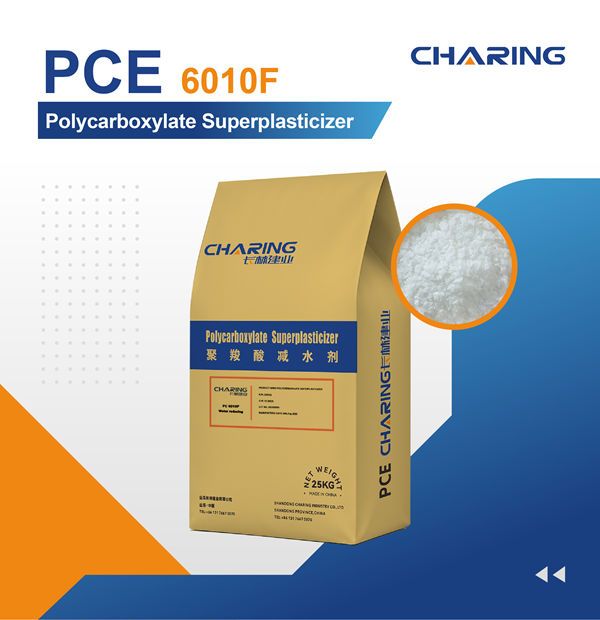
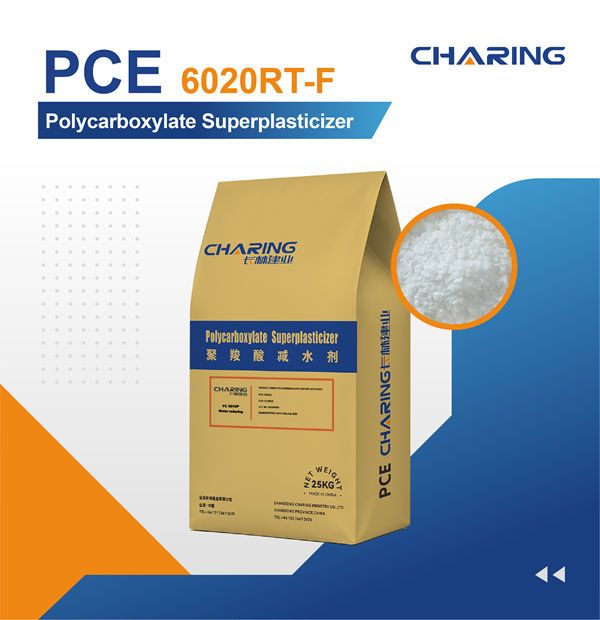
This is where solid PCE earns its keep. Flake PCE dissolves into a clean, near-100% base liquid — the perfect starting point for compounding. Add lignosulfonate and the small additives, and a buyer with a single tank builds a full range of cost-competitive admixtures. The flake gives you the raw material; the lignosulfonate cuts the finished cost. Together they are how a small regional compounder competes with big finished-product suppliers.
1.Do not substitute naphthalene. Only lignosulfonate blends cleanly with PCE; naphthalene and melamine will hurt it.
2.Blend in stages and mix well. Lignosulfonate must be fully dispersed or it settles.
3.Always trial. The right ratio is material-specific; test water reduction, setting and strength.
Why compound PCE with lignosulfonate?
To cut cost and add retarding in one step. Lignosulfonate is cheap and naturally retards, and it is the only traditional reducer that blends cleanly with PCE.
Does lignosulfonate weaken the PCE?
No. Blended with PCE, it holds performance and can even improve it — unlike naphthalene or melamine, which reduce PCE's effect.
What is a good blend ratio?
Around 1 : 1 (lignosulfonate : PCE) is a common working ratio, but the best ratio depends on your materials and how much retarding you need.
Can I compound lignosulfonate with flake PCE?
Yes. Dissolve the flake first, then add the lignosulfonate — the flake gives you a clean near-100% base to compound from.
To see who benefits most from compounding their own admixtures, read Is Solid Polycarboxylate Superplasticizer (PCE) Right for You?.
To learn how to compound the small additives, read How Do You Compound a Polycarboxylate Superplasticizer (PCE) Admixture?.
To see the full cost comparison, read Solid vs Liquid Polycarboxylate Superplasticizer (PCE).

E-mail: sdcharing@sdcharing.com
Phone: +86 131 7667 0070
WhatsApp: +8615066133527
Add.: No.605-606,NO1 BUILDING,WANGYUE ZHIGU INDUSTRY PARK,NO.1919 WANGYUE ROAD, SHIZHONG AREA,JINAN CITY, SHANDONG PROVINCE,CHINA