- Home
- Products +
- Industries +
- About Us +
- News
- Contact Us

- Home
- Products
- Industries
- About Us
- News
- Contact Us
Sep. 07, 2026
You have a C1 adhesive that works. Now the customer wants porcelain tiles, or 800 mm tiles, or an exterior wall. C1 will not hold. You have to upgrade to C2. This guide shows the path — what to add, what to remove, and what it costs.
| Question | Short Answer |
| When must C1 go to C2? | Porcelain (<0.5% absorption), tiles >600 mm, exterior walls, wet areas |
| What does C2 add over C1? | Double RDP (12–18 → 30–40 kg/t) + silica fume 15–40 kg/t, remove inert filler |
| What is the biggest cost? | RDP. It is the most expensive additive, and C2 doubles it |
| Can I add more HPMC instead of RDP? | No. HPMC gives no bond strength. It cannot replace polymer |
| How much RDP for large tiles? | 45–55 kg/t for tiles over 1200 mm |
C1 is enough when the tile is small, absorbent, and indoors. Check three things:
Tile size. Over 600 mm on one side → C2.
Water absorption. Below 0.5% (porcelain, vitrified) → C2.
Where it goes. Exterior, wet area, or over a flexible membrane → C2.
If one of these is true, C1 will fail. The tile has nowhere to grip, or the wall moves, and the bond breaks.
| Grade | What changes | RDP (kg/t) | Silica fume | Relative cost |
| C0 | Basic thick-bed | 5–10 | None | 1× (baseline) |
| C1 | Add RDP + starch ether | 12–18 | None | ~2× |
| C1T | Add more starch ether | 12–18 | None | ~2× |
| C2S1 | Double RDP + silica fume | 30–40 | 15–40 | ~4× |
| C2TES1 | Large tiles, more RDP | 45–55 | 15–40 | ~6× |
The pattern is simple: every upgrade is buying more polymer.
C0 → C1: Add the polymer
RDP: 5–10 → 12–18 kg/t (RD 7015H or RD 7003M)
Add starch ether 0.3–0.8 kg/t (anti-slip)
That is it. C0 and C1 share the same cement and sand.
C1 → C1T: Add anti-slip
Starch ether: 0.3–0.8 → 0.5–1.0 kg/t
Nothing else changes. T just means the tile does not slide down the wall.
C1 → C2S1: The real jump
RDP: 12–18 → 30–40 kg/t, and switch to a flexible grade (RD 8080F, Tg −8°C)
Add silica fume 15–40 kg/t — fills pores, passes the water immersion test
Remove inert filler (calcium carbonate) — no room for cheap filler
HPMC stays 2–3 kg/t
This is the step most people get wrong. They add RDP but skip the silica fume. Then the adhesive fails the water immersion test at 0.8–0.9 MPa instead of 1.0 MPa.
C2S1 → C2TES1: For large tiles
RDP: 30–40 → 45–55 kg/t
More fine sand (70–140 mesh) for longer open time
More fiber (2–4 kg/t)
RDP is the most expensive additive. So the cost of upgrading is mostly the cost of more RDP.
| Grade | RDP (kg/t) | Polymer cost vs C0 |
| C0 | 5–10 | 1× |
| C1 | 12–18 | ~2× |
| C2S1 | 30–40 | ~4× |
| C2TES1 | 45–55 | ~6× |
Silica fume adds a little too, but it is cheaper than RDP.
The lesson: upgrading is buying polymer. Cut the RDP and the upgrade fails, no matter what else you add.
1. Adding RDP but skipping silica fume. The bond looks fine at 28 days dry. Then water immersion drops it to 0.8 MPa, and it fails. Silica fume is what gets you through the water test.
2. Trying to replace RDP with HPMC. HPMC gives water retention and workability. It adds nothing to hardened bond. No amount of HPMC replaces polymer.
3. Using the wrong RDP grade. S1 needs transverse deformation ≥2.5 mm. RD 8080F (Tg −8°C) stays elastic. RD 7003M (Tg 3°C) is too stiff and cracks. Match the Tg to the deformation.
4. Cutting cement to save money. C2 strength comes from cement + polymer together. Cut the cement and the whole formula weakens.
5. Upgrading only on paper. The formula changes, but the test does not. Run the four conditioning tests — standard, water, heat, freeze-thaw — before you call it C2.
| Step | Product | Role |
| C0 → C1 | RD 7015H / RD 7003M | Adhesion, 12–18 kg/t |
| C1 → C1T | HPS starch ether | Anti-slip, 0.5–1.0 kg/t |
| C1 → C2S1 | RD 8080F (Tg −8°C) | Flexibility + adhesion, 30–40 kg/t |
| C1 → C2S1 | Silica fume | Matrix density, 15–40 kg/t |
| C2S1 → C2TES1 | RD 8080F | Large tiles, 45–55 kg/t |
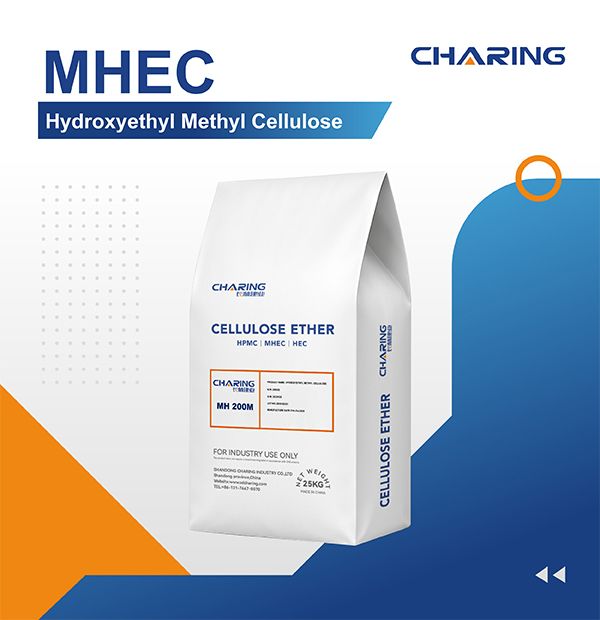
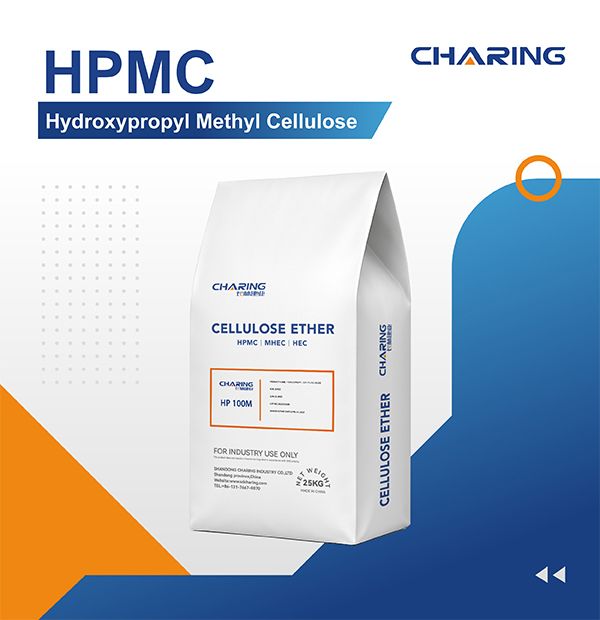
| All grades | HP 100M / HP 60M | Water retention, 2–3 kg/t |
| Hot climate | HK 100M / HP 200M | Heat-resistant HPMC |
| Optional | PC 3010 / PC 2018 | Workability |
When do I have to upgrade from C1 to C2?
When the tile is porcelain (below 0.5% absorption), larger than 600 mm, or going on an exterior wall or wet area. C1 cannot grip a dense porcelain surface.
What is the single biggest cost of upgrading?
RDP. Going from C1 to C2S1 doubles the RDP from 12–18 to 30–40 kg/t, and RDP is the most expensive ingredient.
Can I skip the silica fume?
No. Without it, many C2 formulas fail the water immersion test. Silica fume fills the pores and makes the matrix dense enough to hold 1.0 MPa underwater.
How far can I push RDP down to save money?
In C2, not below 25 kg/t. Below that it will not reach 1.0 MPa. In C1, not below 12 kg/t. Cutting further fails the water and freeze-thaw tests.
Does more RDP always mean better?
Up to a point. RDP raises flexibility and bond, but too much raises cost and lowers compressive strength. Match the dosage to the grade — 30–40 for C2S1, 45–55 for large tiles.
Note: All formulas are based on Northern China temperature and humidity. Adjust HPMC viscosity and dosage to your local climate. Always run lab tests with your own raw materials before production.
For technical inquiries: info@sdcharing.com
Shandong Charing Industry Co., Ltd.

E-mail: sdcharing@sdcharing.com
Phone: +86 131 7667 0070
WhatsApp: +8615066133527
Add.: No.605-606,NO1 BUILDING,WANGYUE ZHIGU INDUSTRY PARK,NO.1919 WANGYUE ROAD, SHIZHONG AREA,JINAN CITY, SHANDONG PROVINCE,CHINA