- Home
- Products +
- Industries +
- About Us +
- News
- Contact Us

- Home
- Products
- Industries
- About Us
- News
- Contact Us

Oct. 16, 2026
Concrete Admixture Technical Guide · No. 23
A polycarboxylate superplasticizer (PCE) tablet is a finished water reducer; a macromonomer is a raw material used to make it. The two can look alike — both are white solids — but only one reduces water. This guide explains the difference and shows how to check what you are actually buying.
Macromonomers such as EPEG, HPEG and TPEG are the polyether building blocks of PCE. They are white waxy solids that dissolve in water, so at first glance a bag of macromonomer can look like a bag of PCE flakes or powder.
The confusion is understandable, but the difference is decisive: a macromonomer has almost no water-reducing power on its own.
A macromonomer is a short polyether chain with a reactive double bond (C=C) at one end. Its molecular weight is typically 2,400 to 3,000 g/mol — the EPEG 3000 grade, for example.
That double bond is the clue: the molecule is designed to be polymerised, not to be used as it is. During PCE production the macromonomer is copolymerised with a small acid monomer (such as acrylic acid) to form the finished comb-shaped polymer. Before that reaction, on its own, it does not disperse cement.
A finished PCE is a comb-shaped polymer: a backbone that adsorbs onto the cement grains, and long polyether side chains that push the grains apart. This mechanism is what gives PCE its water reduction of 25% to 40%.
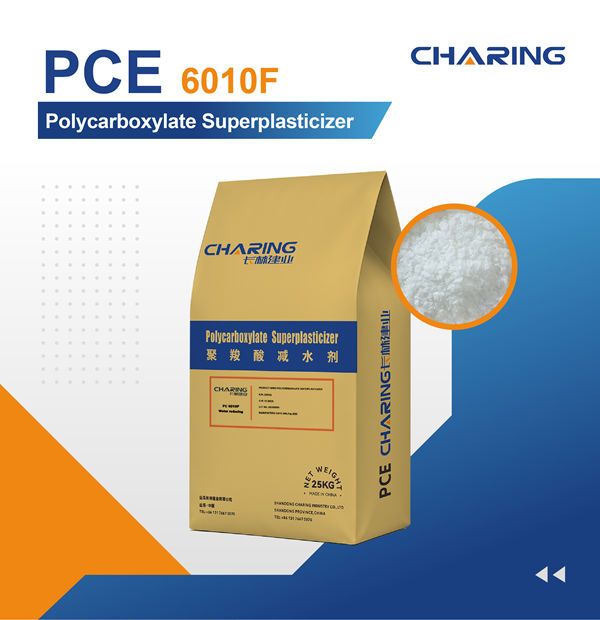
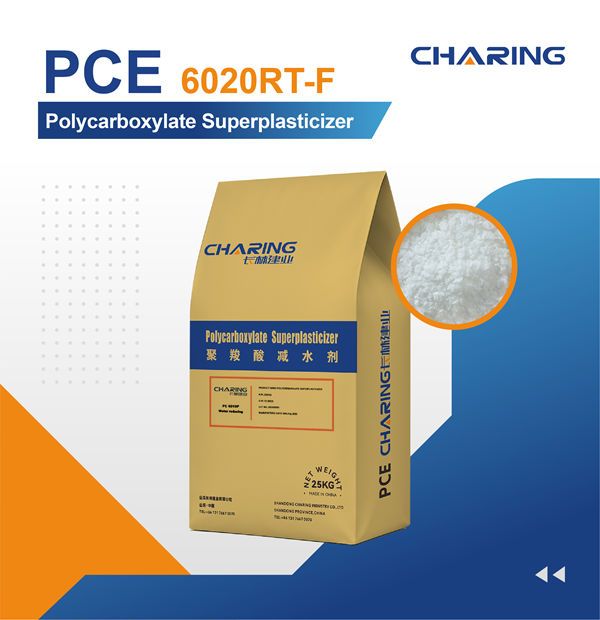
A PCE tablet is this finished polymer in solid form, made by bulk polymerisation and cut into flakes or milled into powder. It is around 97% to 100% active, with a molecular weight of roughly 20,000 to 60,000 g/mol.
The table below shows the gap between the two:
| Property | Macromonomer (raw material) | PCE Tablet (finished product) |
| Role | Building block | Finished water reducer |
| Molecular weight | 2,400–3,000 g/mol | 20,000–60,000 g/mol |
| Structure | Short chain with a double bond | Comb polymer (backbone + side chains) |
| Water reduction | Almost none | 25%–40% |
| Feel | Waxy, softens at ~40–55 °C | Hard, dry, brittle |
It is possible, but it is not a profitable long-term fraud — for a simple reason. A macromonomer is not cheap, and it does not reduce water, so the substitution is caught the moment the buyer runs a trial mix. Suppliers who want repeat business do not do this. The real risk sits with one-off middlemen who target buyers that never test before purchasing.
A more common problem is not a macromonomer at all: it is a genuine PCE diluted with cheap filler, a naphthalene-based water reducer, or a sugar retarder. That is a different — and more frequent — form of adulteration. Either way, the checks below will expose it.
The checks are ranked from decisive to supporting.
| Step | Check | What You See | Verdict |
| 1 | Water-reduction test | Dose 0.1%–0.3% and measure flow | Real PCE: 25%+; macromonomer: almost none |
| 2 | Molecular weight (GPC) | Measure the polymer size | PCE: 20,000–60,000; macromonomer: 2,400–3,000 |
| 3 | Look and feel | Handle the solid | PCE: dry, hard, brittle; macromonomer: waxy, softens in heat |
| 4 | Dissolve | Stir into cold water | PCE: dissolves fast, clear to slightly cloudy; macromonomer: slow, tends to lump |
| 5 | Read the documents | Check the COA/TDS | Must name "polycarboxylate superplasticizer" and a water-reduction rate |
Step 1 is decisive. A water-reduction test needs nothing more than a cement paste or a trial mix: dose the sample at 0.1% to 0.3% by cement weight and measure the flow. A genuine PCE cuts water by 25% or more; a macromonomer does almost nothing. No substitution survives this test.
Step 2 confirms the structure. Gel permeation chromatography (GPC) reads the molecular weight directly. The finished PCE is roughly ten times larger than the macromonomer, so the two are separated cleanly.
Steps 3 and 4 are quick field checks. A macromonomer is a waxy solid that softens around 40 to 55 °C, so it feels soft and can clump in a warm warehouse. A PCE tablet is dry, hard and brittle, and it dissolves quickly in cold water.
Step 5 protects you on paper. A genuine COA or TDS names the product "polycarboxylate superplasticizer" and gives a water-reduction rate. A vague description such as "polyether" or "monomer" is a warning sign.
| Ask For | Why |
| Water reduction rate | The core number a real PCE must show |
| Molecular weight (Mw) | Separates the finished polymer from the raw monomer |
| Active content | Real tablets are 97%–100% active |
| COA with a clear product name | "Polycarboxylate superplasticizer", not a vague polyether |
| A small trial sample | Lets you run Step 1 before any large order |
supplier who can state the molecular weight and the water-reduction rate — not just a trade name — is one who controls the process, not one who resells an unknown material.
Is a macromonomer a kind of superplasticizer?
No. It is a raw material used to make a polycarboxylate superplasticizer (PCE). On its own it has almost no water-reducing power.
Do the two look different?
They can look similar — both are white solids. The reliable difference is behaviour: a macromonomer is waxy and softens in heat, while a PCE tablet is dry and hard.
What is the fastest way to tell them apart?
Dose the sample at 0.1%–0.3% and measure the flow. A real PCE reduces water by 25% or more; a macromonomer does almost nothing.
Why would anyone sell a macromonomer as PCE?
Mostly one-off middlemen targeting buyers who do not test. It is not a profitable long-term fraud, because the trial mix exposes it immediately.
Is dilution a bigger risk than substitution?
Often yes. A genuine PCE diluted with cheap filler or a naphthalene-based reducer is more common than a raw monomer passed off as PCE.
To see the molecular parameters behind quality, read How to Judge the Quality of a Polycarboxylate Superplasticizer (PCE).
To understand how flake PCE is made, read Bulk Polymerization vs Spray Drying.
To learn how to run a trial dose correctly, read How Much Polycarboxylate Superplasticizer (PCE) Do You Need?.

E-mail: sdcharing@sdcharing.com
Phone: +86 131 7667 0070
WhatsApp: +8615066133527
Add.: No.605-606,NO1 BUILDING,WANGYUE ZHIGU INDUSTRY PARK,NO.1919 WANGYUE ROAD, SHIZHONG AREA,JINAN CITY, SHANDONG PROVINCE,CHINA