- Home
- Products +
- Industries +
- About Us +
- News
- Contact Us

- Home
- Products
- Industries
- About Us
- News
- Contact Us
Oct. 19, 2026
Concrete Admixture Technical Guide · No. 24
Concrete bleeding is water rising to the surface after placement. A little bleeding is normal and harmless; a lot weakens the surface and the bond. The main causes are too much water, too much superplasticizer, a retarder overdose, and a poor sand grading — and each has a fix.
Bleeding happens because water is lighter than cement and aggregate. After you place and compact concrete, gravity pulls the heavier solids down and pushes free water up. That water collects on the surface as a thin, often milky, layer.
Bleeding is not the same as segregation. Bleeding is water rising; segregation is the coarse aggregate sinking and separating. They often appear together, but the cause is not identical.
| Cause | How It Happens |
| High water-cement ratio | Too much free water to hold |
| Overdose of superplasticizer | Over-dispersion leaves water unbound |
| Retarder overdose | Setting is delayed, bleeding goes on longer |
| Sand too coarse / low fines | Little surface area to hold water |
| Low cementitious content | Not enough paste to hold water |
The most common one in practice is too much water — often hidden as "just a little extra for workability."
| Normal Bleeding | Excessive Bleeding | |
| Amount | A thin film that dries or is absorbed | Pools of water on the surface |
| Effect | Usually harmless | Weak, dusty surface, cracks, delamination |
| Action | None | Fix the mix |
A concrete that bleeds a little is normal. A concrete that pools water after an hour is a problem.
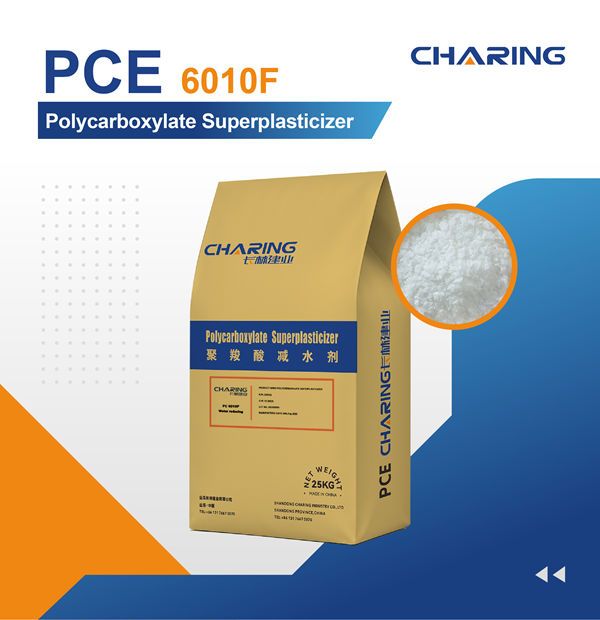
A polycarboxylate superplasticizer (PCE) normally reduces bleeding, because it lets you cut the water-cement ratio. Less water, less bleeding.
But bleeding also has a molecular side — and it explains why the two kinds of water reducer behave so differently.
Fresh cement grains clump together into flocs, and those flocs trap free water inside them. A water reducer adsorbs onto the grain surface and breaks the flocs apart, releasing that trapped water so the mix can flow.
That is the whole game: disperse too little and the mix is stiff; disperse too much and you release more water than the mix can hold — and the surplus rises to the surface as bleeding.
| Dose | Dispersion | Result |
| Too low | Poor | Stiff, low slump |
| Right | Controlled | Flows, little or no bleeding |
| Too high | Excessive | Free water released, bleeding |
A naphthalene-based reducer is a short, linear molecule. It disperses by one mechanism only — electrostatic repulsion: its sulfonate groups give every grain the same negative charge, so the grains push each other apart.
That repulsion is a "hard" force. Once the charge is high enough, the flocs collapse all at once and the trapped water is released in a single burst. With no second, gentler mechanism to cushion it, a small overdose quickly becomes heavy bleeding and segregation.
A PCE is a comb-shaped polymer — a backbone that anchors onto the grain, and long polyether side chains (around 68 EO units) that stretch into the water.
PCE disperses by two mechanisms at once:
| Mechanism | What It Does |
| Electrostatic repulsion | The backbone carboxyl groups charge the grains |
| Steric hindrance | The side chains form a soft barrier between grains |
The steric barrier is the key difference. The side chains act like soft springs: they push grains apart gradually, and they do not collapse the floc structure all at once. They are also hydrophilic, so they hold water rather than shedding it. The result is a gentler, more controllable dispersion — a higher dose releases far less free water, so bleeding stays mild.
| Naphthalene-Based | PCE | |
| Molecule | Short, linear | Comb polymer |
| Mechanism | Electrostatic only | Electrostatic + steric |
| Dispersion | Hard, sudden | Soft, gradual |
| Over-dose result | Heavy bleeding | Mild bleeding |
This dose tolerance is a real advantage of PCE, and it grows with quality: the better the PCE, the wider its safe dose range.
Match the fix to the cause:
| If You See | Likely Cause | Fix |
| Bleeding from the start | Water too high | Cut water, or raise fines |
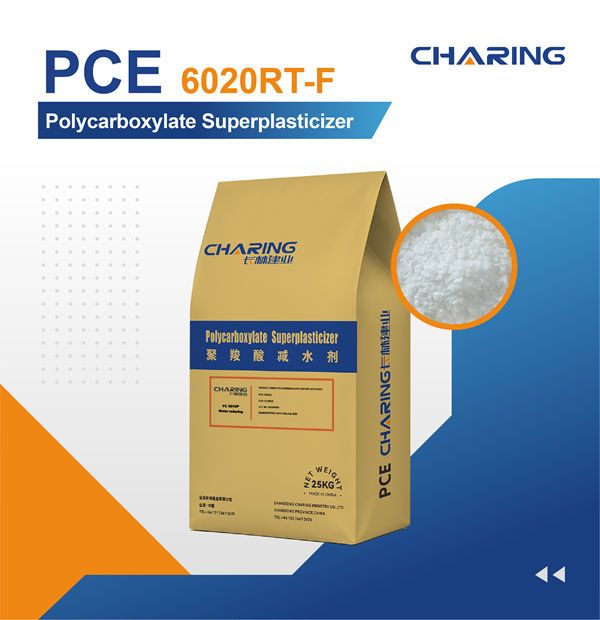
| Bleeding that keeps going | Retarder or slump-retention overdose | Reduce the retarder / PC 6020RT |
| Bleeding with visible air | Air content too high | Add a defoamer, check air |
| Bleeding with stone separation | Poor sand grading | Improve sand, add fines |
Two quick wins: add a little more fine material (fines hold water), and check the superplasticizer dose before adding water.
1.Fix the water first, not the symptoms.
2.Do not over-dose the superplasticizer to chase more slump.
3.A slump-retention type (PC 6020RT) over-dosed prolongs bleeding — test it.
4.Control air content; high air worsens bleeding.
Is a little bleeding normal?
Yes. A thin surface film that absorbs or dries is normal and usually harmless.
Does a superplasticizer cause bleeding?
Not when dosed correctly — it lets you use less water. Over-dosing it can cause bleeding, the same as over-dosing a retarder.
How do I stop bleeding quickly?
Cut the water, add fines, or reduce an over-dosed retarder. Check the air content too.
Is bleeding the same as segregation?
No. Bleeding is water rising; segregation is coarse aggregate separating. They are related but different.
For a complete overview of every concrete admixture, read Concrete Admixtures: The Complete Guide.
To see the right dose and why more is not always better, read How Much Polycarboxylate Superplasticizer (PCE) Do You Need?.
To learn how to control air content, read Air Content in Concrete.

E-mail: sdcharing@sdcharing.com
Phone: +86 131 7667 0070
WhatsApp: +8615066133527
Add.: No.605-606,NO1 BUILDING,WANGYUE ZHIGU INDUSTRY PARK,NO.1919 WANGYUE ROAD, SHIZHONG AREA,JINAN CITY, SHANDONG PROVINCE,CHINA